Restoration Continues on the Gunstock Timberframe

Memorial Day Weekend in Middletown Springs, Vermont

Work on this gunstock treasure continues and I am enjoying every second of restoring this frame.

I consider my role in this as that of a connector – a lucky link in a historical moment bridging a timber framer who lived centuries ago and spent months chopping, carving and erecting this beautiful hand hewn frame and the future owners who will build lives beneath these old timbers once again.

Who will live amidst these timbers? What joys will happen under this roof? Children will be born and raised. Generations will come and go – with these old growth timbers standing sturdily by as silent witness.

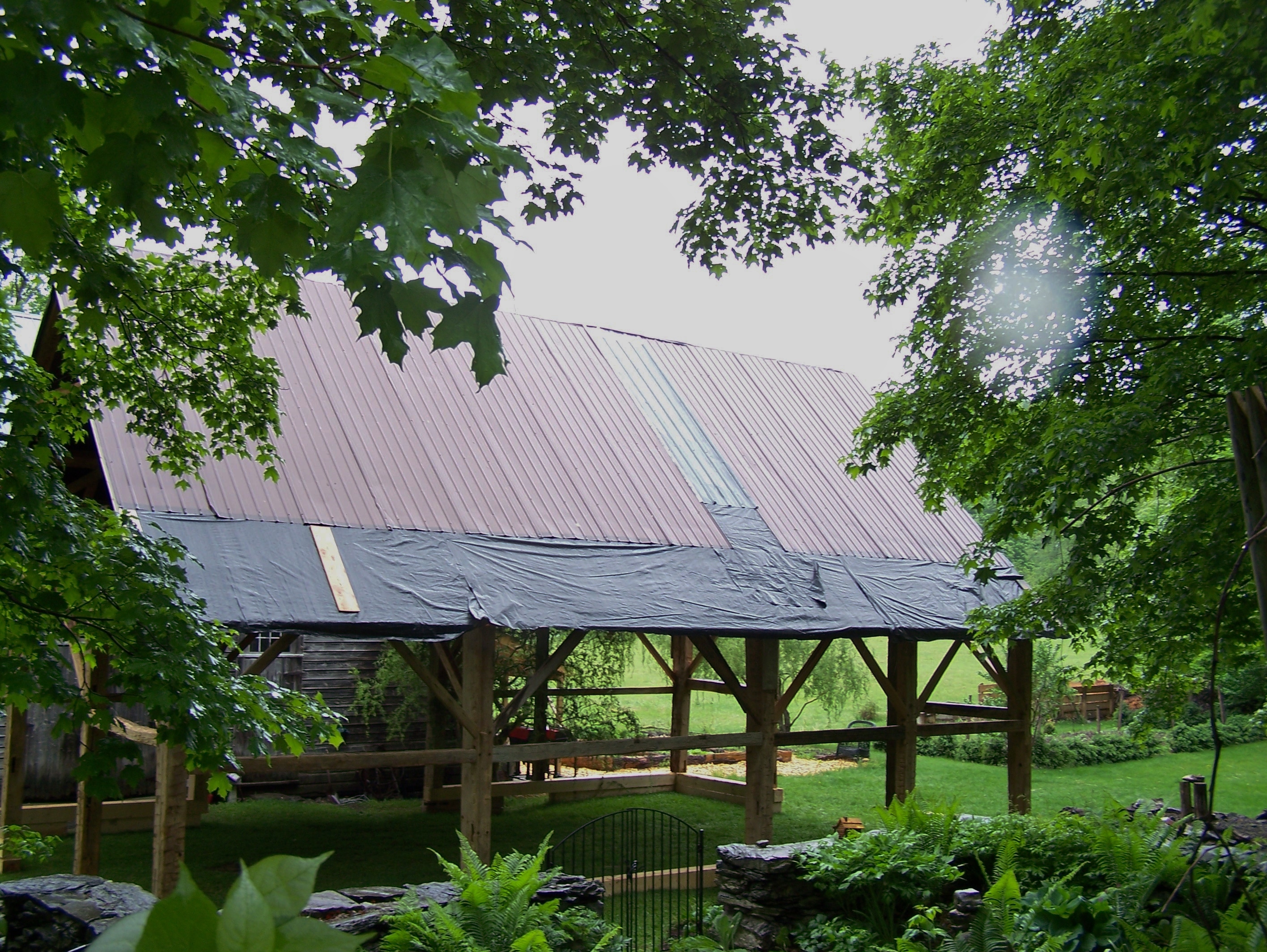
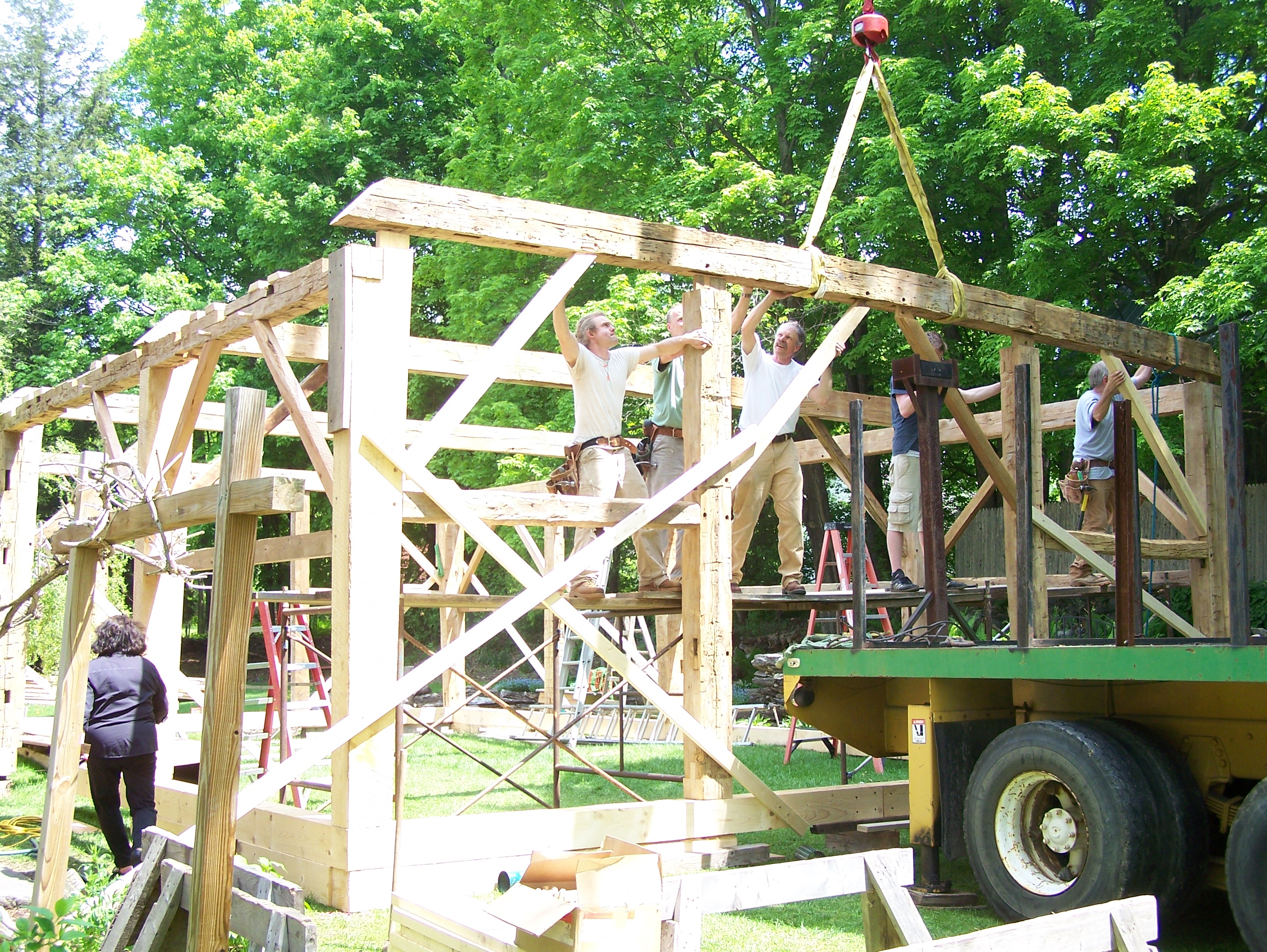
On Friday, we spent much of the day applying the original white oak roof boards back to the frame.

Next, we installed a roof from recycled metal (actually, it’s four roofs, over its lifetime) that had been on the barn when it was dismantled. We’re using black plastic in the interim until more metal roofing can be applied. The plastic has helped keep the frame dry during last week’s 5 inches of rain, but the metal will be more secure until we dismantling the frame in November. We will keep reusing the metal roofing on future frames as temporary rain caps until these available frames find a home.

Applying roof Boards to restored timberframe in Vermont
Applying roof Boards to restored timberframe

Applying roof Boards to Timber Frame 3

Roof boards and plastic sheeting to protect restored frame

With all the rain this past week, covering the roof with plastic allowed me to sleep at night. Over the rainy weekend we headed back to the Pawlet property to take more metal roofing  off of a shed (about to be torn down) that was attached to the gunstock frame. Armed with this added metal roof materials, we have all the ingredients we need to complete the roof.
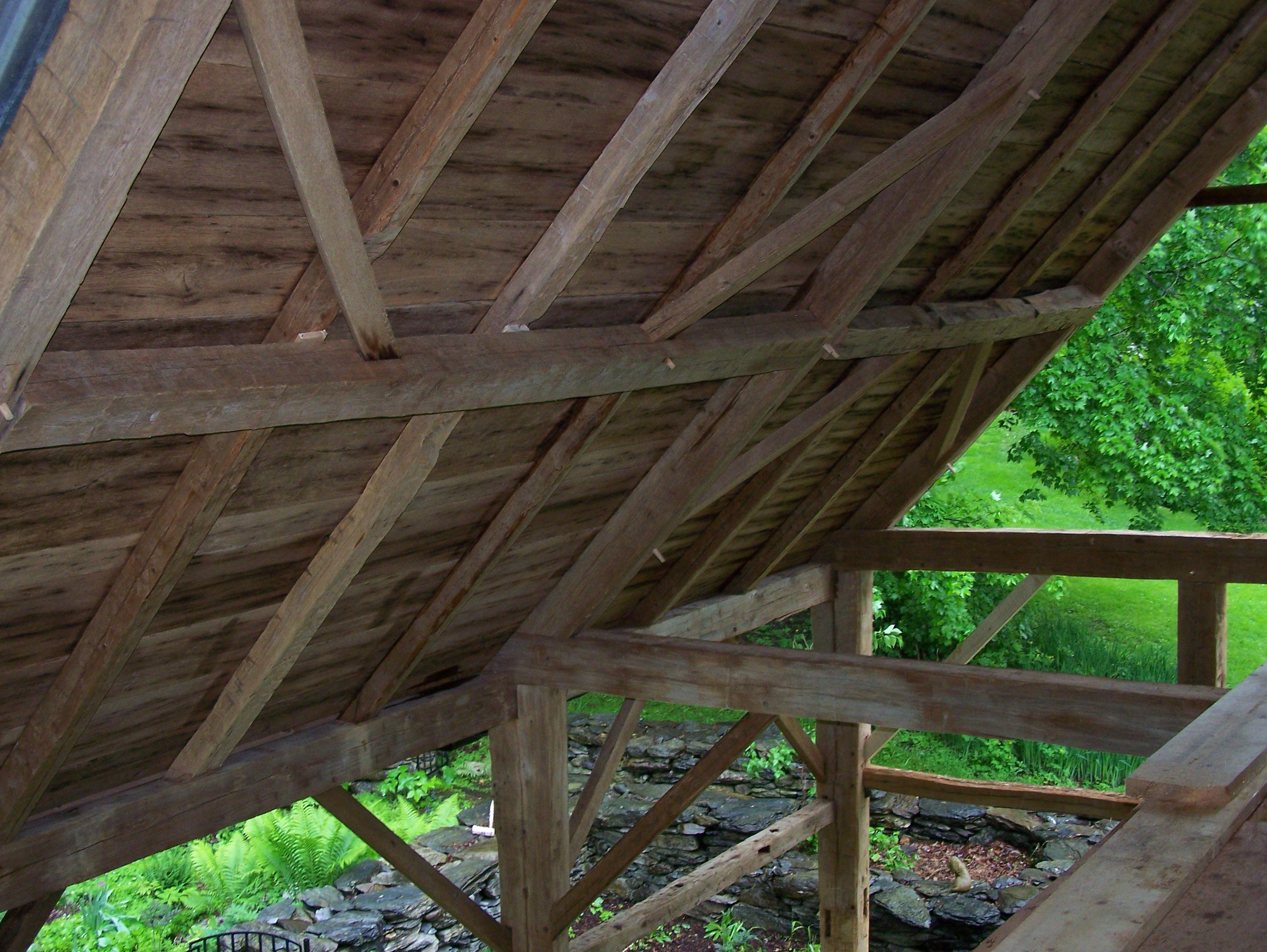
Interior Roof Structure on Gunstock Restored Timber frame

Interior roof structure of restored timber frame
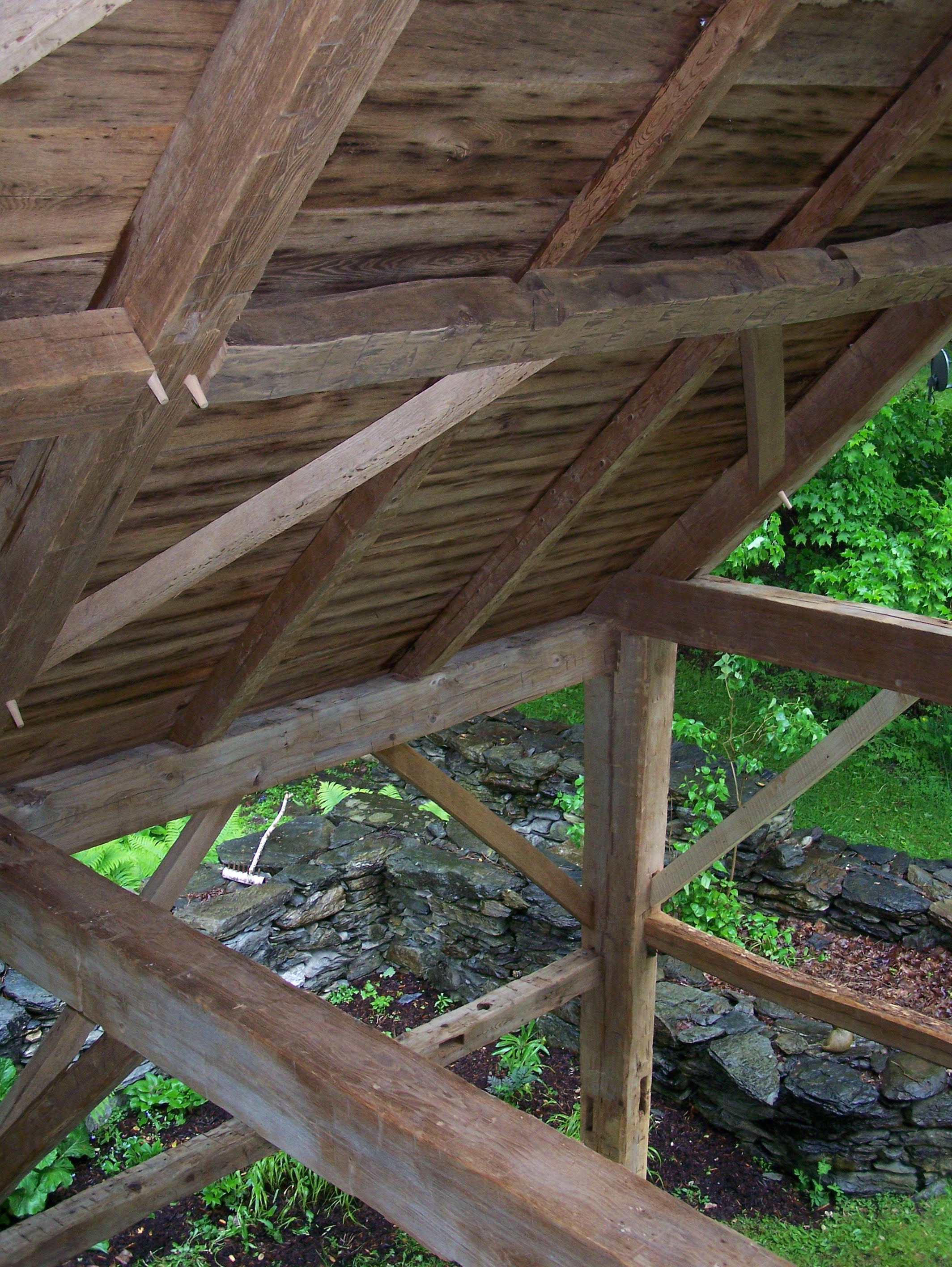
Interior of Roof Structure on Vintage Timber frame

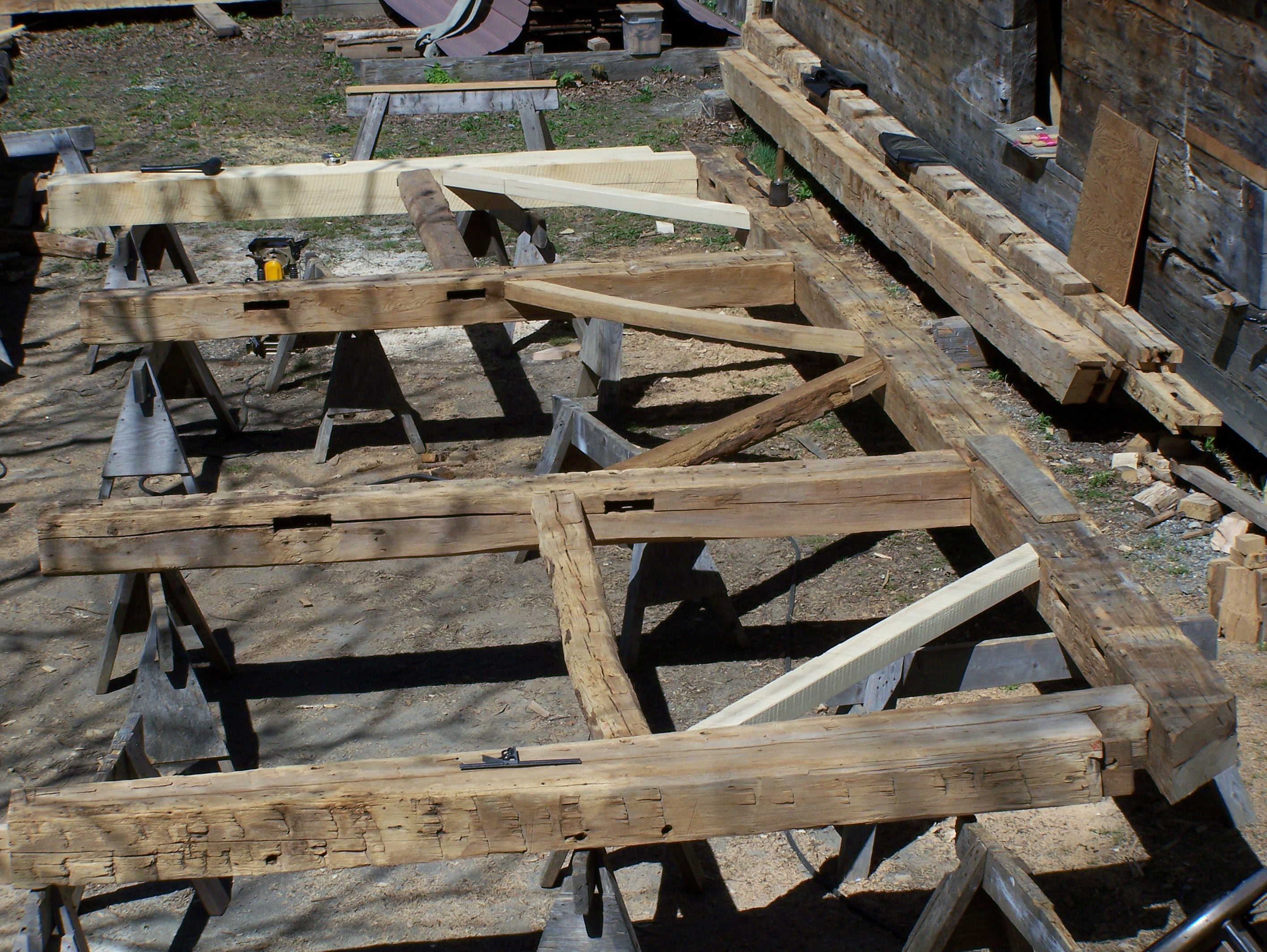
The photos above show the roof structure from the inside. Those large roof beams are the principal rafters. You can also see the horizontal tie beams and bracing between principal rafters. These beams support the smaller rafters which are all covered by white oak roof boards we applied on Friday. 

Restored Timber Frame with Roof Boards

Restored Timber Frame with Roof Boards

What a beauty!( Okay – except for the lawn which I know needs mowing.) Here you can see half the roof boards and I think this shot does the old timber frame justice – look at the potential of this lovely structure!

Stay tuned: Next week we will focus on completing the roof boards and installing the rest of the metal roofing. This frame will be fully restored and ready to host summer events here at Sissy’s Kitchen.

We’re even planning on using some vintage planks to make three harvest tables with benches, which will sit beneath the restored gunstock timber frame.

I have to go now and mow the floor. Guests are coming……………………….

If you would like to visit any of these barns – or learn more about all the details (I can always talk barn) please let me know. I’m trying to help out the owner and find someone to love these old frames and all of the magical history they hold. www.greenmountaintimberframes.com
The Gunstock Timber Frame Lives Again

I’ve been counting the days until this project! Here, just minutes from my home at delicious Sissy’s Kitchen, I had the incredible opportunity to raise this vintage timber frame which dates back to the 1700s. It was in tough shape when I found it, but I saw its inner beauty immediately… 

This past weekend, I gathered some of my best crew members and in just 8 hours, we were able to complete the majority of this restoration project.

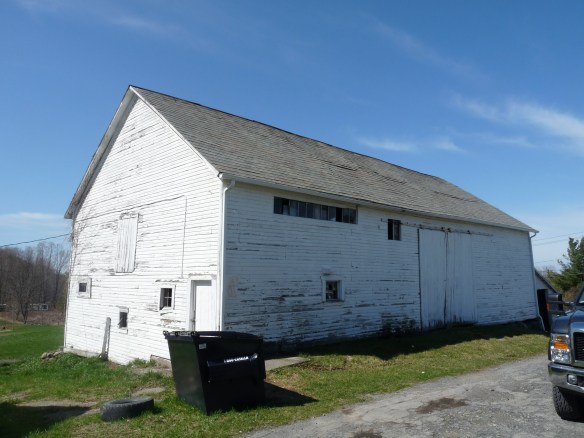
Here’s a quick BEFORE shot. (You’ll have to keep reading to see the after picture!)

vermont timber frame - gunstock

Before – this gunstock timber frame sure needed some love

The weather forecast was 80% rain. We were blessed with no rain and a great timber frame crew. We started work at 8:30 with the usual Blessing, asking for safety for all involved. Thanks to a hardworking crew and Sissy’s delicious sandwiches, we set the last rafter timber by 4:30pm.

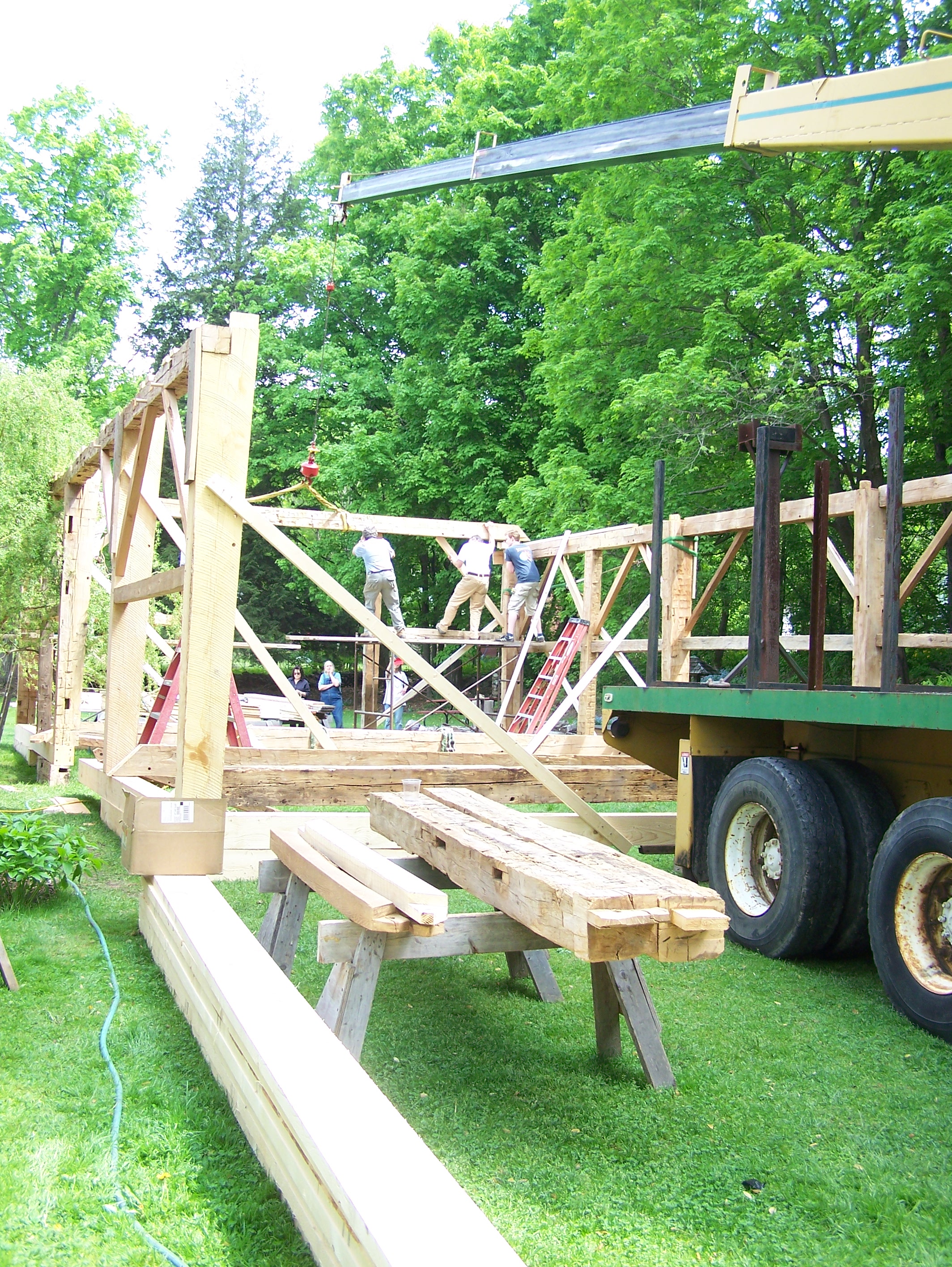
Sue, a first-class crane operator, came down to help out so we could focus on placing timbers instead of worrying about back pains and where to find another six strong guys to help us with heavy lifting. Thank you Sue!

Lifting the Timber Frames with Sue's Crane

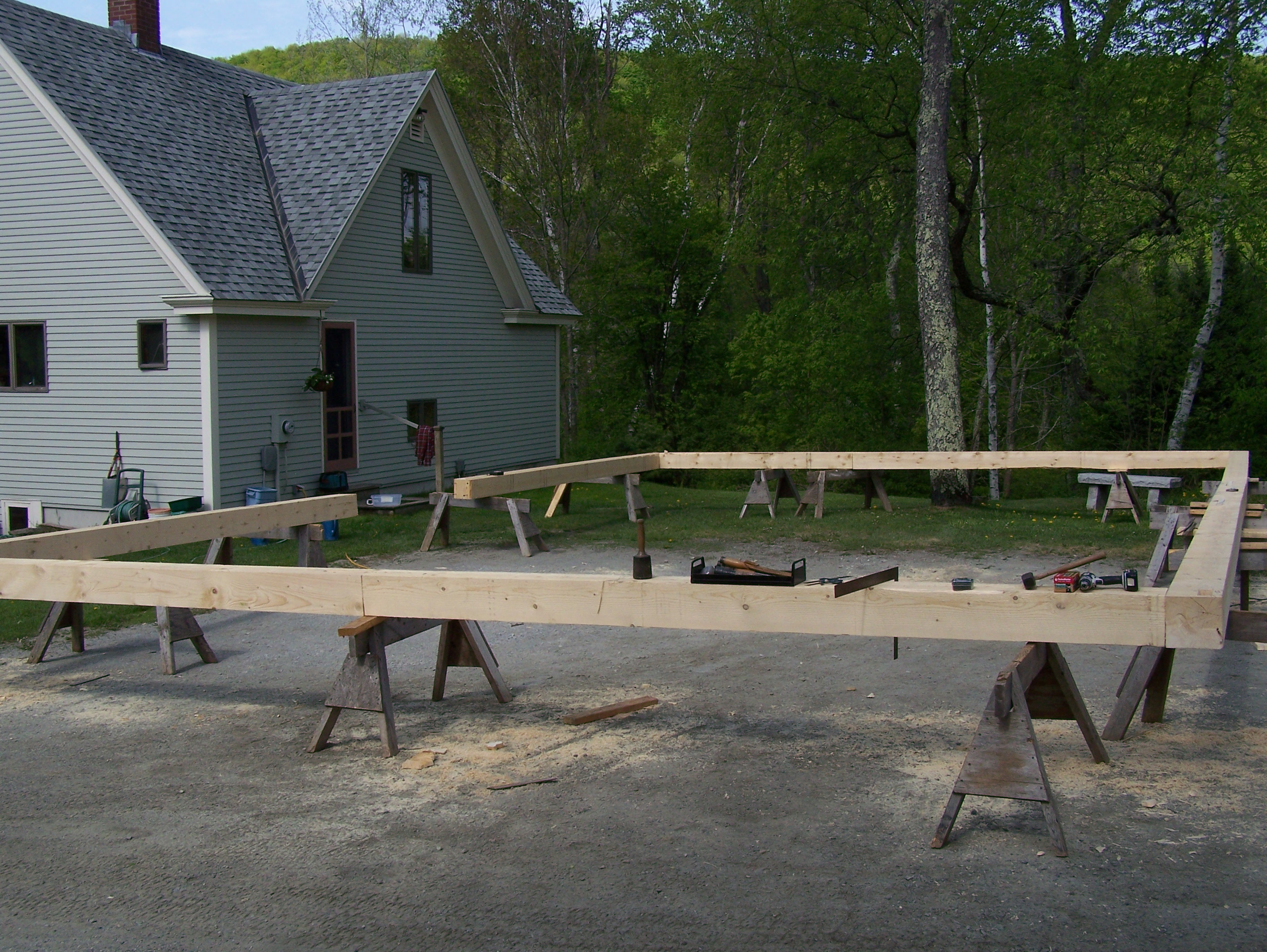
I had made the sills at home beforehand because Sissy’s was hosting a wedding reception the day before and I didn’t want my hammering to disrupt the festivities. These sills will form a sort of platform where the restored timber frame rests. 

Vermont Timber Frame Sills

Timber Frame Sills – made beforehand at home

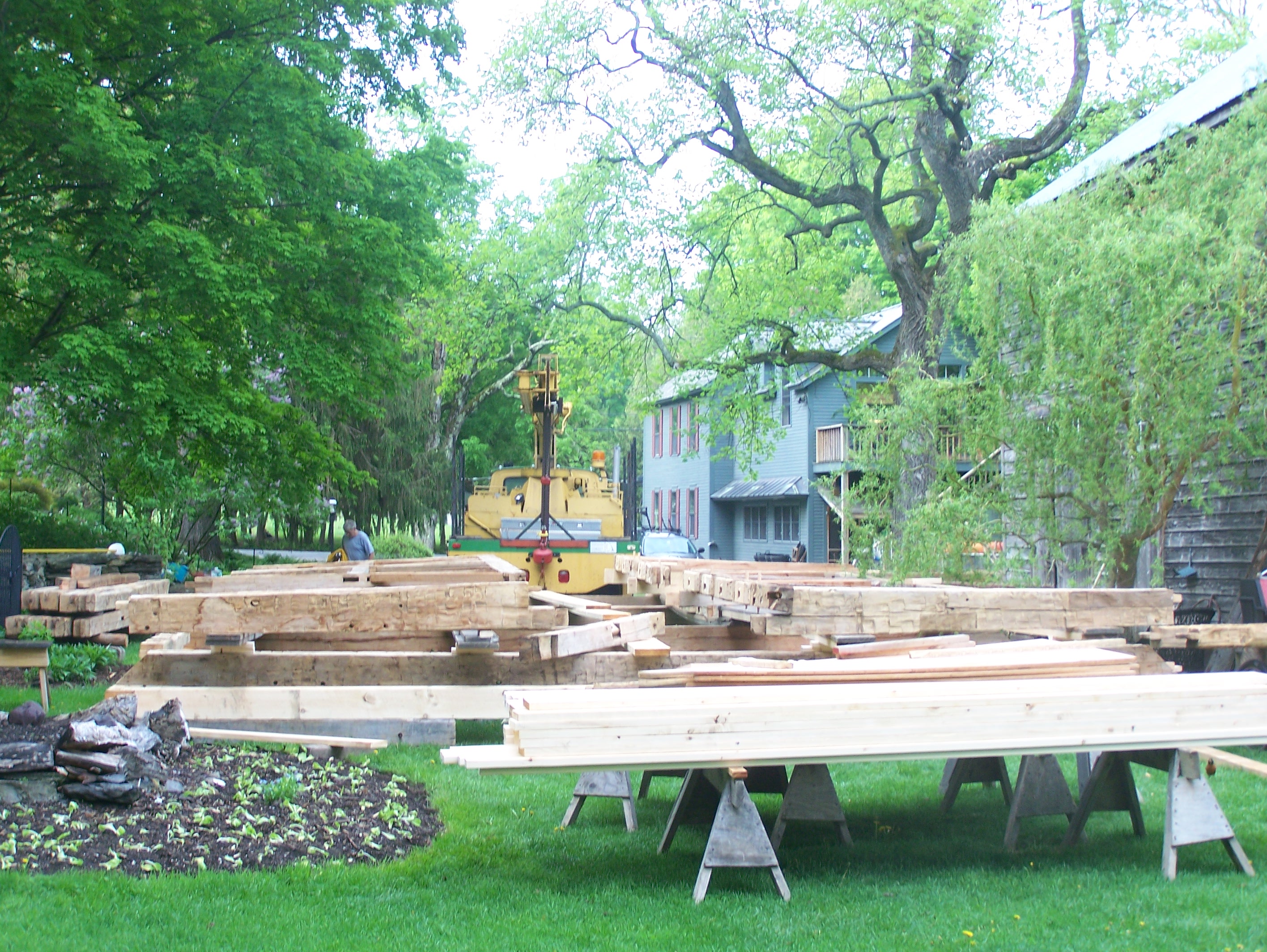
We started by putting the sills in place on Sissy’s lawn. Unfortunately, there was no room for a crane so we had to stack various frame elements on top of each other.

Timber Frame Sills

Stacking the Sills

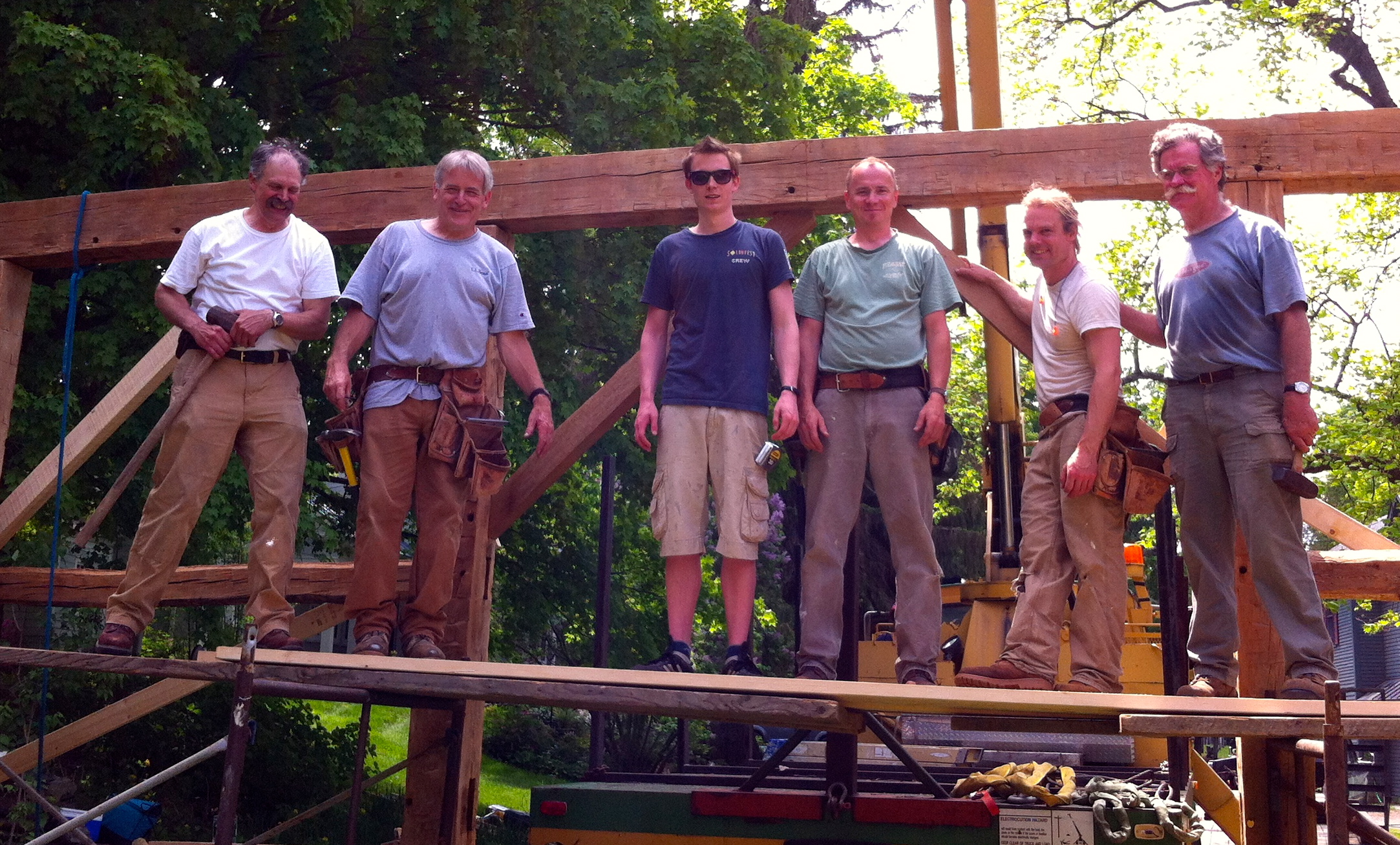
Having an experienced (and fun) crew makes all the difference and was a huge part of the success of the day. For this special project, I gathered guys who I’ve worked with over the last 10 to 20 years. The project felt almost like a reunion and we were all dedicated to working hard, staying focused for 8 hours and seeing just how much we could accomplish by the end of the day.

A First Rate Timber Frame Crew

A First Rate Timber Frame Crew in Vermont

Before lunch, we were busy raising the 40 foot walls which now are tied together by the 25 foot cross timbers. By noon, the main cross timbers were up. In order to install the 25 foot cross timbers, we needed to add on various accessory timbers to ensure the integrity of the structure.

Timber Frame Walls

Building the walls and getting cross timbers up

25 foot restored timbers

By noon, the cross timbers were up!

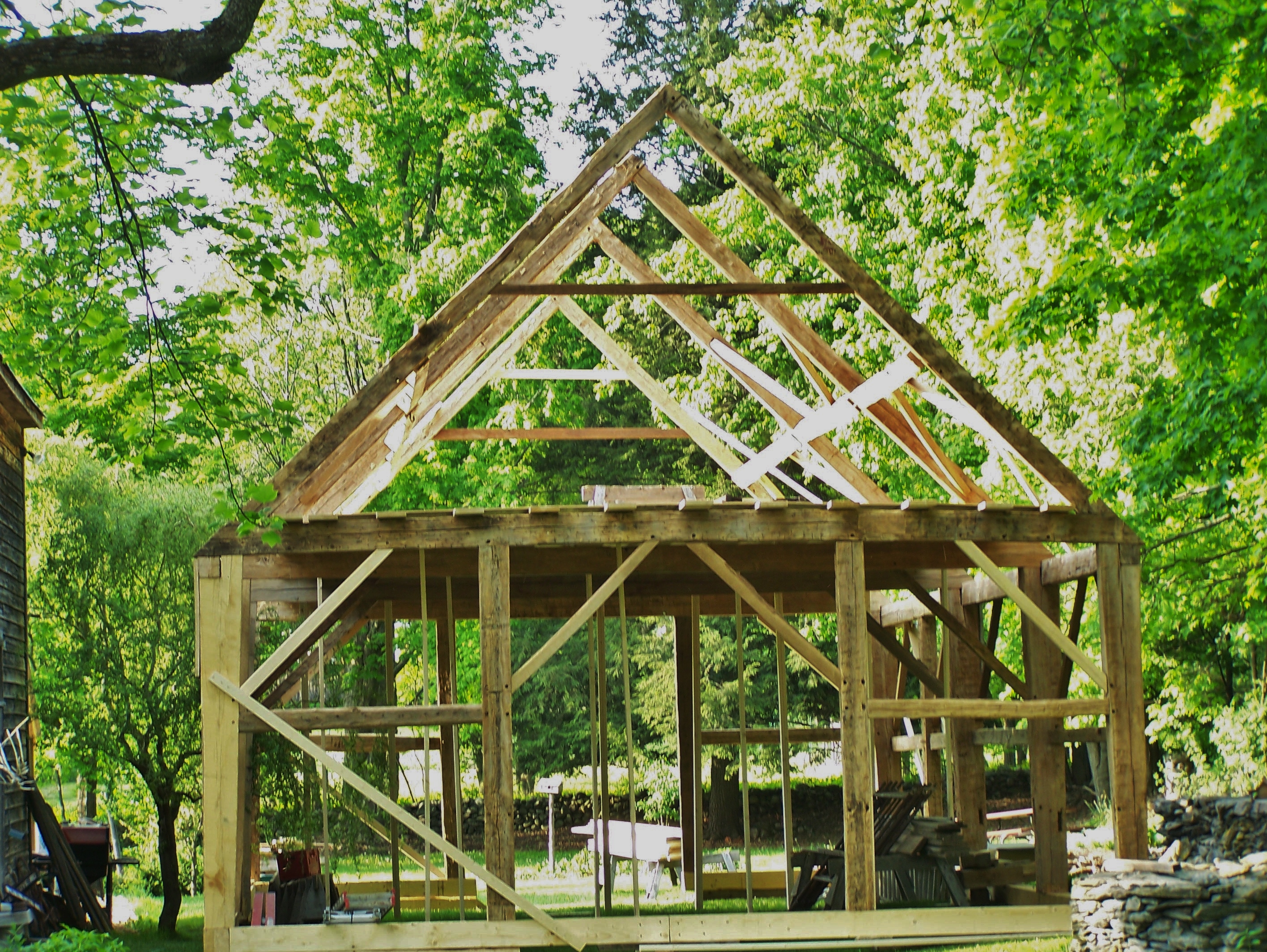
After taking a break for a delicious Sissy’s lunch, we hoisted up the principle rafters with tie timbers and bracing.

Principal Rafters with tie timbers and bracing

Principal Rafters with tie timbers and bracing

After lunch, we built a temporary floor system to enable us to erect the principle rafter system safely.

Timber Framing by Green Mountain Timber Frames

This floor system will also help us install roof boards and metal roofing.  For visitors, it helps showcase the glorious potential of the frame; there is plenty of height in these walls and we can easily add a loft to this frame.

Restored Timber Frame in Vermont

Memorial Day weekend is always a busy one for Sissy’s and our small town of Middletown Springs, Vermont. The unofficial start of summer, we have held a parade here on the Sunday of Memorial Day weekend for the last 43 years. As she awaits a new owner, the frame is playing host to a variety of events in the yard of Sissy’s restaurant. It’s a sort of historical gazebo and inviting people to rest under its timbers making a great home for events in Sissy’s yard.

Thar’ she is! The restored, adjusted gunstock timber frame standing 25 feet wide and 40 feet long.The beautiful results of a hard day’s work. This timber frame is ready to last another 250 years!

historical timber frame

This reconstructed timber frame awaits her new home.

This beautiful historic property is begging for a new home.  It could be a great room, dance studio, office space or more. The options are endless……

Interested in coming to visit and take a tour of the frame? Contact me at my website: www.greenmountaintimberframes.com


New Old Barn in Vermont

As Vermont finally thaws out from a long, dreary mud season, I’m getting excited here exploring old barns and finding treasures. Spring is high season for a timber framer and I am counting the hours until Tuesday. I’ll be over at our friend Sissy’s erecting the Gunstock Timber Frame that I’ve been writing about of late.

Meanwhile, I’m getting calls about lots of timber frames homes and barns around and it seems I just don’t have enough time to check them all out.

It’s remarkable how many old barns and historic properties exist just within the area where I live.

Last week, I headed down to a property in Danby, VT to check out a Gambrel Roof style home that was built in the 1800s.  Gambrel roofs originated in Europe, but the term gambrel is an American one. The older, European name was a “curb roof.” In the US, gambrel roofs are sometimes called Dutch gambrel. They can be identified by the double slope on each side of the roof. Gambrel roofs allow for more living space on the second floor than in a traditional roof slope.

danby vermont timber frame home

Gambrel Style Roof in Danby, VT

This timber frame home measures 28×38 feet. It’s for a sure a diamond in the rough, but the gambrel lovers out there will love the gunstock posts. The house has got a hardwood frame, too, so it’s built to last.

Danby VT Timber Frame for sale

On the same property is an old milk house, built around 1900. With some restoration, it could make a great small out building or garden shed.

Vermont Milkhouse old barn

Cutest little milkhouse

If you would like to visit any of these barns – or learn more about all the details (I can always talk barn) please let me know. I’m trying to help out the owner and find someone to love these old frames and all of the magical history they hold. – Dan www.greenmountaintimberframes.com
Another Gunstock Timber Frame Treasure

 (or “Restoring This Frame Is Just Too Much Fun for a Timber Framer”)

I feel like a young fella who has discovered a buried treasure! After so many years of working with timber frames and old barns, the magic of each newly discovered frame never dies!

This past week, I got to work on an old Gunstock Timber Frame whose labeling system goes back to the 1500s and earlier. Now if we were in England, this might not be such a big deal. But we’re talking about a labeling technique that was brought across the Atlantic to rural Vermont – and this timber frame is a real, rare find in our community!

Here are a few photos that show the details of the beauty – the handicraft of an expert timber framer who lived in New England centuries ago.

Gunstock Timber Frame from 1500s

Gunstock Timber Frame from 1500s

In the photo above, we can see the labeling technique of the old world joinery, brought to New England where it was used until the mid 1800s.

Below is an excerpt from  Richard Harris’s book, “Discovering Timber-Framed Buildings.” which explains the old world joinery and labeling system. The first picture below shows the traditional lettering system used to label timber frames. The second picture shows a detail of the joinery that this original timber framer used.

Joinery  Labeling System Timber Frame

Joinery Labeling System Timber Frame

Timber Frame Joinery Labeling System from 1500s

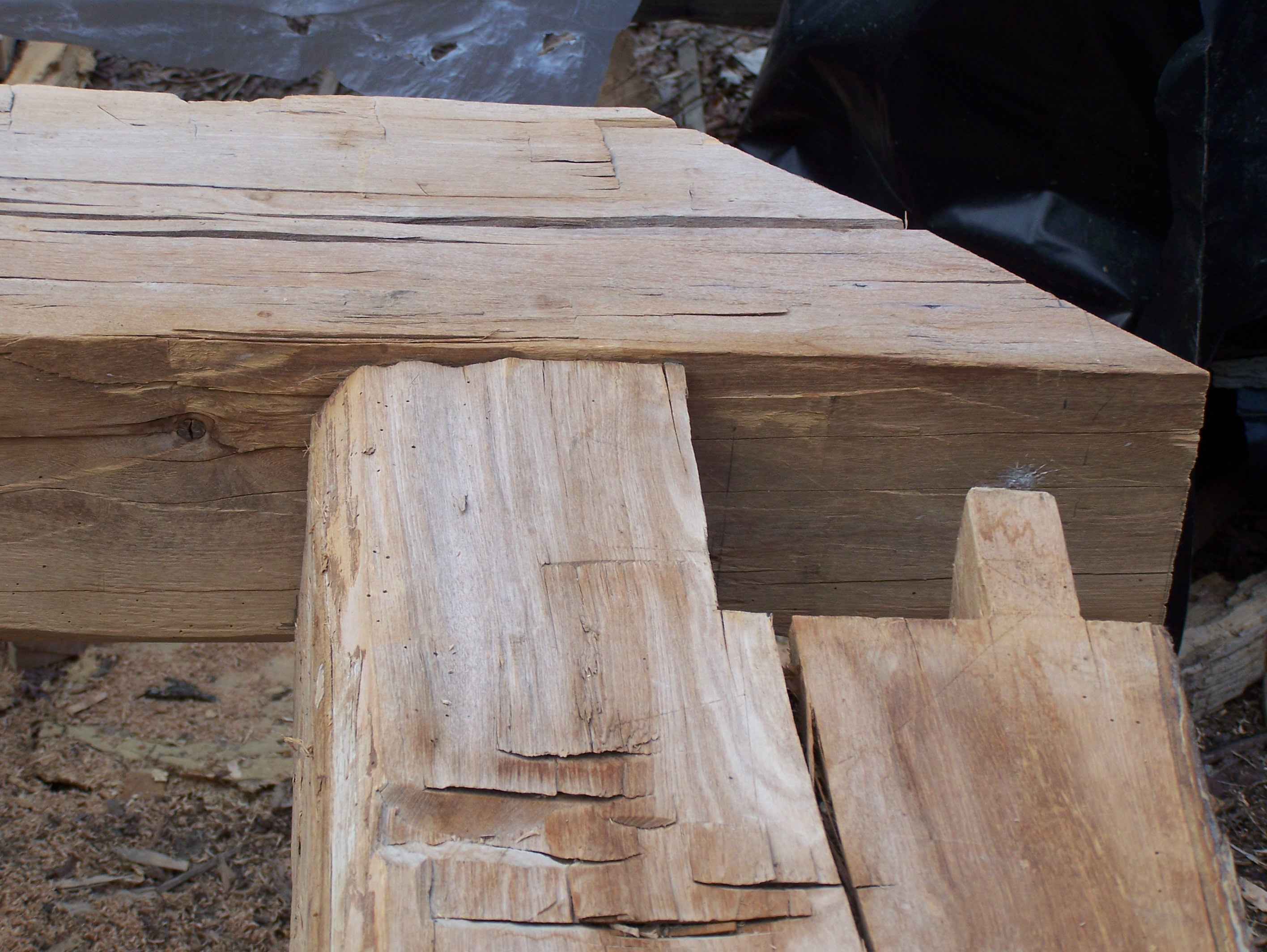
And below we see the frame I worked on this past week – an up close photograph of the joinery on this beauty of a frame! This frame is classified as a Gunstock frame because the posts that hold it up are tapered from bottom to top in order to allow two timbers to join and overlap at the top of the post. The top plate timber – or rafter plate – will fill the gap on the right side on raising day.

Timber Frame Joinery

Below is a picture showing the principal rafters of the frame.

Principal Rafters from Historic Timber Frame

Principal Rafters from Gunstock Frame

The girts – or  long timbers – on this frame are made from Elm and Chestnut. The midbay timbers were originally 30 feet wide, but restoration allowed 25 feet. It was hard to tell what wood it was until the cutting, but the familiar pungent smell helped me recognize the Elm.

Timber Frame Barn Restoration

The Elm and Chestnut Girts span 25 feet

The picture below shows the gable (or end wall) section of the frame. Some new timbers have been added, and will age nicely over the next 200 years.

Gable of the Gunstock Timber Frame

Gable of the Gunstock Timber Frame

This final picture shows the frame’s roof structure. We are assembling the original half of the roof frame before adjusting it to new dimensions.

Timber Frame Roof Structure

Timber Frame Roof Structure

And here we have it – another piece of history uncovered.  A fine example of “post medieval construction”,  when buildings where built to last for centuries.

I have several restored old barn frames in stock and erected at my shop. You are invited to plan a visit to walk through them and get a feel for what they could become. See them online first: http://www.greenmountaintimberframes.com/#!available-frames/cqps

Saving Another Old Barn

Image

Saving Another Old Barn

Gunstock Timberframe Barn

This beauty of a Gunstock Barn Frame dates from before 1800! The wide boards on the walls and ceiling indicate early construction and a timber framer who had skills and a real dedication to craftsmanship  Most notable is that the builder was willing to spend extra money on quality sheathing boards.

We are fortunate in our area that many of the old barn roofs were made from slate, thus preserving these abandoned barns for many decades until new life can be brought back into the building.

In other news, I am looking forward to this weekend! I will be spending the next few weeks restoring a gunstock timber frame barn. I will post pictures soon of the entire restoration process. Lots of old barn frames are coming my way, and it seems at time I just can’t save them all…

This beauty from nearby Vermont – could make a beautiful barn home!

Contact me at www.greenmountaintimberframes.com.

Treasure Found – Vermont Timber Frame Barn

Image

Treasure Found - Vermont Timber Frame Barn

Another historic barn frame waiting for a home

Saving a Gem: The Gunstock Barn Frame in Pawlet, Vermont

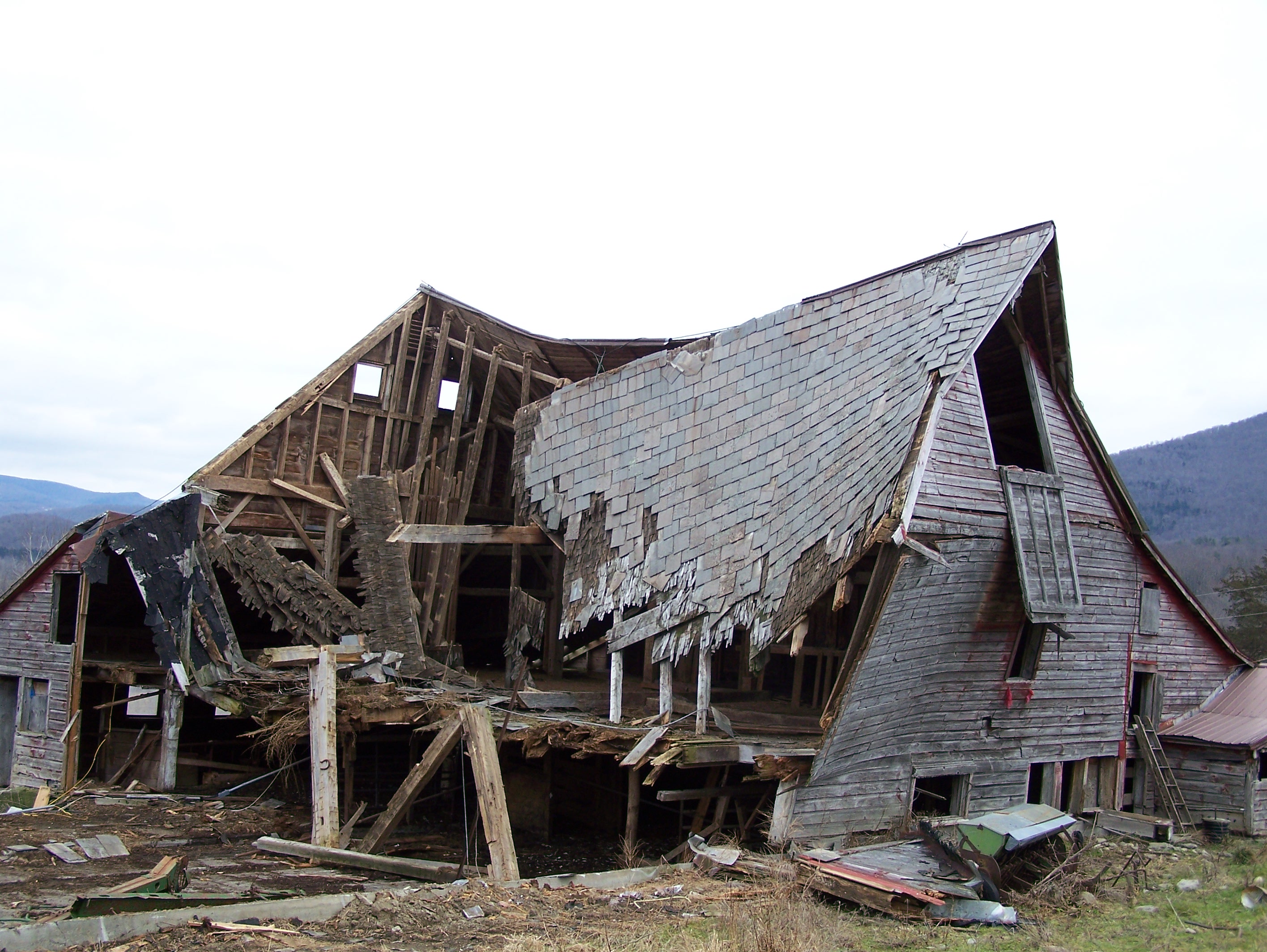
My friend’s old barn collapsed in January. For 10 years, he and I had been discussing how to save this beautiful historic property.  After putting off work for a variety of reasons, the barn finally demanded our help. With some friendly prodding from my wife, who always knows best, I went down to take look at this very special old timber frame.

The Gunstock Frame is a unique barn on the property of the second oldest house in Pawlet, Vermont. Pawlet was incorporated in 1761 so we’re talking about a property that is older than our country.

Vermont Timber Frame Historic  Property

How could I not save this old barn?

It’s our heritage!  The growth rings in one of the gorgeous Chestnut posts had over 450 rings. In a frame that was standing 250 years ago, the timber in the frame was growing in Vermont 700 years ago. THAT is history worth saving. And 1500 hours of restoration will allow the frame to live another 180,000 hours (200 more years) at least.

What’s a Gunstock Timber Frame?

The frame is called a Gunstock frame because the posts that hold it up are tapered from bottom to top in order to allow two timbers to join and overlap at the top of the post.

The frame is 25X40 feet in size, predominantly made from Chestnut timbers, with an oak roof boards. I am currently working on restoring the post and beam structure, washing the timbers and the roof boards.

Meanwhile, I hope to  find this timber frame a new home. One of the reasons I love timber framing so much is because I can continue the legacy of someone who lived here so long ago, and loved this structure as much – or more so – than I.  Made 250 years ago by the hands of a colonial American, this beautiful frame can become the centerpiece of a barn style home. Through careful restoration, the frame can live another 250 years. The post and beam frame would make one of the best great rooms you can imagine! Extremely versatile, it could also accommodate one spacious kitchen / living room / dining room.

This rare and special barn was up when they signed the Declaration of Independence! It was being used when they moved the cannons from a captured Fort Ticonderoga to Boston Mass. to pester the British ships in the harbor. This barn was up when they threw the big ol’ Tea Party in Boston Harbor.

And today, I feel honored to work on its timbers, bring the frame back to its original condition, and listen to these timbers’ story. ​

Want to see more frames and old barns? Visit my website: www.greenmountaintimberframes.com