Reading this in your email? For a better view of the blog - click here!
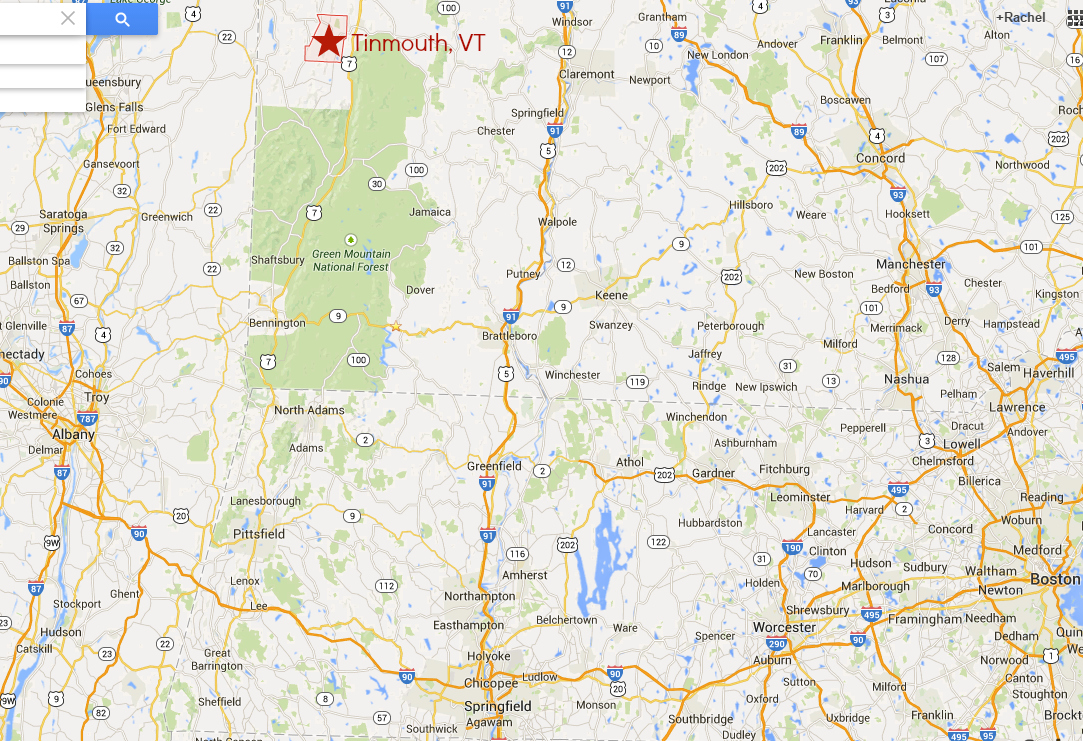
This week’s guest blog comes to us from our fellow builder and timber framer, Glenn Tarbell, who is currently restoring a 1780s timber frame from Tinmouth, VT.
Reading this in your email? For a better view of the blog - click here!
This week’s guest blog comes to us from our fellow builder and timber framer, Glenn Tarbell, who is currently restoring a 1780s timber frame from Tinmouth, VT.
Reading this in your email? For easier reading – Click here.
Most of the time here at Green Mountain Timber Frames, we restore 18th and 19th century barns and turn them into new timber frame homes, barns, great rooms and more.
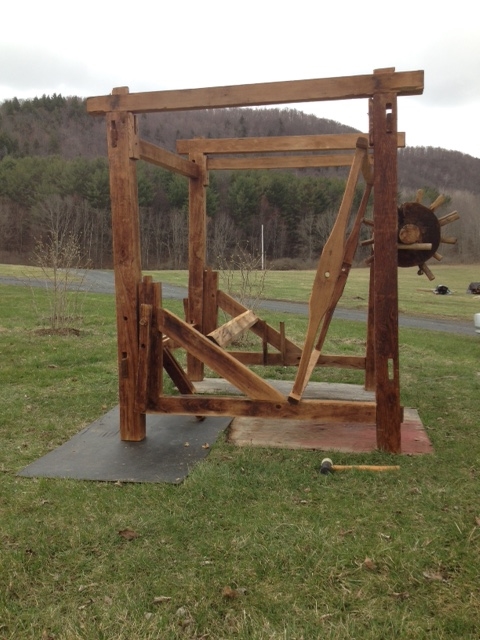
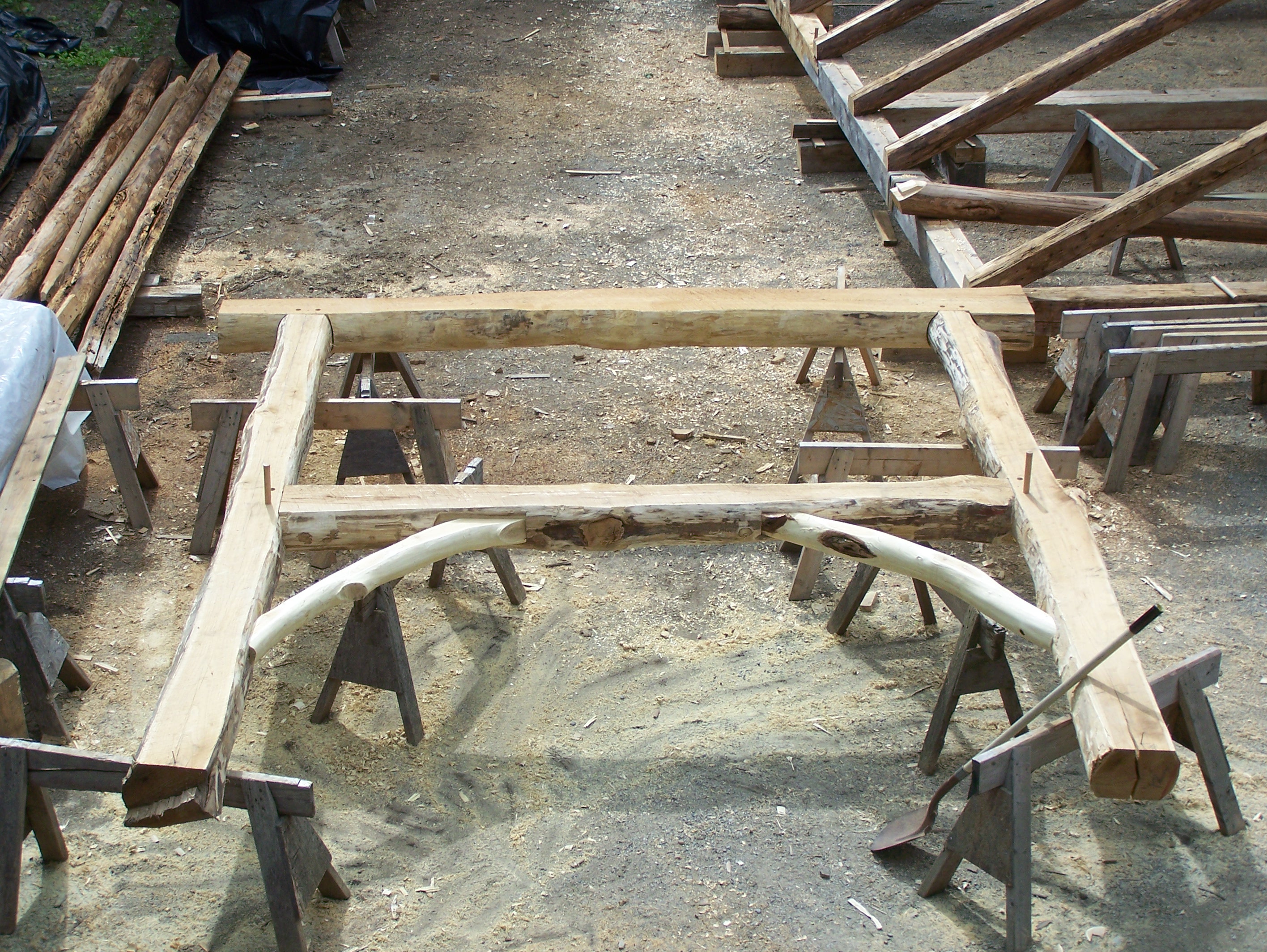
But this summer, just for fun, a different project came into the mix when I was asked to put together a very “organic” sign frame for Rutland County’s Vermont Farmers Food Center.
How does one make a timbered sign frame out of half round locust trees?
To begin the process, I chose to use local locust wood. I found the logs at Ken Gagnon’s saw mill in Pittsford, VT. Armed with these rugged timbers, I was ready to begin building.
Why locust trees?
I used locust because their wood is comparable to “pressure treated” wood. Locust naturally has many of the properties of pressure treated wood, without any chemicals needed to preserve the wood’s fiber. Remarkably, locust can easily withstand being exposed to the elements for 50+ years.
Building the sign frame
Ken Gagnon sawed flat sides on the front and back of the sign timbers, making it much easier for us to do the joinery. I carefully studied the surfaces to decide the placement of each timber.
Because locust wood is very hard, we used a chain mortiser to make the mortises (pockets). This time-saving piece of modern equipment is very exact, and reduces wear and tear on our arms. However, I still had to scribe and chisel the rounded sides of the four beams to make them fit together tightly when the joinery was completed.

Tools used in making a joint.
We connected the beams using mortise and tenon joints. Once erected, this joinery allows the frame to be a very strong structure, even in heavy winds. Because the wood is locust, the joints won’t rot.
Below you will see the two pieces being joined:
The Diagonal Braces
As we were building the sign, I felt that adding in some locust limbs for the diagonal braces would enhance the look.
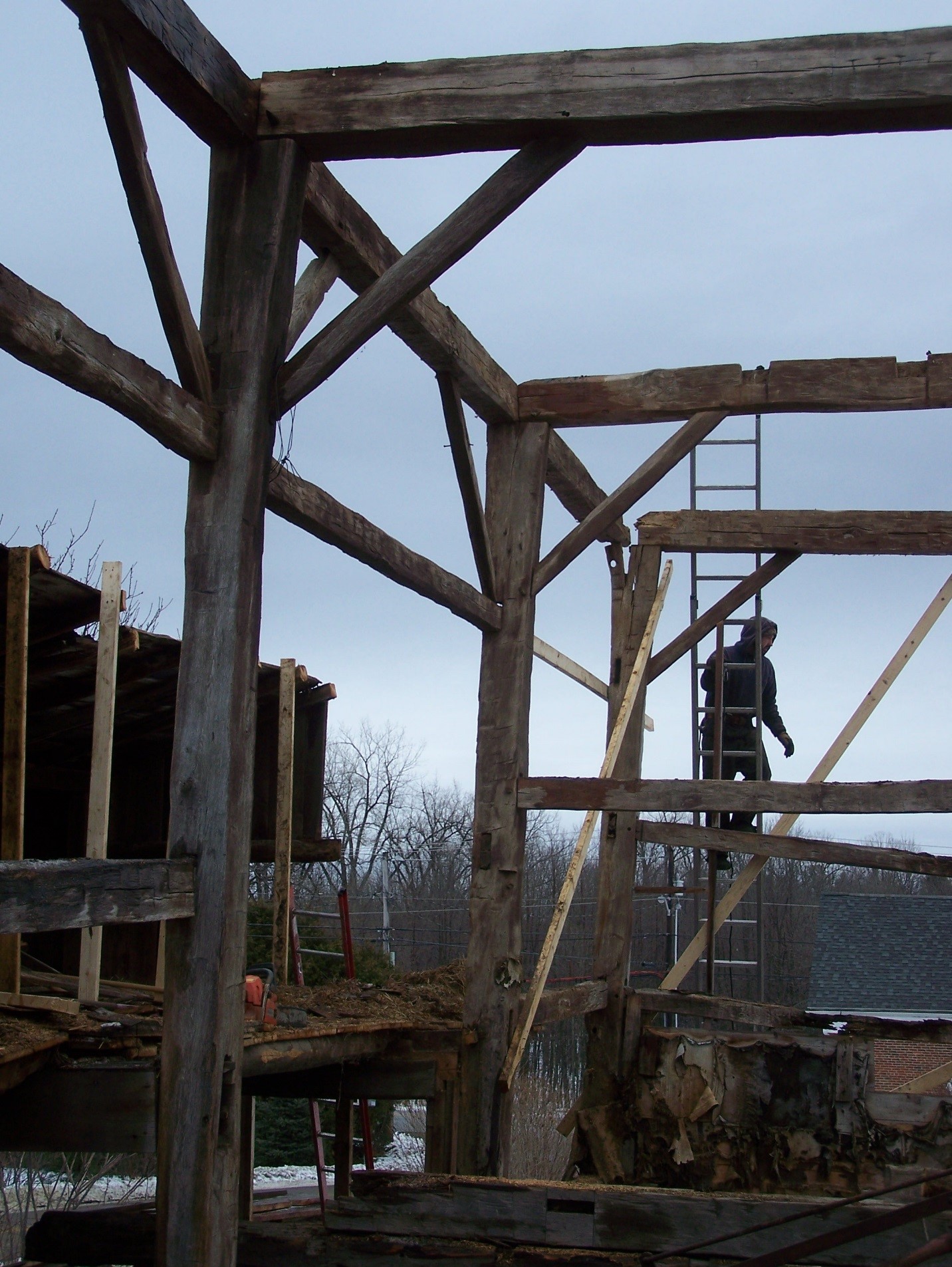
Heading out to the woods, I found some locust trees. I cut some limbs that had natural curves. We pealed off the bark and eventually carved tenons on both ends of each piece.
All in all, it was a fun project that took the Green Mountain Timber Frames team about 50 volunteer hours to complete.
Interested in your own timber frame structure?
Our main focus is on historic properties and timber frame homes, but we have other talents as well! Interested in furniture that compliments a timbered home or something else special?
Let us know! 802.774.8972
Reading this in your email? For easier reading – Click here.
Remember this hand hewn frame, made of pine timbers, that we highlighted in last week’s blog?
Well – the good news is – restoration is complete! After 8 days of focused work with a superb team of seven, the barn is fully restored and in use.
At 21 feet wide x 30 feet long, it spent nearly 175 years protecting hay in a meadow in Benson, Vermont. This barn has had quite a journey since 1840.
We became involved a few years ago when we took down the barn, restored the structure and erected it at our workshop. It was put to good use there, protecting building materials, while we waited for a new owner; and in time the right family came along.
We’ve spent the past two weeks restoring the frame for the new owners in Pomfret, VT. In last week’s blog, I wrote about the process of dismantling and re-erecting the antique timber frame in Pomfret.
I also showed how we applied the roof boards and started on the siding, using materials from another historical barn.
Getting the Arches JUST Right
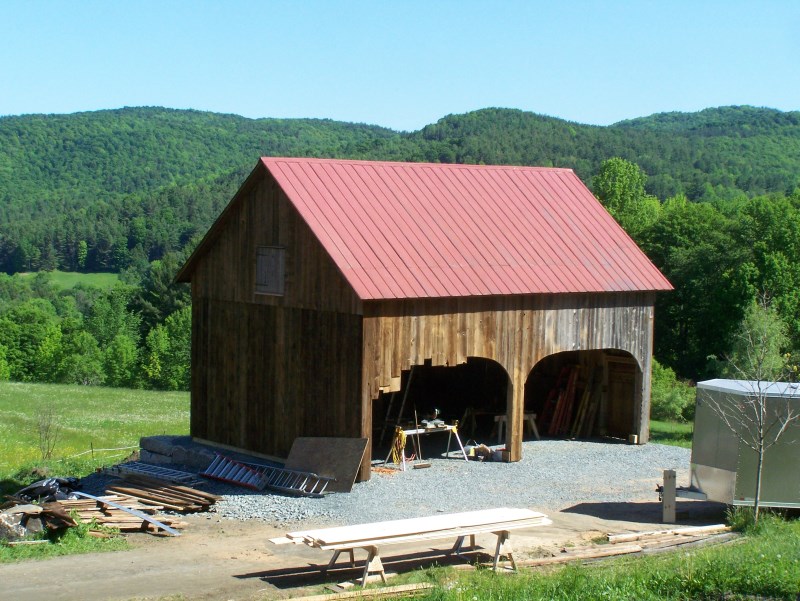
One of the challenges of restoring this barn was making sure the arched doorways looked just right. The picture below shows the process of creating the arches.
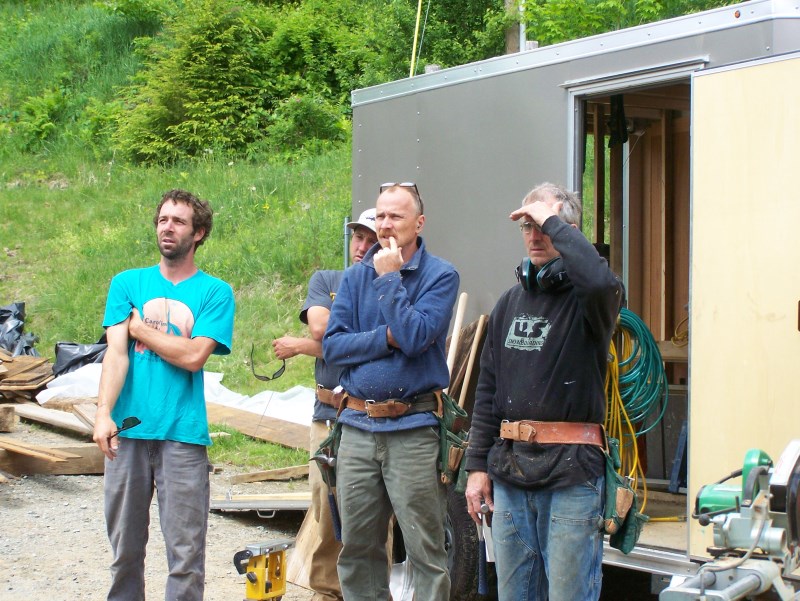
And here are some of our talented crew members pondering the arches to make sure they are just right!
Here you can see the nearly completed results!
Applying the Siding
Last week, we put on two layers of siding, one ½ an inch thick and the second one 1 inch thick. We put the two layers on, overlapping each other, to keep the driving rain and snow from seeping through the cracks.
As always – we love to recycle! For this project, we used exterior siding from four different barns and the door is also on its second life. You can see the original barns here on our available frames page.
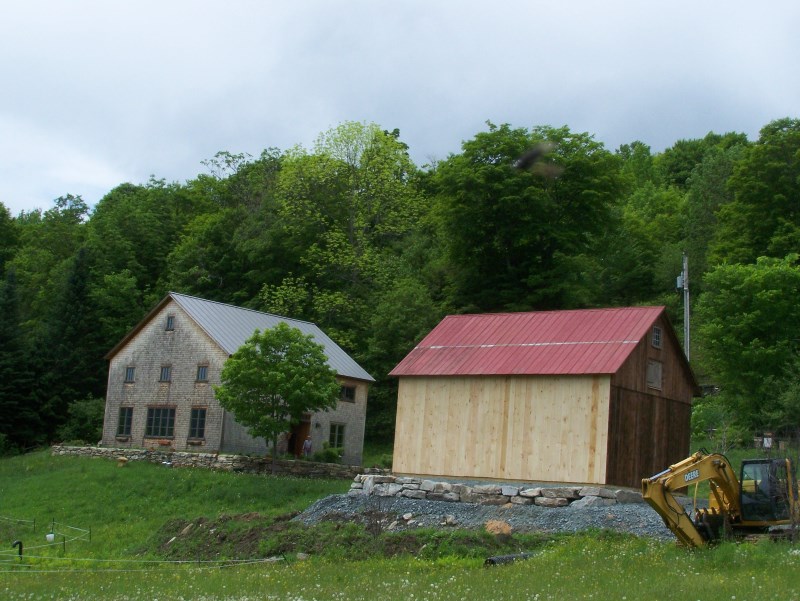
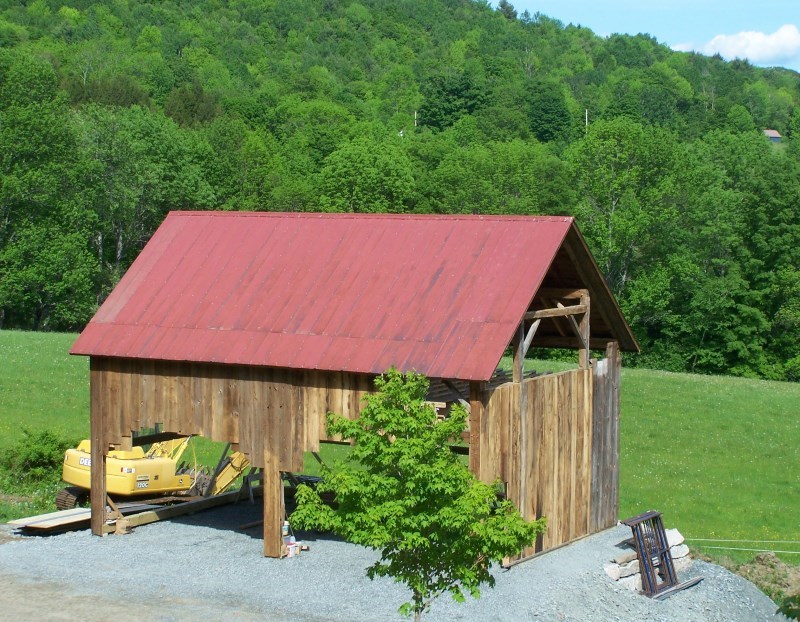
In the view above, you can see the recycled red roof taken from another barn project we also have in progress.
Reclaimed Wood versus New Wood
Economics and availability often come into play with a project, as reclaimed siding can be four times more expensive than new. In this case, the owners chose to use new siding on the back side of their barn. It is hidden safely from view and can not be seen from the house or the road. Give it another thirty years and it will look vintage, too.
Now Let’s Step Inside…
From the interior of the barn, we can see the beautiful hand hewn timbers of the original frame.
The upper loft might make a wonderful overflow guest room in the summertime.
There’s a large, open main level with the relatively spacious half loft. Eventually, a modest stairway will replace the metal ladder that you see in the view below.
It was, as always, a pleasure to save another barn – and create a new-old barn for another wonderful client. The point was to have it look like it has been there for one hundred years. Did we succeed?
This year has been a busy one here at Green Mountain Timber Frames. We’ve dismantled no fewer than seven barns and houses in the last year and they are each in various stages of restoration.
Want your very own piece of American history? Think that barn living might be for you? Give me a call at 802.774.8972 or email Luke@greenmountaintimberframes.com.
Reading this in your email? For easier reading – Click here.
Last week in Pomfret, Vermont, beneath a canopy of new leaves and apple blossoms, we tipped up another beautiful timber frame barn. Below, you can see the barn as it originally stood in Benson, Vermont.
This hand hewn frame, made of pine timbers, stood 21 feet wide x 30 feet long and was originally a meadow barn, built in the 1840s. We took it down a few years ago, restored the structure and erected it at our workshop. We used it to store materials until recently, when it was chosen to fit the needs of a new owner.
The goal of this barn restoration project is to erect the restored frame and finish the exterior and interior walls with seasoned barn boards. The owners want this “new” barn to look as if it has called the Pomfret site its home for at least 100 years.
It’s no easy task to restore a timber frame, but the work is exciting and rewarding. This past week, the crew of seven experienced timber framers made good progress each day, intent on creating “visual drama” for the new owner, and getting the job done.
Step 1: Dismantling the Old Frame
Here we are dismantling the previously restored frame to re-erect it in Pomfret.
Once the frame was dismantled, we loaded it for transport to its new location in Pomfret.
Step 2: Re-erecting the Frame
We were able to put the 175 year old beams back together in our first day’s work.
Step 3: Putting up the Roof System
The next step was to put up the roof system and roof boards. Since this frame stands 25 feet tall, we had to install a temporary work platform to reach the roof peak.
From our safe perch on the temporary floor, we carefully set the roof rafters and applied the roof boards.
Step 4: Putting on the Red Roof!
The next step was to put on a recycled red roof. For this project, we took the roofing from another barn project we also have in progress. I love it when we are able to salvage old wood or materials from one job and use them on another. One person’s trash is indeed another person’s treasure in my line of work.
Below is our third day of progress.

Step 4: Applying Exterior Siding
On the fourth day of our efforts, we started applying the vintage siding. We’ll show the finished product in our next blog. Stay tuned!
Every dreamed of living in a centuries old barn? Want to save a piece of New England history? Let me know! I’d love to hear from you!
— Dan McKeen
Reading this in your email? For easier reading – Click here.
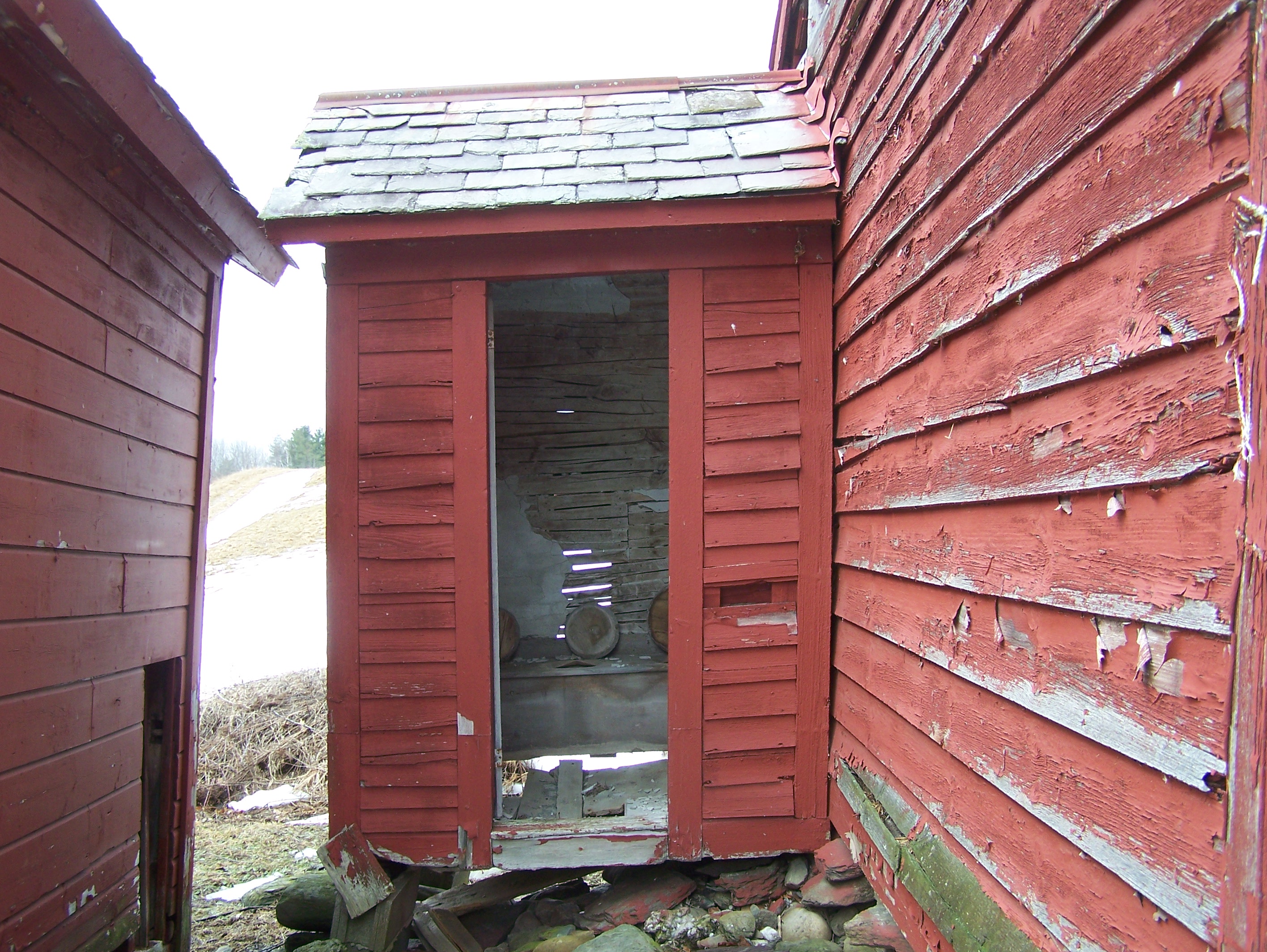
In my meanderings across New England to look at old barns, I often come across unexpected treasures. Antique outhouses fit that category. While there isn’t much market for a renovated timber frame outhouse or modernized backyard latrine, these outhouses were a basic necessity for everyone in the past!
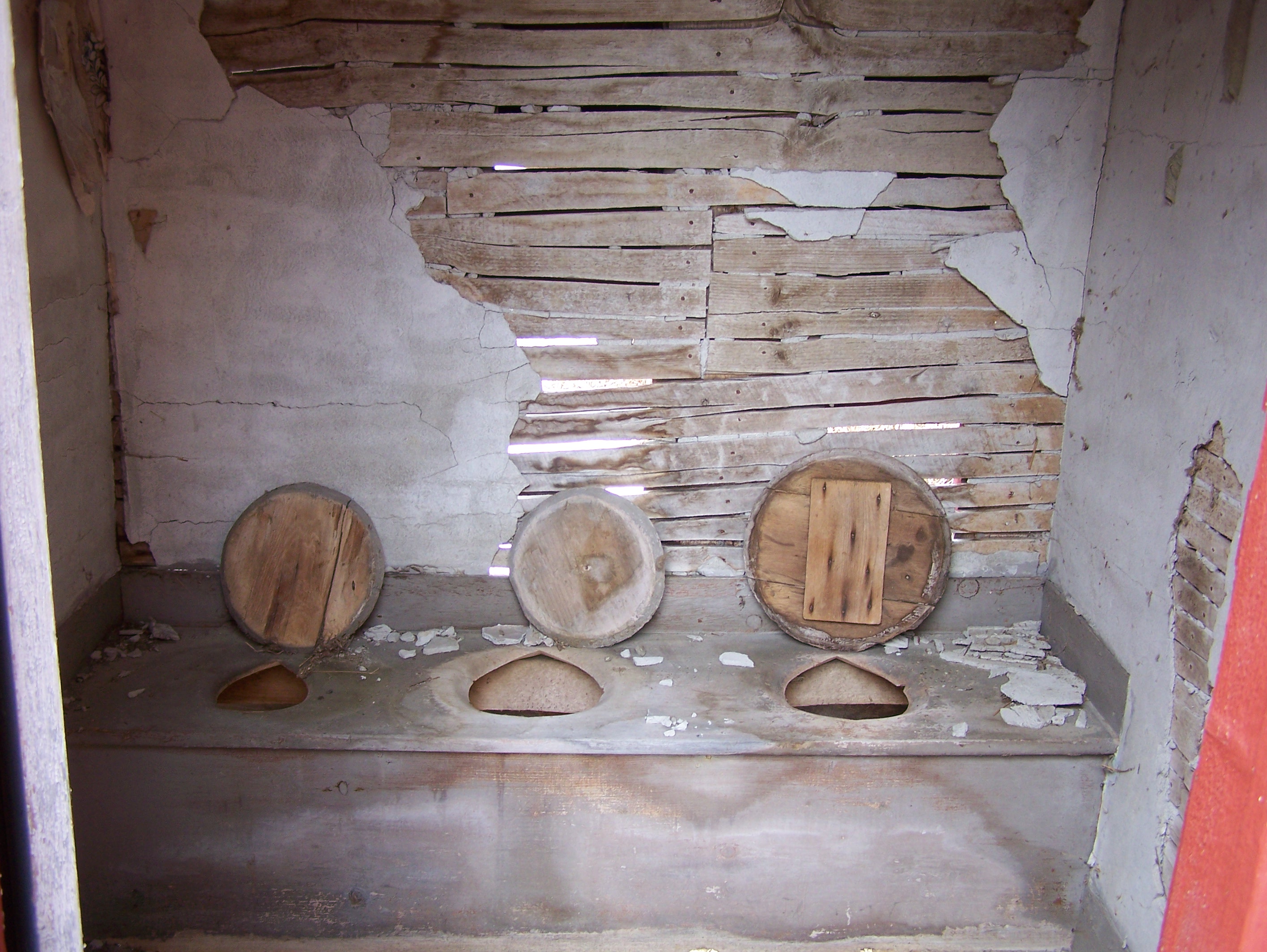
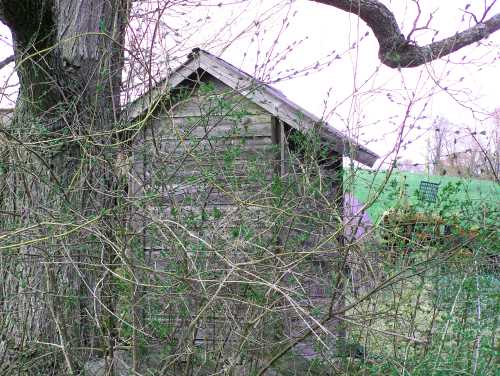
Once while looking at an historic barn in Wells, VT, I came across this grand specimen; perfect for the whole family to enjoy together.
Since I couldn’t very well take the commodes back home with me, I couldn’t resist taking a snap shot. This particular backyard bathroom stood approximately 100 feet from the house. Can you imagine how many clothes you’d have to put on in the winter to head out to the throne room?
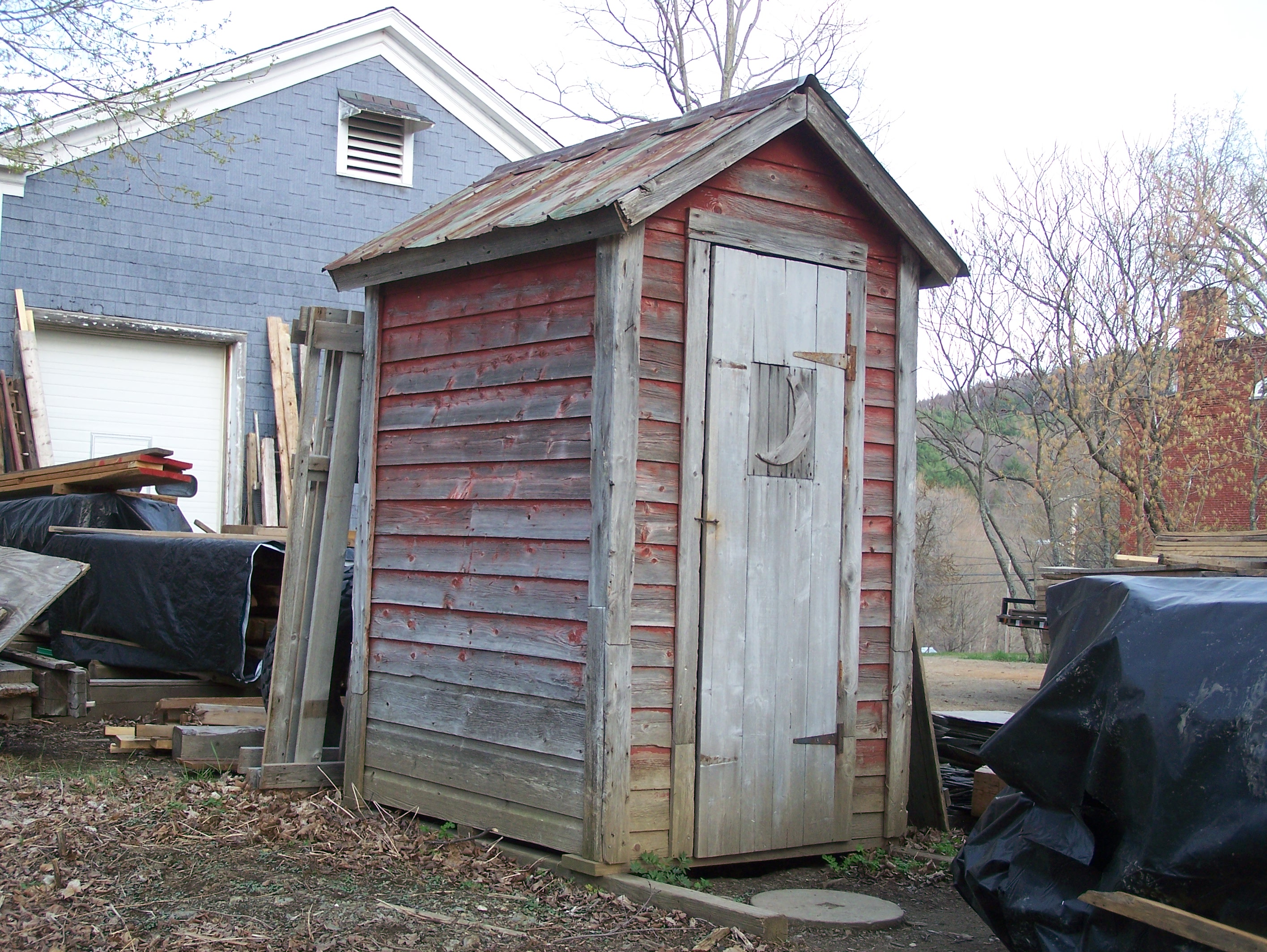
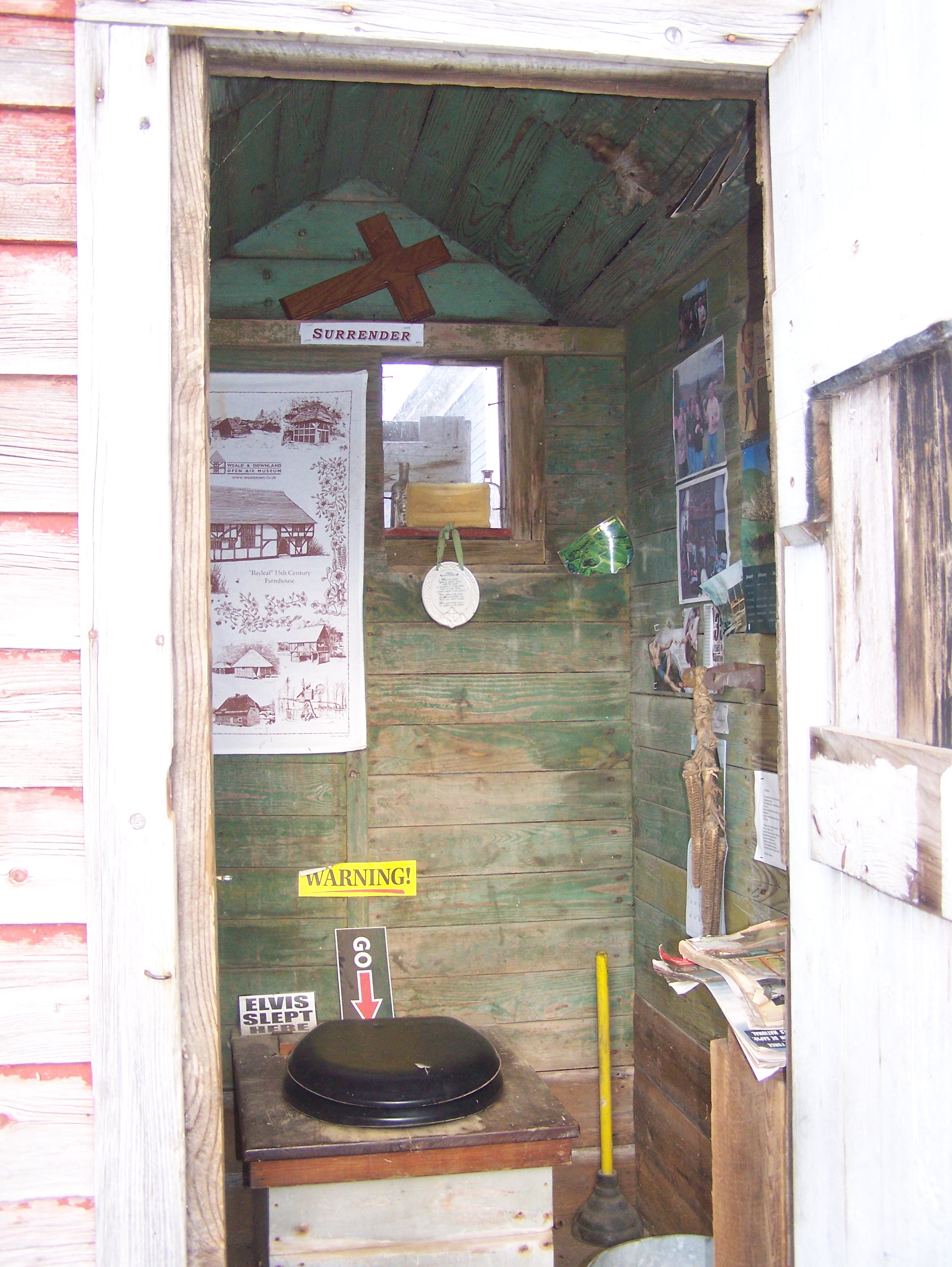
Below is an outhouse that came from Pawlet, Vermont and was built around 1900. It stood out back behind another old timber frame barn I came to evaluate. This was one well-appointed little stall. It even came with corn cobs to use in a pinch. And do they ever pinch!
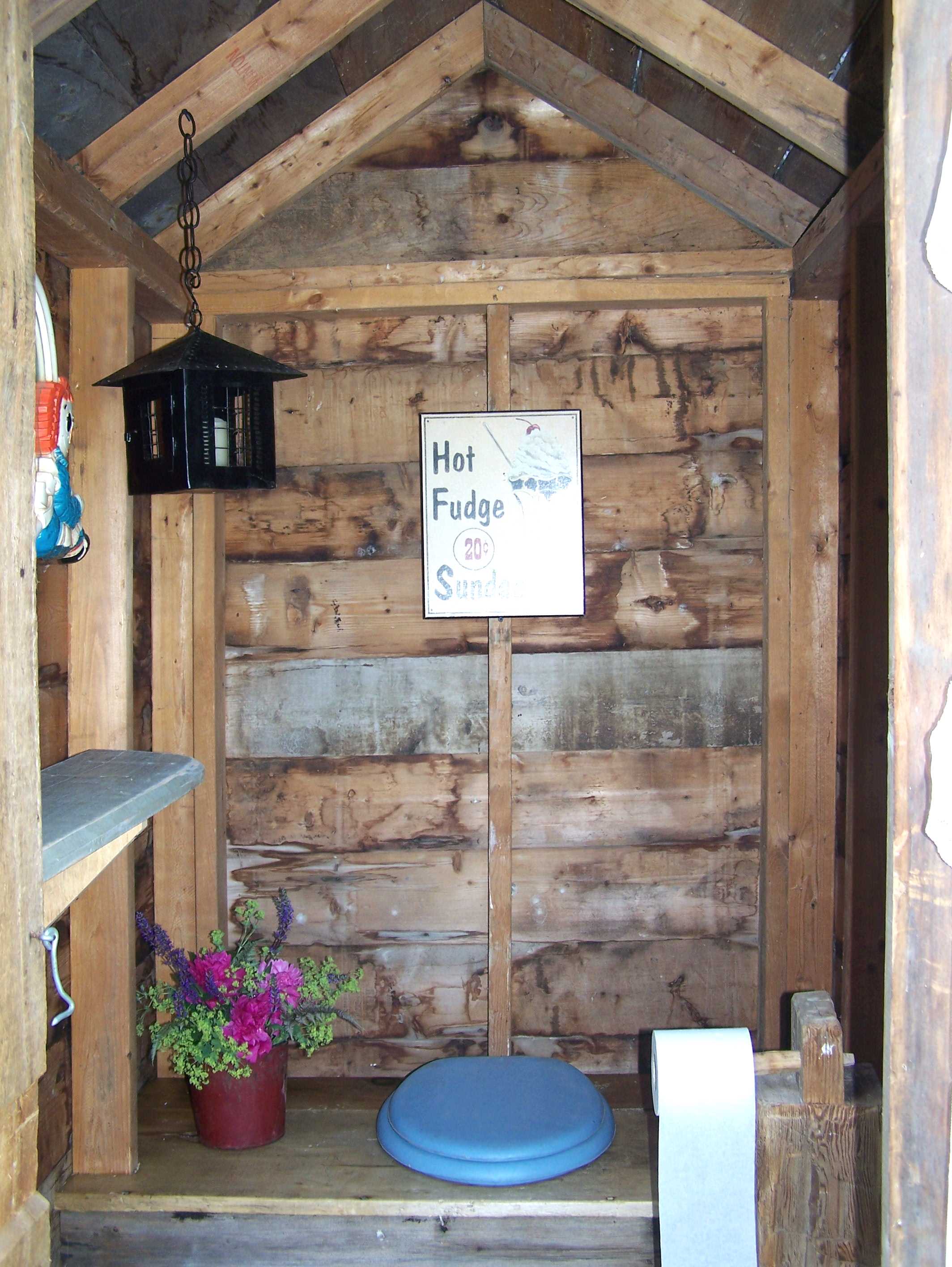
Below is a backyard beauty inspired by some of the “one holers” I’ve happened upon in my barn hunting. One of our daughters built it to accompany a timber frame cabin she constructed in our back field, with just a bit of help from ol’ Dad.
I like how she added a special feminine touch.
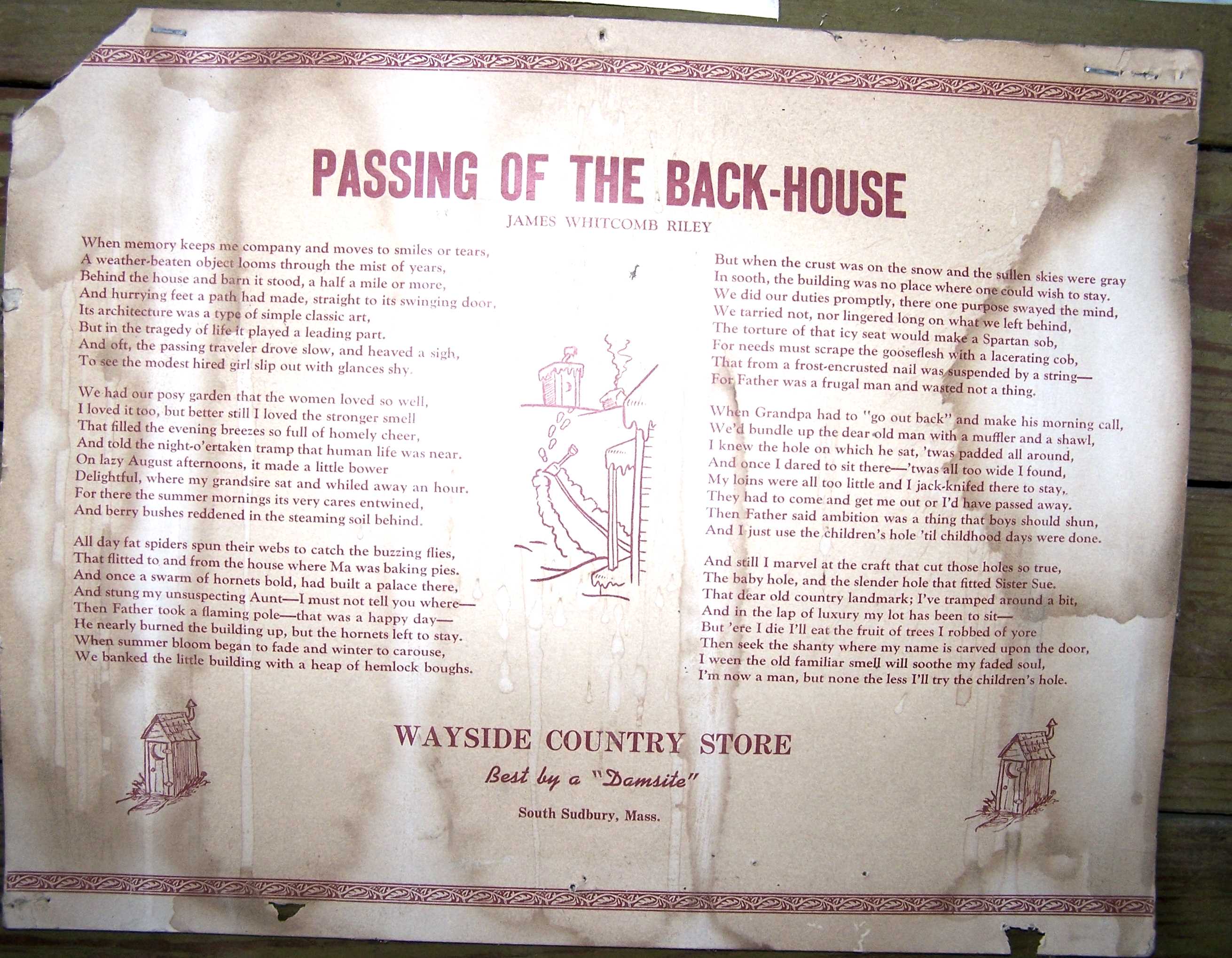
And now, while we’re on the topic, here’s a poem to ponder – “Passing of the Back-House,” by James Whitcomb Riley:
(You can click on the picture to enlarge the text, or go to the link).
If you are looking for a fine wooden outhouse (or regular timber frame house) made from the finest of Vermont restored wood, we can be your crew! Give me a call at 802.774.8972 or email Luke@greenmountaintimberframes.com.
Reading this in your email? For easier reading - Click here!
Today’s blog is written by a guest blogger and master carpenter, Luke Larson.
The 1780s Prohibition Barn
“My grandfather went to jail because of this barn.”
I was standing in the spacious interior of a beautiful and well-kept barn dating from the 1780s. “Is that so?” I asked, and the gentleman continued his story.
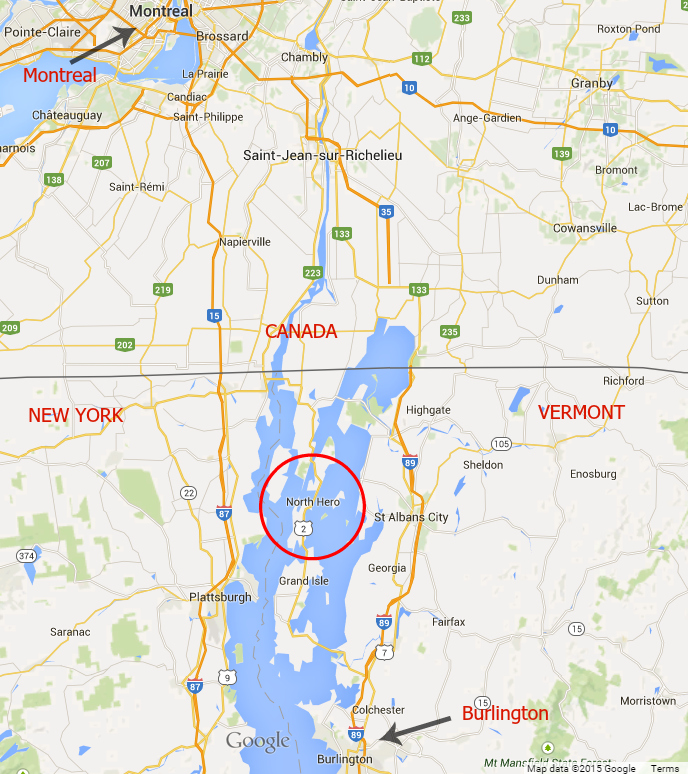
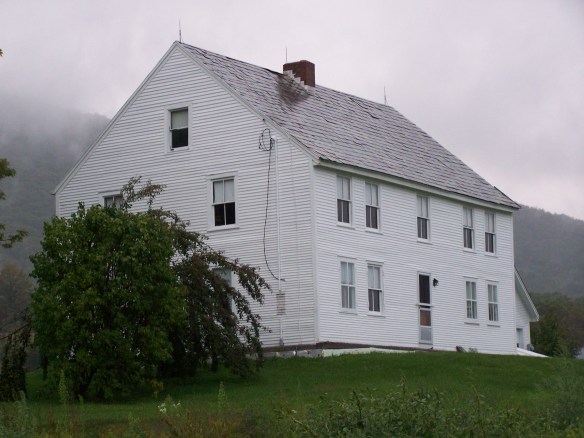
We were on the Lake Champlain island of North Hero, only about fifteen miles from the Canadian border with Vermont. I was there to look at the barn because the owner is considering selling it. I leaned against a twelve foot beauty of a hewn pine post as the story continued…
Prohibition lasted in the United States from 1920 until 1933. The manufacture and sale of alcohol was prohibited, which gave rise to a healthy black market with whiskey runners smuggling alcohol south from Canada. As the story goes, friends of the barn owner were involved in this trade and the authorities were hot on their tail. They sped a car full of liquor into the wide eve door of the barn and quickly threw hay down from the loft to conceal the vehicle and its clandestine contents. Unfortunately for my friend’s family, the cops discovered the car under the hay and the owner of the barn (this man’s grandfather) spent time in prison.
But year’s later the barn still stands, remembering those decades ago when it was used to smuggle liquor to Vermonters thirsting for the hard stuff!
Below is an interior photo of the Prohibition Barn. This would make an incredible loft living space!
Imagine the hay being hurriedly cast down from this loft to cover the contraband almost 100 years ago!
The Prohibition Barn was the second barn I was to visit on the island. The first barn, on my trip up north, was the Hero Barn and the two barns had a lot in common.
Both barns date from the time of the heroes for whom the Island was named: Green Mountain Boys, Ethan Allen and Ira Allen, among others. Incredibly, both barns are twenty-six feet wide by thirty-six feet long, and both have hand hewn chestnut braces. While it was common in that era to build barns with hand hewn vertical and horizontal timbers, I have come across only one other barn in my work where even the diagonal braces were hewn. It is a good clue as to the very early construction of these barns, and makes me wonder if both might have had the same builder.
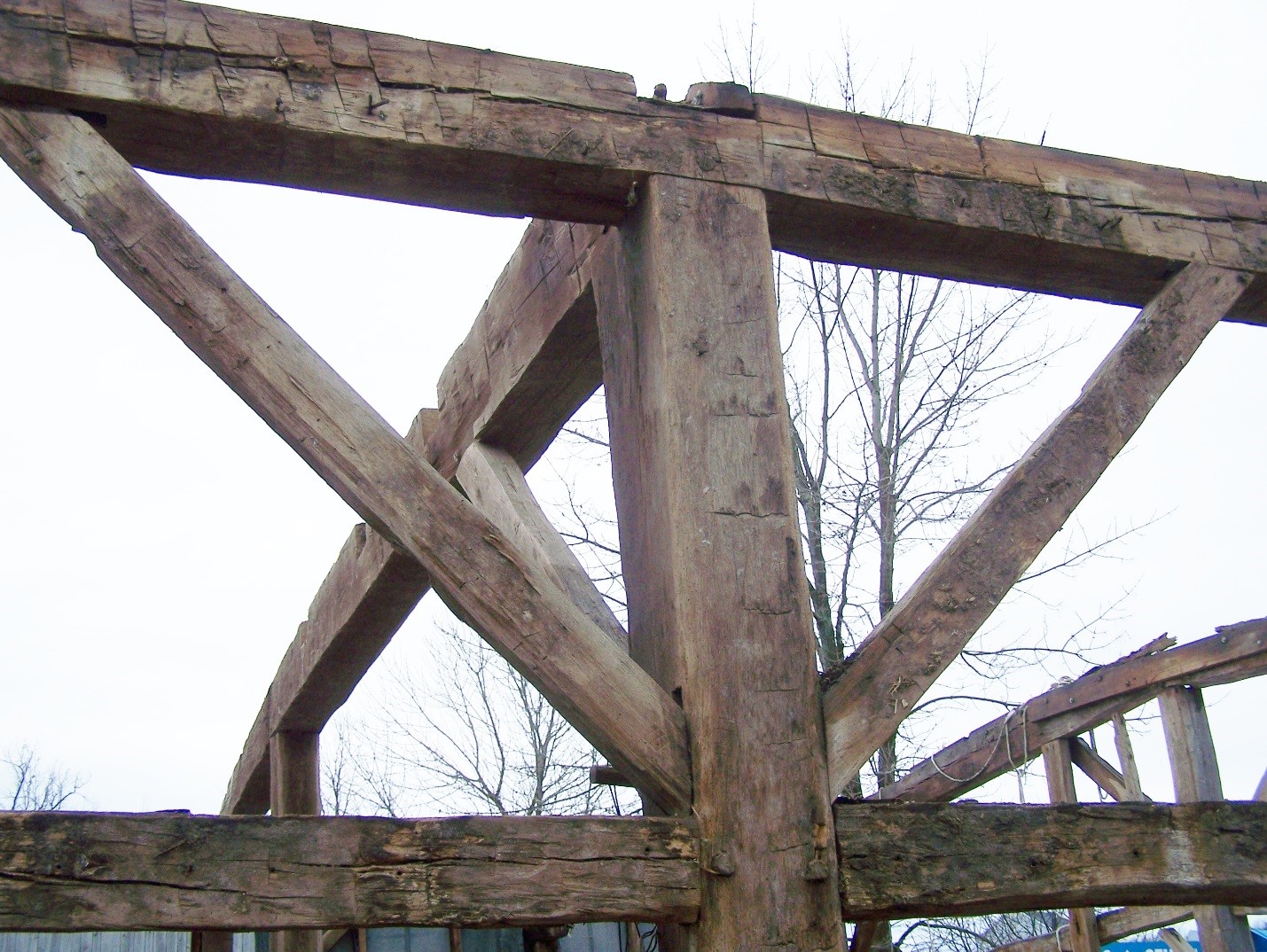
The Hero Barn – A Gunstock Timber Frame
I love the stories that barns can tell, and all the history engraved in them. The gunstock Hero Barn, a few miles south from the Prohibition Barn, has the skeleton of a very early log cabin just feet from the barn. As settlers moved north, they would have quickly erected a structure to live in while constructing the rest of the buildings.
It was the middle of December as a great crew and I carefully disassembled this barn frame, and I quickly understood why the original dwelling was only feet from the animal barn with a covered passage between the two! Oh, the wind it was a blowin’!
Here is a photo of the collapsed log house, with the barn behind it.
This Hero Barn, which I now have in stock, is a gunstock frame made with oak and American chestnut. The term “gunstock” refers to the solid oak posts which flare at the top, providing more strong wood for joinery.
This barn has a ridge beam, which is a thirty six foot American chestnut beam in perfect condition.
Notice how the gable rafters are braced to the ridge beam.
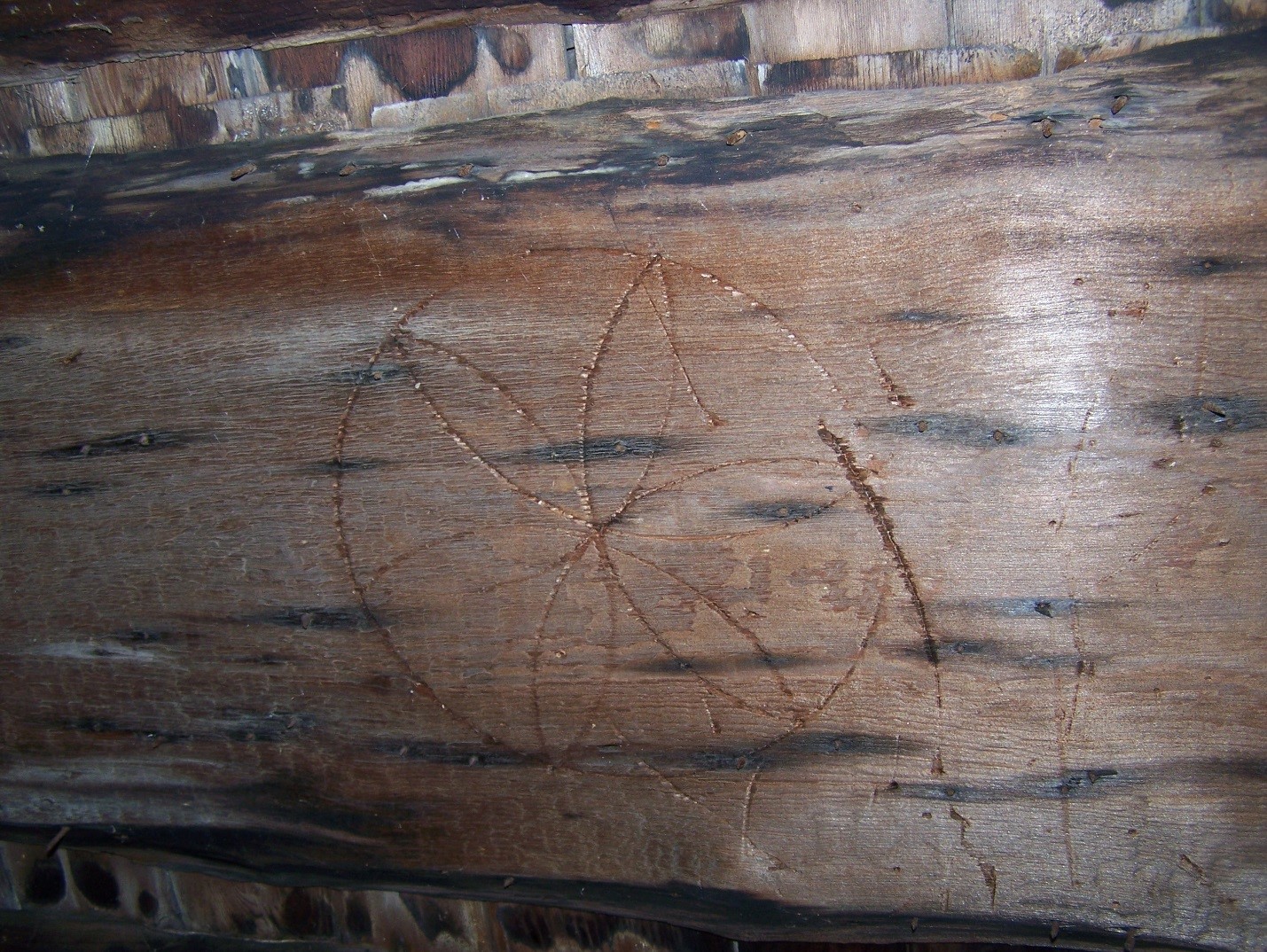
Below is a classic “signature” of the builders, a daisy wheel displayed top center on the roof boards. Elsewhere on this blog, you can read about the purposes of these daisy wheels. Notice that you can see the original cedar roof through the gap between the boards. The cedar was later covered with metal roofing.
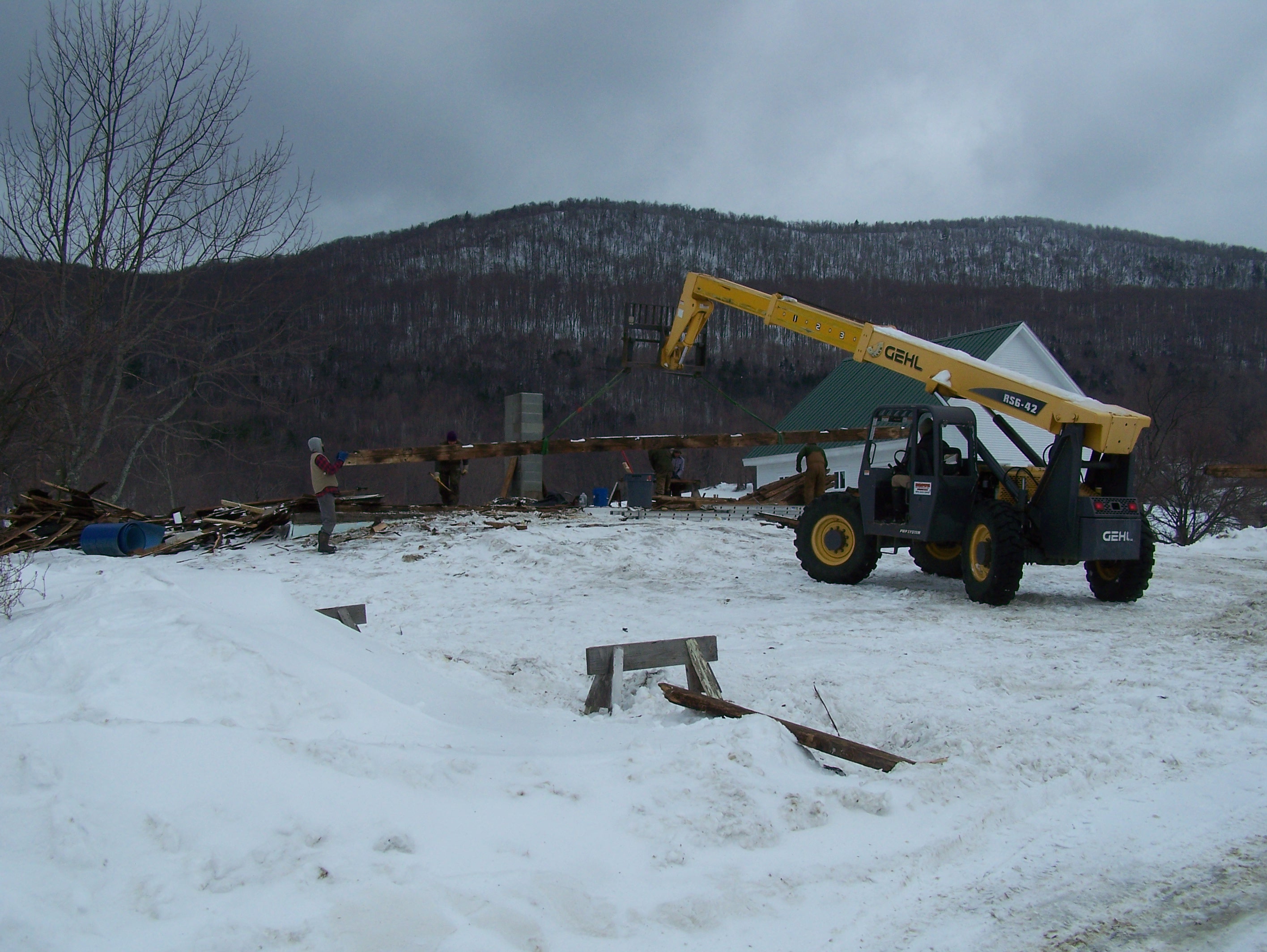
Here are a few photos of the process of taking down the Hero Barn:

The photo below shows the gunstock posts and strong chestnut girts. The far post in the photo has rot on the top. I have now acquired another hewn oak gunstock post which I will use for the repair.
Below is the weathered but strong collar tie on a gable rafter pair. The quality of joinery on this barn speaks to me of heroes perhaps less well known than the Allen boys, who put such quality craftsmanship into these two barns on the island.
After careful washing and restoration, this barn will be ready to tell its stories to a new family, and even begin to absorb new tales into its weathered and long history.
——
A tremendous thanks to Luke of Larson Carpentry for sharing this with us!
Contact Green Mountain Timber Frames if you are interested in learning more about either the Prohibition Barn Frame or the Hero Barn!
E: Luke@greenmountaintimberframes.com
P: 802.774.8972
You can read another guest post from Luke when he shared with us the details of a Gambrel barn home in Danby, Vermont.
Reading this in your email? For a better view of the blog – click here!
Mud Season – the bitter/sweet time of year.
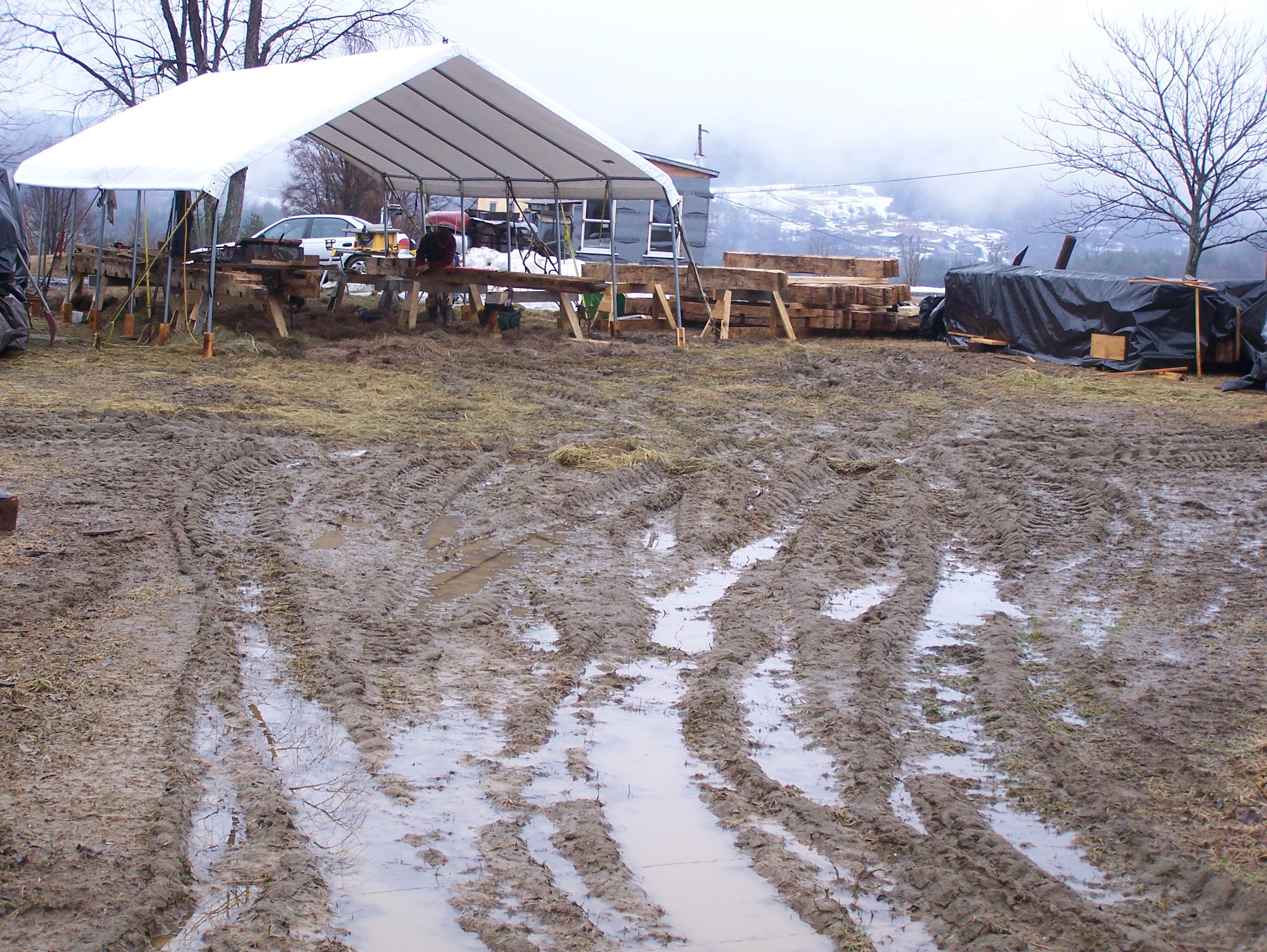
While the temperatures have at long last inched their way above the zero mark, here in rural Vermont the ground is still solid. Timber framing in the famous mud of New England’s spring beats the challenge of working in snow squalls and sub-zero temps, but it’s still not for the faint of heart!
Sure, our winter coats and work gloves have been shed but now we must muddle through our work area.
As more snow melts, the damp ground slowly releases the grip of winter, churning out a soft, murky surface under our feet that you can sink into up to the ankles.
Construction continues nonetheless, so we throw down a carpet of hay to make the work area easier to traverse. 
There is, of course, a wonderful silver lining. Not only is old man winter behind us, but best of all, mud season means the maple sap is flowing! Cold nights and warm days bring the sweetness of spring.
Reading this in your email? For a better view of the blog – click here!
How do you dismantle a timber frame for restoration?
Here’s an overview of the process:
Going…
Going…
Going…
GONE!
Thanks to all of your help and support, this timber frame from Tinmouth, VT is now being restored at the Green Mountain Timber Frames workshop in Middletown Springs.
After carefully skinned the old timbered house, we took it apart, timber by timber, making sure to label meticulously along the way. Over the next two months, we will professionally restore the timbers, before reassembling the frame in New York. Look forward to the results in late summer, when we re-erect these historic beams for another 235 years! In the mean time, we hope you will stay tuned with our blog!
Reading this in your email? For a better view of the blog - click here!
A few weeks back we wrote about this beautiful colonial American barn home that was
about to be destroyed.

Now, just two months later, I am pleased to share the great news that we have found a new owner for the Hod Hepburn house.
It’s hard to describe how grateful I am – how thrilling it is to know that there are others out there who share my passion for history and who are willing to invest in saving these beautiful pieces of America’s past.
If it wasn’t for the power of modern technology, and the wide reach of this very blog, I am certain that this house, built originally in 1780, would now be nothing more than rubble.
The house was built originally in Tinmouth VT but will be reassembled and restored in New York.
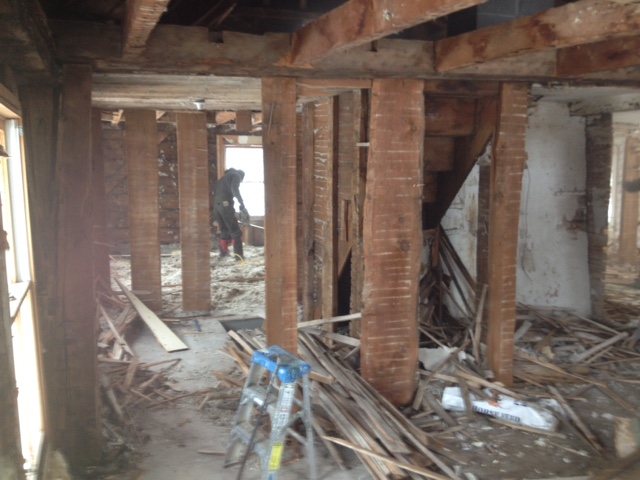
Despite the cold weather and many feet of snow, we are already moving forward on dismantling the frame. The first step is to clean out the centuries of dirt, dust and artifacts from the large barn home. Here’s a glimpse of what the interior looked like before we got started:
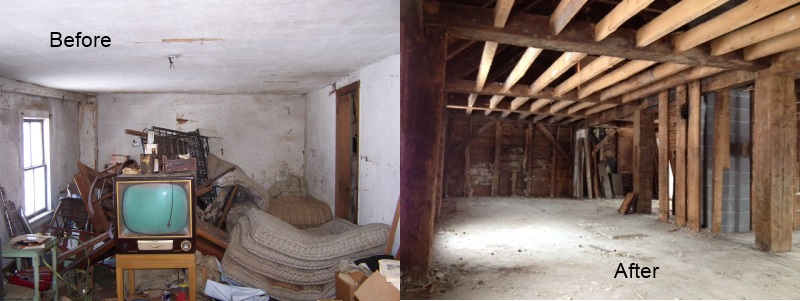
We’ve spent the last week cleaning up the house and opening up the plastered walls. This before and after shot will give you a good sense of what I mean:
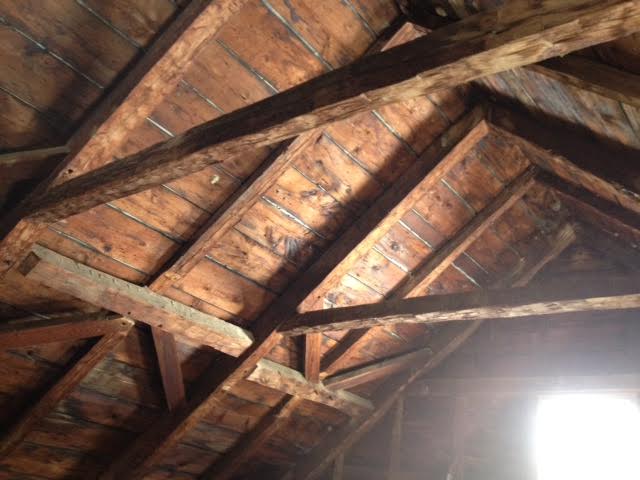
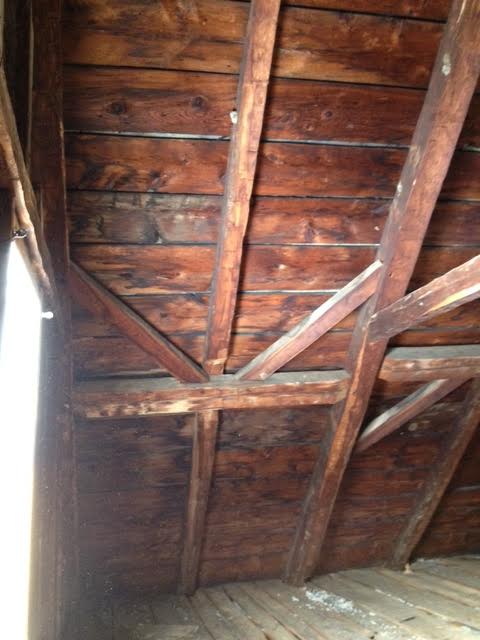
Below you can see the rear view, before and after. Try to ignore the tar paper and note the post medieval roof system!
Once “muck-out” is complete, we will move on to labeling all of the timbers and carefully removing them. We will restore each of the hand hewn beams at our local workshop. From there, we will ship the frame off to New York where we will reassemble the restored frame.
Below are some videos of the inside of the house. In this first one, we take a walk through the rooms of the home and see all of the treasures left behind from decades ago. There’s also an unusual, small stairway:
In this video, you can see the second floor, post-dismantling:
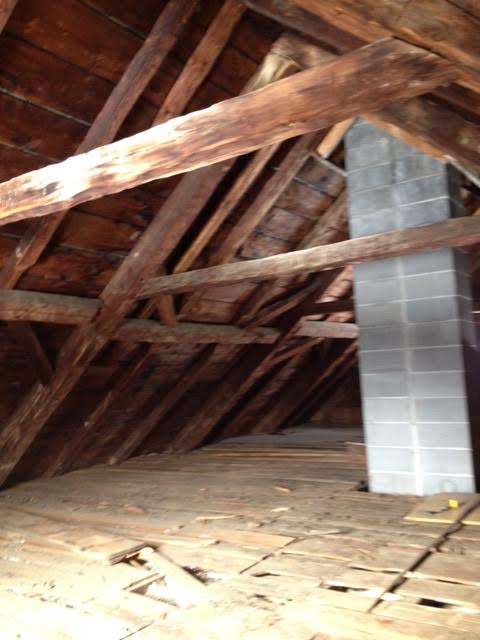
Check out the clip below to see how the attic looked before dismantling began.
And here’s the spectacular view from the roof, sans roof boards.
Thank you again for helping us save this post and beam house!
Know of another barn in need of saving? Looking for your own historic barn to call home? Contact us! We’d love to help.
Reading this in your email? For a better view of the blog - click here!
This winter has not been an easy one here in New England, even for those of us who have lived in the cold north for many decades. It seems like each weekend has brought us a new snow storm, and Monday I woke up to this:
Nonetheless, there are historic timber frames like this one in need of saving and the work continues, despite the bitter cold. This week, we are busy dismantling the Tinmouth timber frame. (That’s right – thanks to the help of my dedicated blog-fans, we were able to find a new owner and save the old barn home from demolition!)
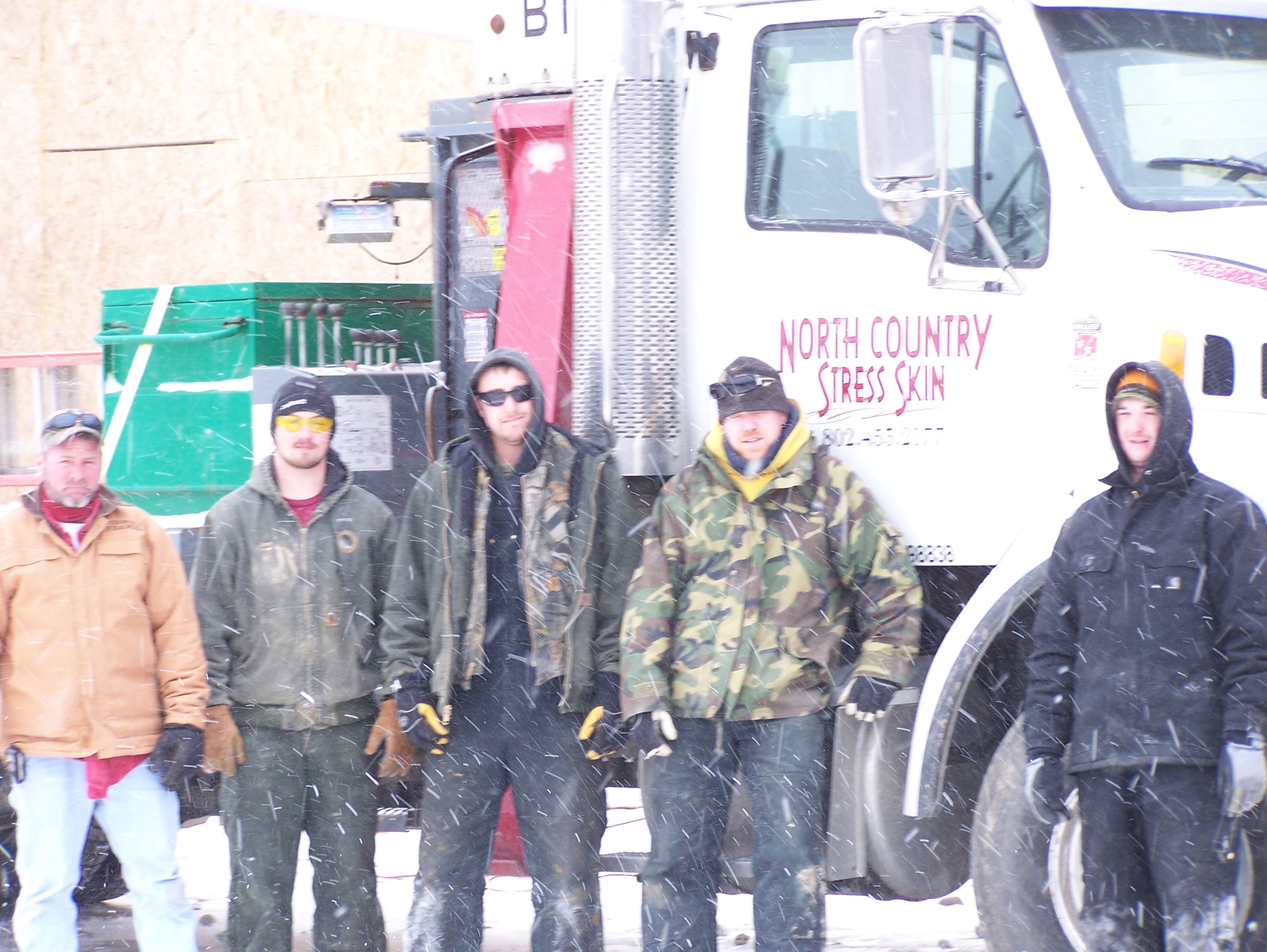
While I’m not one to complain, the truth is that everything about winter work is either hard or less hard, never easy. But you can’t let ole man winter beat you down, so you beat your own body up and keep the project moving. Luckily – I’ve got a dedicated, hard working team on board to help with the work!
A hearty crew, look very happy, huh! There’s no doubt about it – working as a group of hearty souls allows you to get through the day, even if we do dream of St. John V.I. this coming April and conjure up images of the beach as we toil!
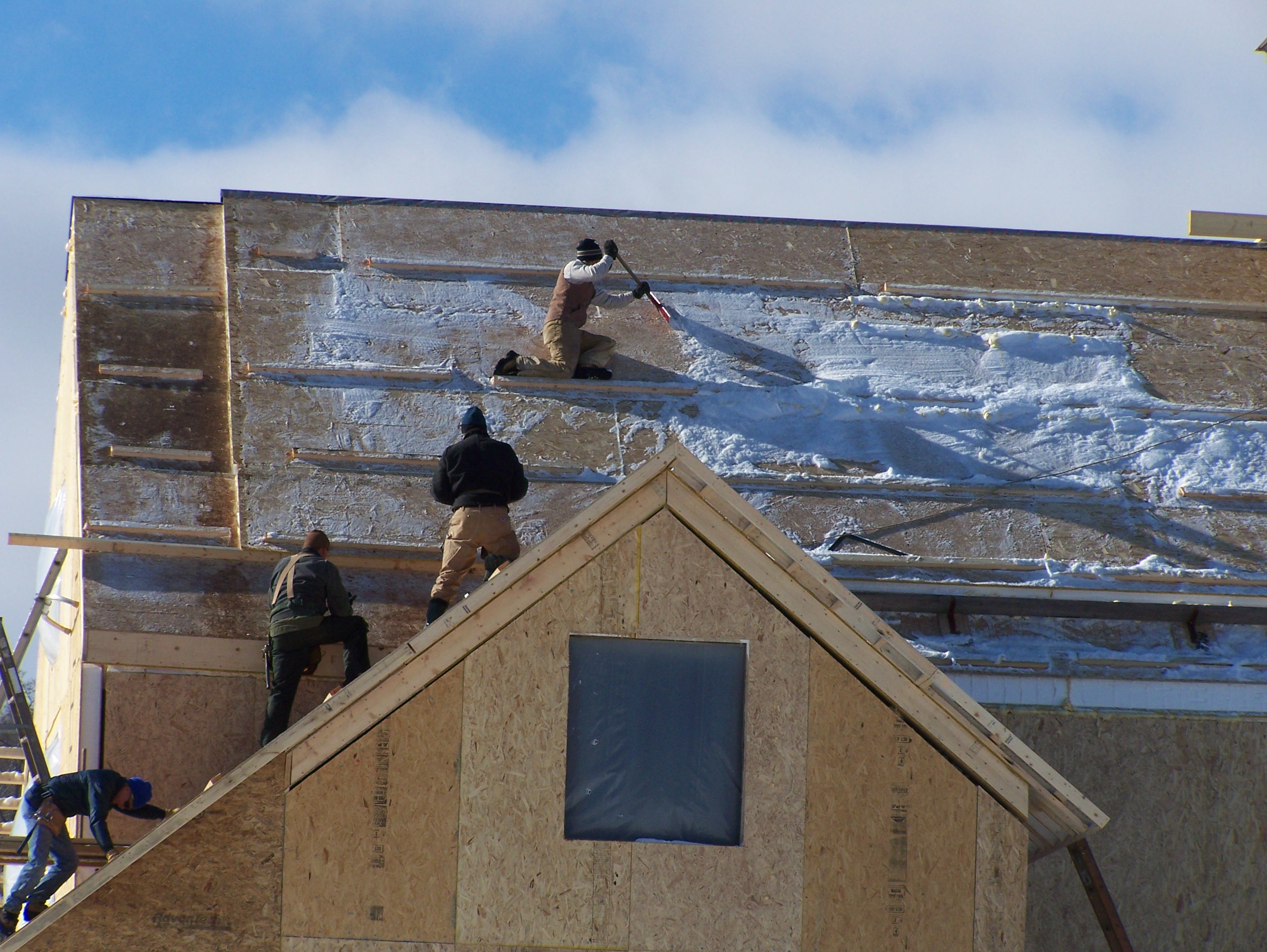
Often 2 hours a day are spent removing snow to get at what you are working. Here we are clearing the roof on a Manchester, VT barn home.
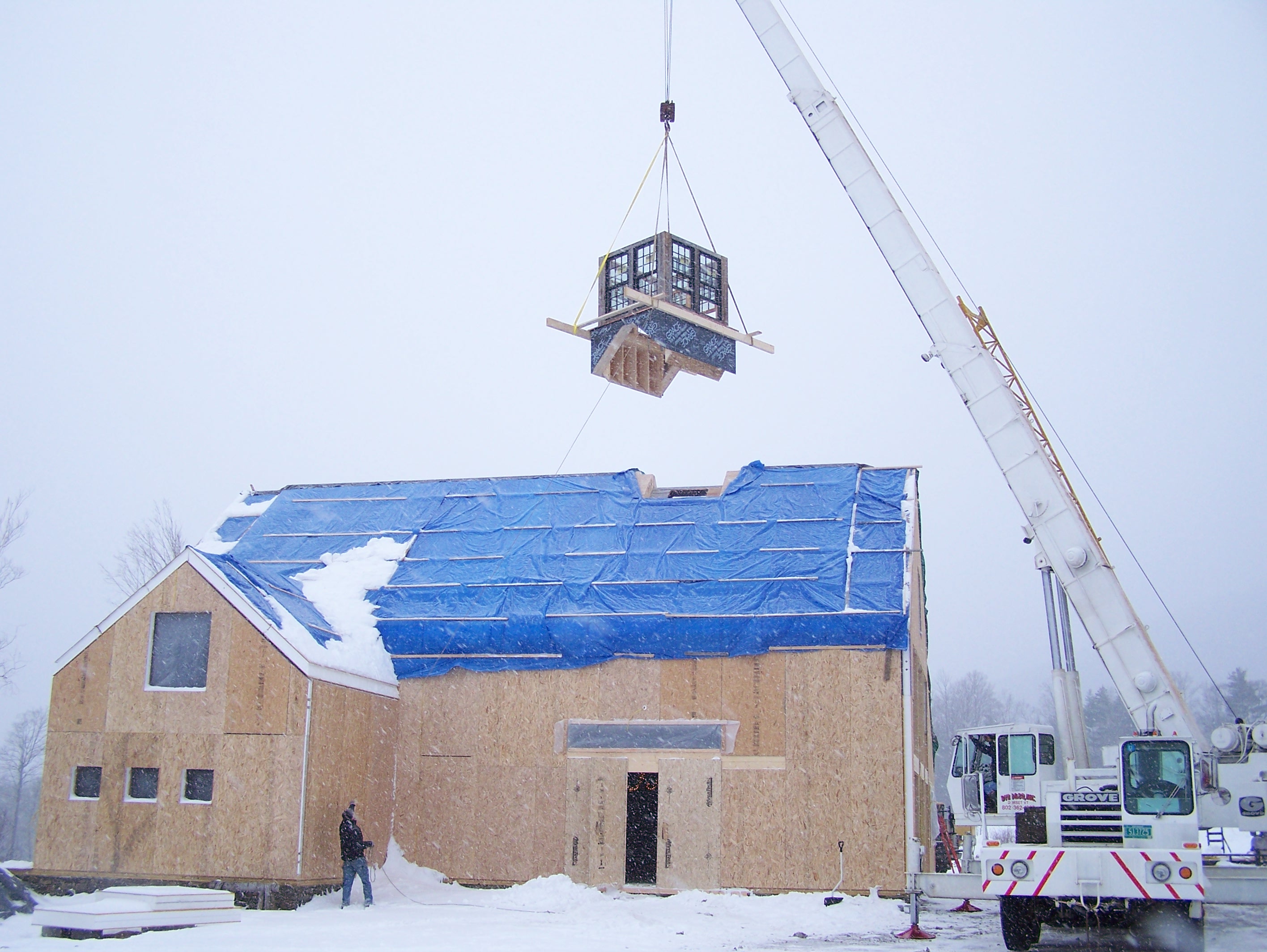
And this is a picture from a few years back, when we set a cupola in the midst of a snow squall…
Assembling wall sections in the snow is always an extra challenge.
This past week, when temperatures were stuck around the zero line (and below), my son in law and I stayed warm in my “toasty” 40 degree shop. (Yes, that’s Fahrenheit.) It’s simply too cold to be outside, so we carry each of the timbers inside to restore a wall section, one bent at a time.
My workshop itself is a 1806 Baptist church that was turned into a potato storage barn in 1954. It’s very well insulated, for which I am grateful, so we are able to keep the barn restoration project moving forward.
Winter Timber Framing – The Bottom Line
Your toes freeze, your fingers hurt, you wonder why you chose Vermont of all places to settle…Because -25 is no joke and there is not much happy about these blood-freezing temps unless you are an ice fisherman. Those guys like to drive their trucks out to their ice shanties and huddle around a mini heater with plenty of ales for what ales ya.
But there is an upside! While I work, a collection of tiny icicles form on my mustache, so I always have plenty of water to drink during the day! (Just have to chew it a bit…)