All in a Day’s Work

Reading this in your email? For easier reading – Click here.

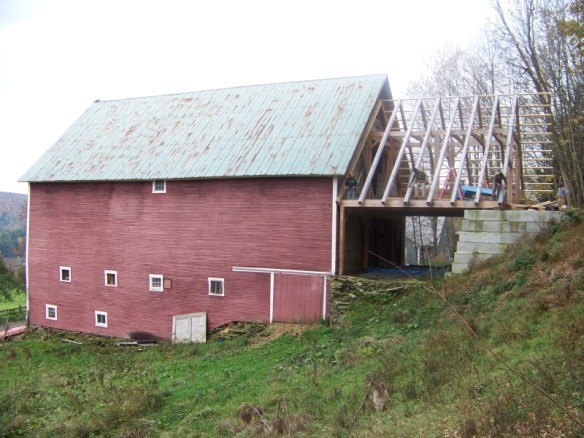
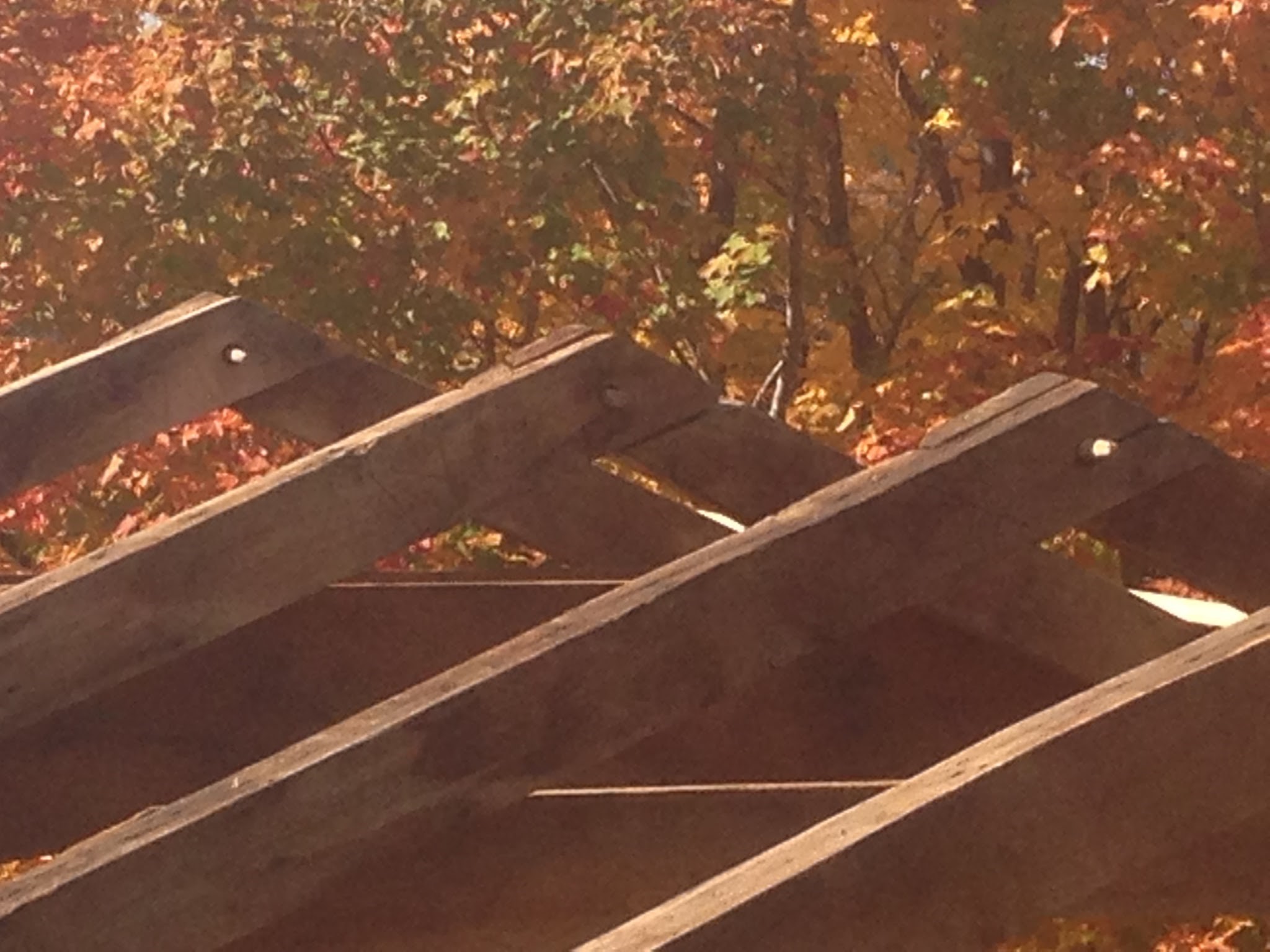
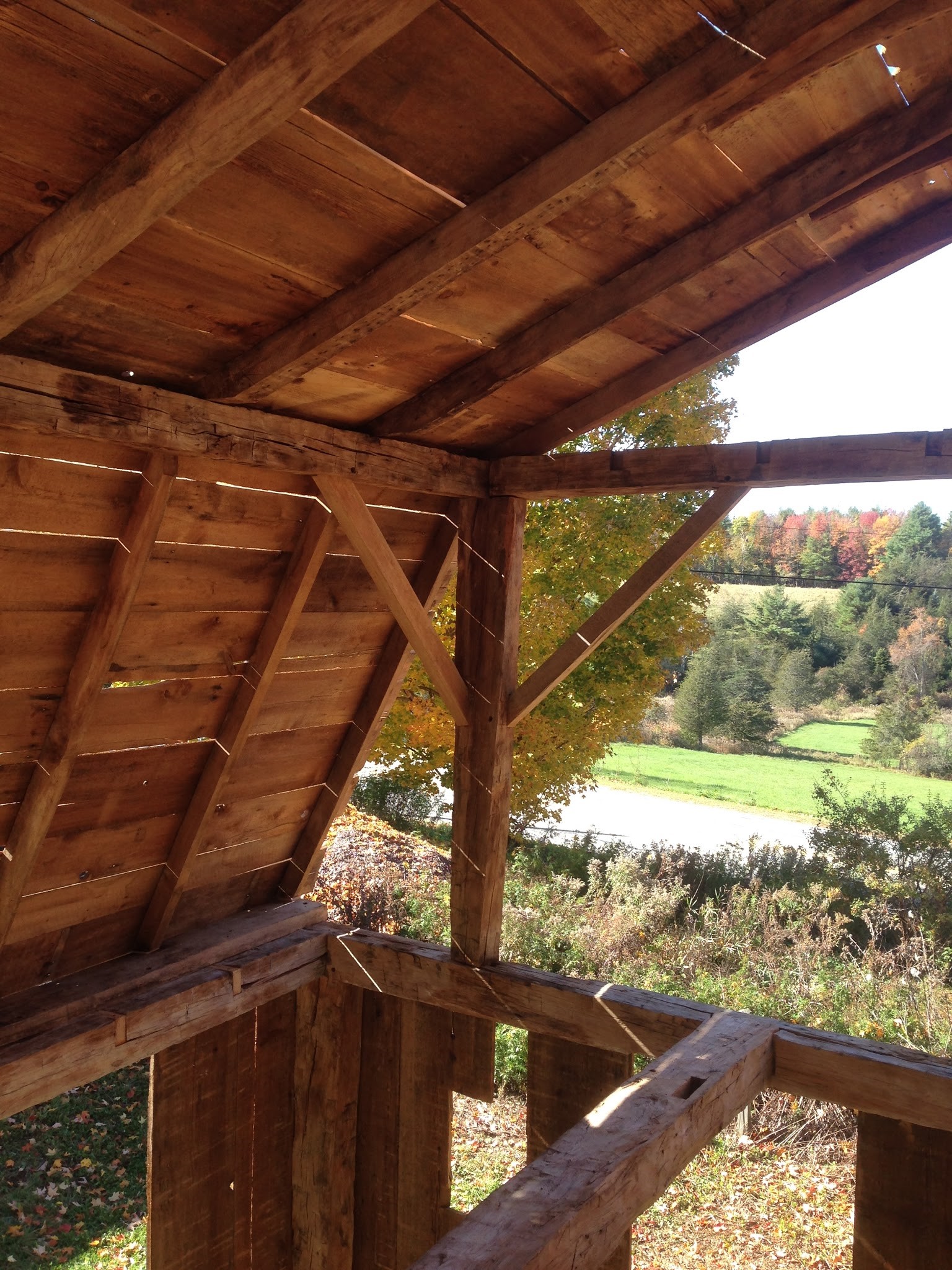
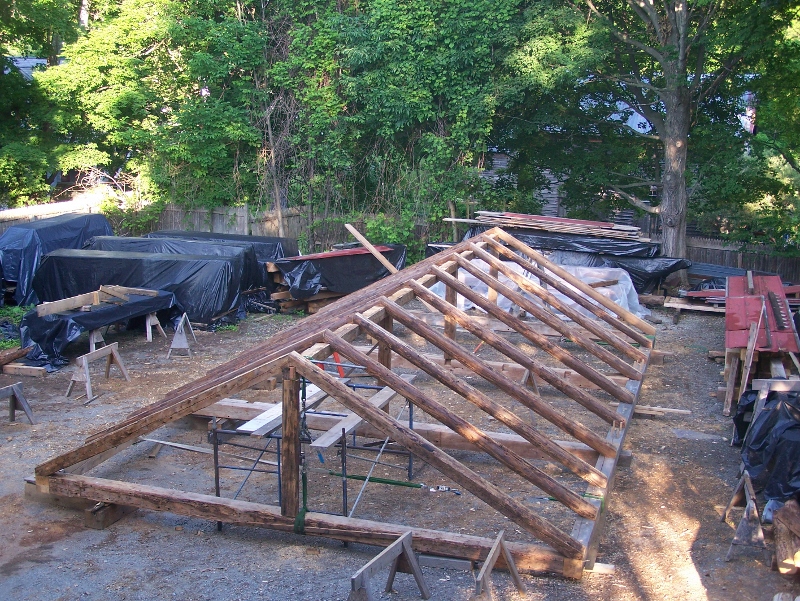
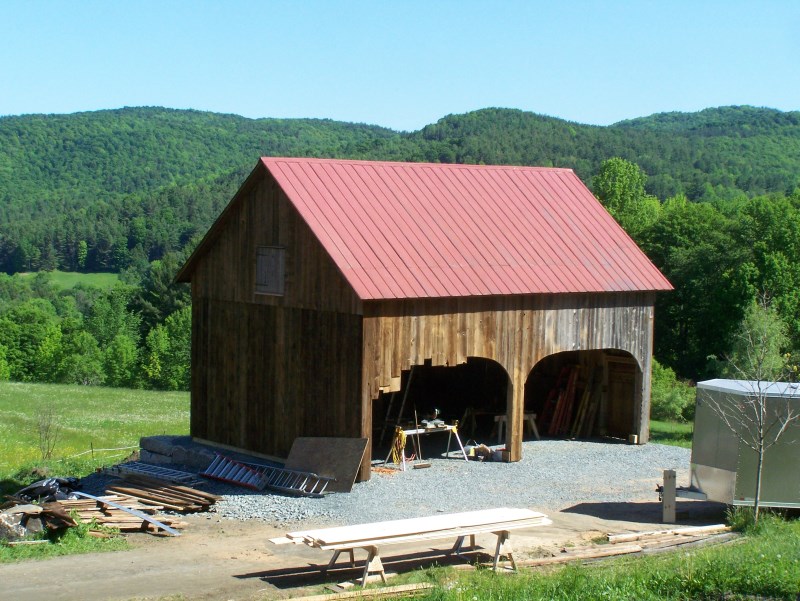
It’s amazing what you can accomplish in one day’s work! With a good team, beautiful cloudy Vermont skies and some hard work, we managed to install a new metal roof on this timber frame barn addition in ten hours with finish trim.

Timber frame_post and beams in Vermont_Green Mountain Timber Frames_8am

This particular timbered bridge addition was built by another crew, but since they weren’t available to complete the roof, we were asked to do the job. As a lover of all things timber, we couldn’t bear to see this new frame open to the Vermont elements any longer.

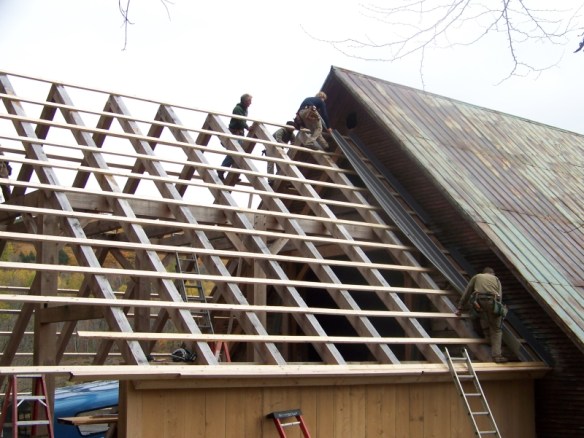
Our crew of seven left home at 6 am for the two hour drive to eastern VT. Starting with the raw frame at 8 am, we installed 2×4 nailers.

Working on roof of historic timber frame_green mountain timber frames_vermont

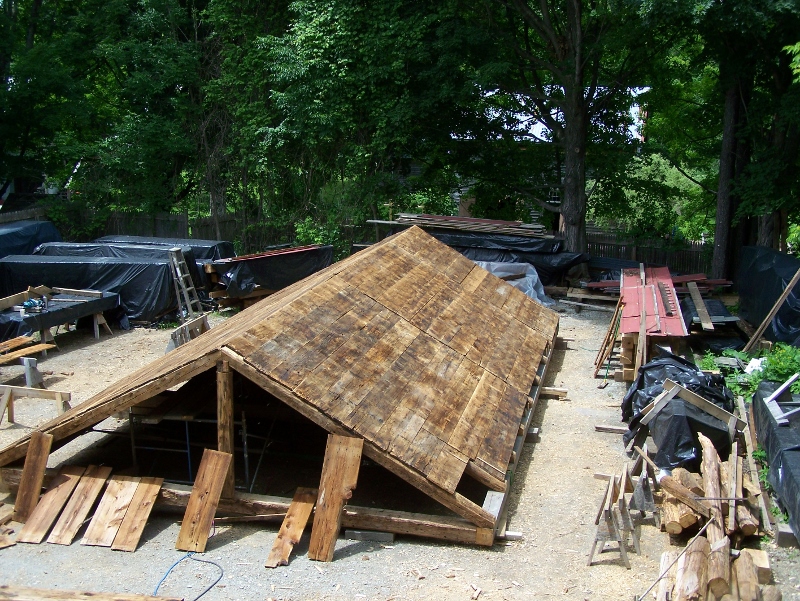
Then, we did the necessary finish on the roof trim and added flashing to the existing barn. Next, we screwed metal roofing to the 2×4 nailers.

applying roof boards_green mountain timber frames_custom barn homes

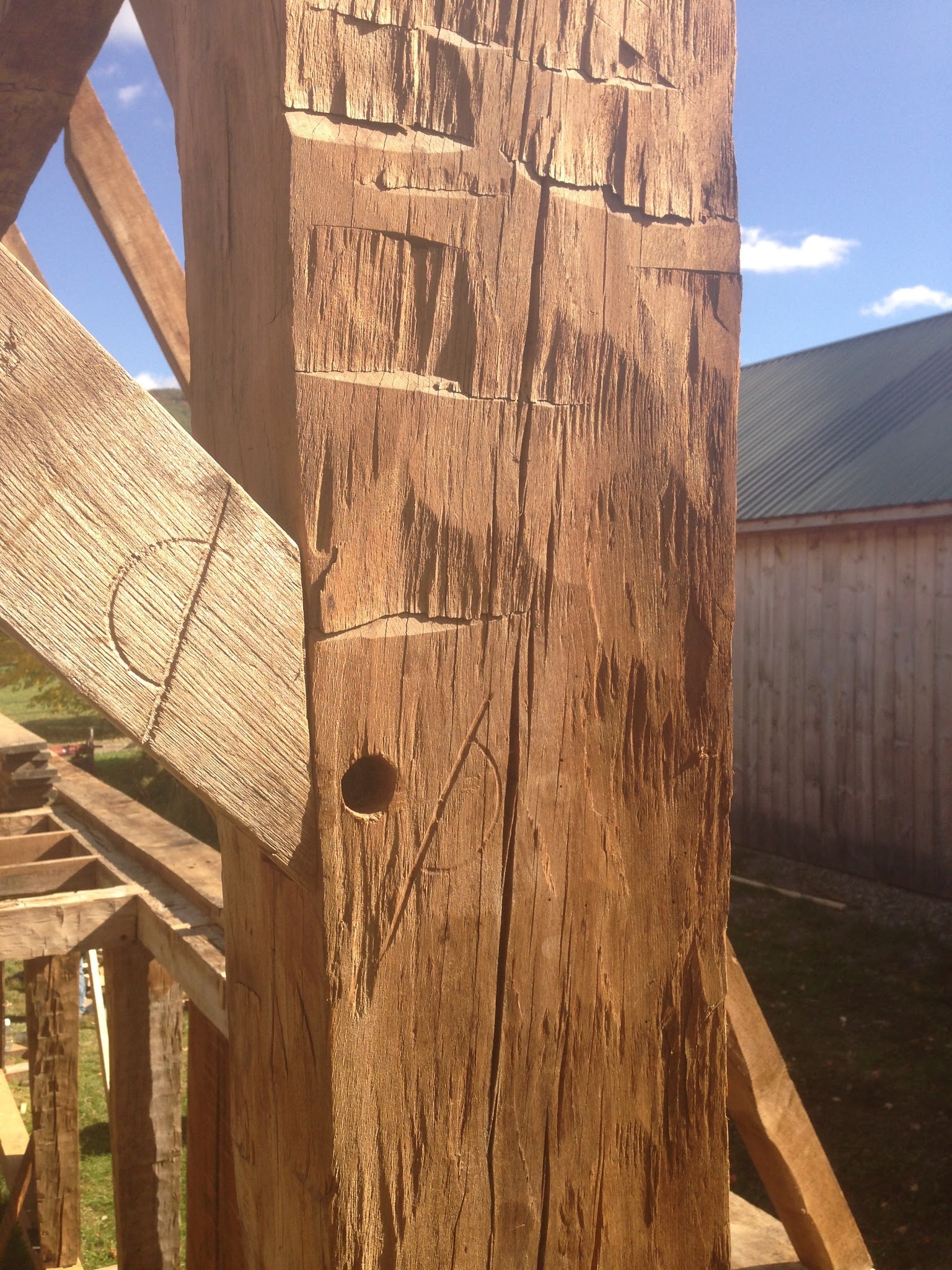
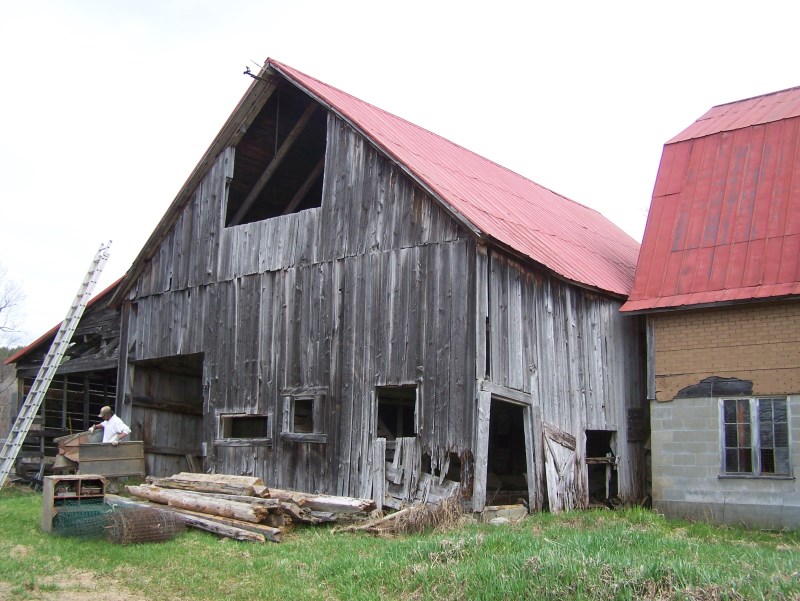
This particular barn has a beautiful gable window that adds an elegance to the building. The original builders did fine work. We believe the barn was built in the 1870s.
Gable Barn Window on Restored Timber Frame_Green Mountain Timber Frames

Closeup of Gable Barn window_Barn Restoration_green mountain timber frames

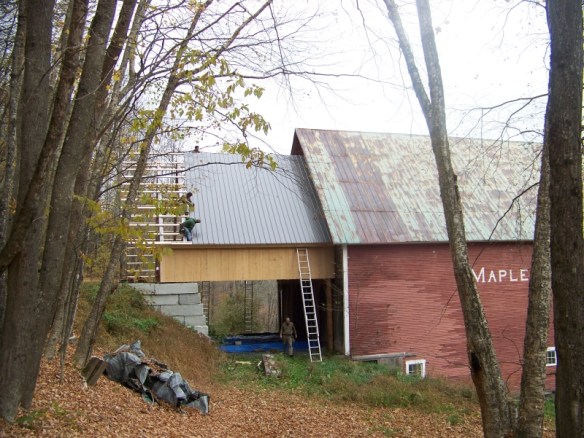
With the new roof safely and securely in place, the owner is relieved the structure is finally covered. We, too, are pleased that this rugged new timber frame isn’t taking on water anymore. Best of all, it’s a 40-year roof, so none of us will have to come back. I don’t think I’ll be doing roofs into my 11th decade!

If you drive by Maple Avenue Farm in the back hills of Vermont, you can see the new roof for yourself. There are not many four-story bank barns left in Vermont. Especially with a timber frame bridge to access the upper levels of this 1870s former dairy barn.

new roof on restored timber frame_post and beam architecture_green mountain timber framesMeanwhile, we’re always happy to take on another project! Looking for a timber framer in Vermont? Give us a call at 802.774.8972!

1790s Gambrel House Restored and Available for Sale!

Reading this in your email? For easier reading – Click here.

Two years ago, we began taking down a gambrel house from the 1790s. (We blogged about it here and here.) I am delighted to report that we have now completed the restoration of this rugged old timber frame! After the passage of that much time, it is all the more satisfying to be putting the timber joints, so masterfully crafted over two hundred years ago, back together as they are meant to be!

Here is what the house looked like when we first heard about it:

1790 Gambrel House_Historic_Green Mountain Timber FramesWhy did we take on this project?

The house was on the docket to be burned down by the local fire department. We are so grateful to the fire fighter who realized how old the house was and contacted Green Mountain Timber Frames! We just couldn’t stand to let it be destroyed.

A couple hundred hours into the process of gutting the house, which included filling two giant dumpsters with insulation, vinyl siding, sheet rock, plaster, and much other “sundry”, our hearts were sinking. But then we finally started to see the original frame. Here is the view after approximately 650 cold winter hours of gutting:

Original 1790 timber frameAfter a couple hundred hours more, we had the frame down and stored carefully under tarps. Now the frame is once again standing, this time in restored condition.

Restored historic timber_Vermont_Green Mountain Timber Frame_Larson FarmWhat does it mean that we have restored the frame?

The first step was to power wash each individual beam, brace, and board, as well as pull thousands of nails out of the timbers. Next, we went over each beam looking for fatigued areas that needed attention. Below is a “English scarf joint,” an incredibly strong joint that we used to replace the bottom of a post.

British Scarf Joint_Green Mountain Timber Frame_Larson FarmRestoration – with painstaking attention to details

The photo below shows a careful repair we did to one of the five beams that measure thirty-eight feet long. The beam had a very “tired” spot over this post due to a leak in the roof that must have persisted for years. We carefully removed soft areas, and replaced them with hand hewn material. Good for another 200 years! We were able to use materials from the original carrying sills of the house to make the repairs on the posts and beams.

Repaired Wooden Beam_Restored Timber Frame_Green Mountain Timber Frame_Larson FarmAs part of the restoration, we laid out each cross-section of the building, called “bents” and “plate walls,” and checked all the joints for tightness and the geometry for squareness. We built new rafters out of oak to replace some that had been too far gone for re-use.

In the following photo, we are laying out all the original wall boards on the ground to check our labeling system as we put the boards back in their original location.

Original Historic Wall Boards_Green Mountain Timber Frame_Larson FarmThe plaster lines from the eighteenth century construction even lined up on the interior! Many of the sheathing boards are over twenty inches wide!

20 inch wide Sheating BoardsWhy have we put this frame up on temporary sills?

Often, we are able to locate a vintage barn and keep it standing until a new owner has a chance to look at it and decide if it will meet the needs and dreams for a new house or addition. In some cases, we have to take the frame down immediately, as in the case of this gambrel in order to avoid its date with the fire department!

With gratitude to Larson Farm, where timber framer Luke Larson grew up, we are able to put the frame up both to check our work and to have it up so that anyone considering using it can walk through it and visualize what it can become.

Here are some highlights of this particular frame:

  • Pre-1800s and framed with American Chestnut, Beech, Oak, and Elm.
  • Gunstock frame on both floors! This means the posts grow in width towards the tops.
  • The gambrel profile creates a 22’x38′ wide open living space on the second floor. First floor is 28’x38′.
  • Original arched collar ties.
  • Original wide pine flooring boards are available.

The October brilliance of color in Vermont has made it a pleasure to work on this frame over the past weeks! This frame is currently available for purchase, and is now ready to stand strong and true again in a new location.

Historic Barn Frame for Sale_ Green Mountain Timber Frame_Larson Farm

11_Inside view of Gambrel Roof_Green Mountain Timber Frame_Larson FarmWe wish to thank the Larson Farm for their generous loan of space to put the frame up. Please visit the frame on its current location. You can learn more about the farm and its fantastic vision on the Larson Farm website or on Facebook.

This frame could be your home… 

If you are interested in turning this beautiful gambrel frame into your own historic property, learn more on our website or contact us at 802.774.8972 or Luke@GreenMountainTimberFrames.com.

Coming up next…

Stay tuned for a future blog on the amazing and artistic labeling system on this gambrel frame!

Labeling System_Restored historic gambrel home_Vermont_Green Mountain Timber Frame_Luke Larson Farm

Labeling System

GMTF Takes Timber Framing to the Water: The Boat House Project

.Reading this in your email? For easier reading – Click here.

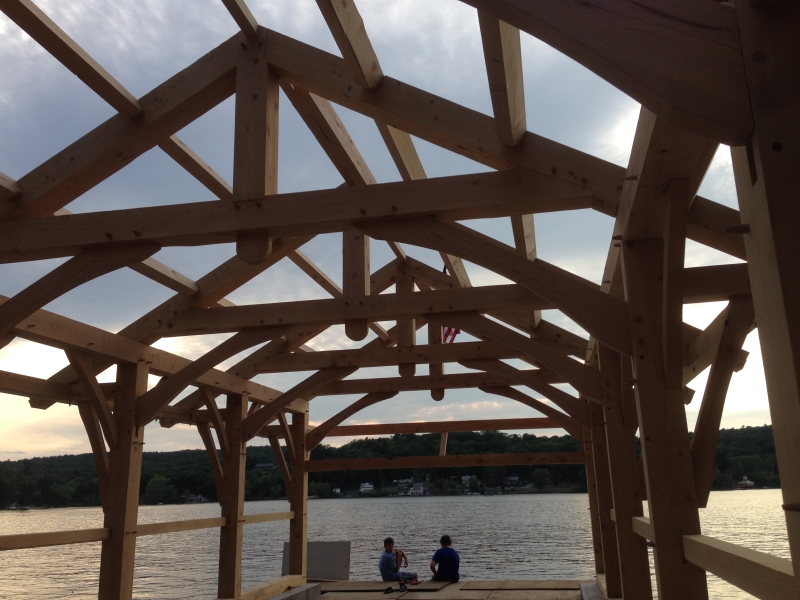
In our latest timber frame project, Green Mountain Timber Frames took to the water! We put in no less than 1000 hours of work to build this gem of a boat house:Timber Frame Custom Boat House Green Mountain Timber Frames

We built the new timber frame structure on beautiful Lake Bomoseen – literally on and over the lake. 

Lake Bomoseen_Green Mountain Timber Frames

Lake Bomoseen

The goal was to build a post and beam structure over a boat mooring, allowing a boat to come inside, be lifted out of the water and stored for the winter. 

Inside the Boat House_Green Mountain Timber Frames_Luke Larson

The view from inside the Boat House

Hemlock and Oak Wood, from the Property

One particularly exciting aspect of this project is that the hemlock and oak were cut from the property using a portable saw mill. Only on a few rare occasions has Green Mountain Timber Frames been able to cut a new timber frame using materials from the land where the structure will be built­. Luckily for us, this was one of them!

Designed in Collaboration with the Owners

When it came to designing the boat house frame, our very own Luke Larson worked closely with the property owners. It was a great pleasure to work together to create a design that fit the goals and desires of the owners and also worked structurally.

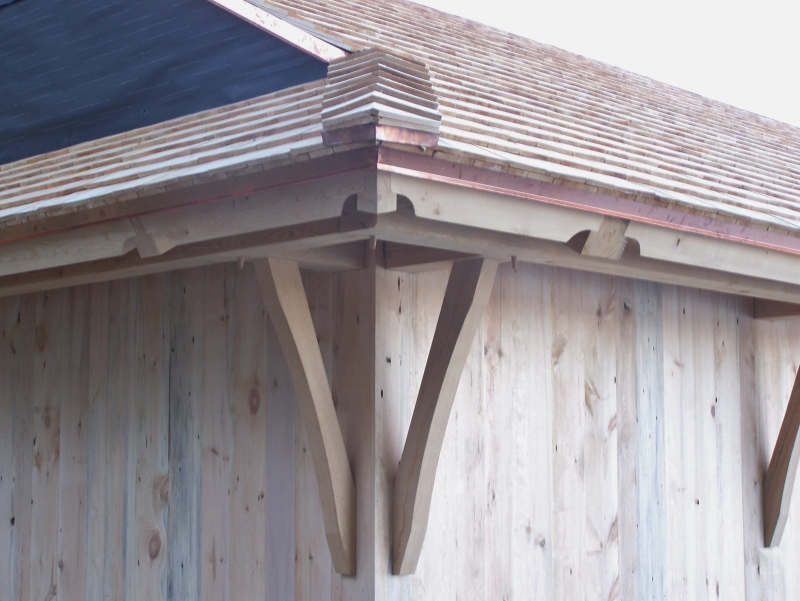
One of those goals was to have an attractive shed roof across the gables. We decided to accomplish this with a secondary top plate, which we started calling an “outrigger,” that turns the corner and wraps across the gable ends.

Outrigger detail of boat house_luke larson_Green Mountain Timber Frames_Vermont

aerial view of timber frame boat house_Green Mountain Timber Frames_Luke Larson

View of “outriggers” from afar

The various dimensions of this frame were each built on saw horses in our yard, so that we could check all the math, angles and joinery as we went.

aerial view of timber frame boat house_Green Mountain Timber Frames_Luke Larson

Using saw horses to work on wall of the Boat House

We used king post trusses to frame the bents and curved oak braces throughout the frame.

Timber frames_Green Mountain Timber Frames_Luke LarsonMost of the purlins in the frame were hemlock from the property, but we needed two pick points in the ceiling that would be strong enough to lift a 4,000 pound boat. Heavy oak purlins were installed at two places which are rated for well over 2,000 pound point loads each.

Purlins in custom boat house timber frames of custom boat house_Green Mountain Timber Frames_Luke Larson

The location of the timber frame presented challenges in getting it erected. Since the lay of the land was such that a crane or lull was not feasible, we put it up the old fashioned way – by hand.

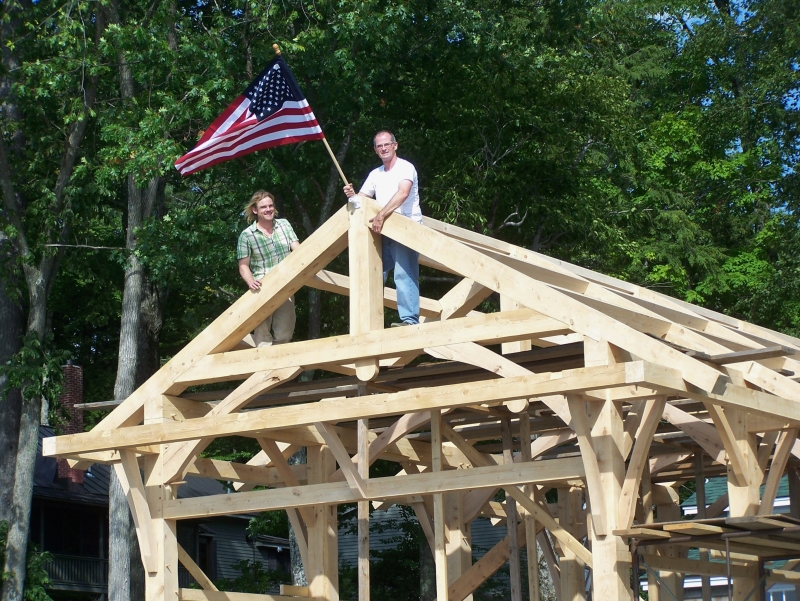
Dan went out in his kayak to take this picture of the flag being raised. 

Flag Raising on boat house_Green Mountain Timber Frames_Luke Larson

Here is a what the rafter trusses look like with the roof boards and wall sheathing applied. These were also harvested on the property. Soon there will be a walkway around the inside edges of the boathouse.

Interior view of custom boat house_Boat house completed with siding_Green Mountain Timber Frames_Luke Larson


Corner details of boat house completed with siding_Green Mountain Timber Frames_Luke Larson

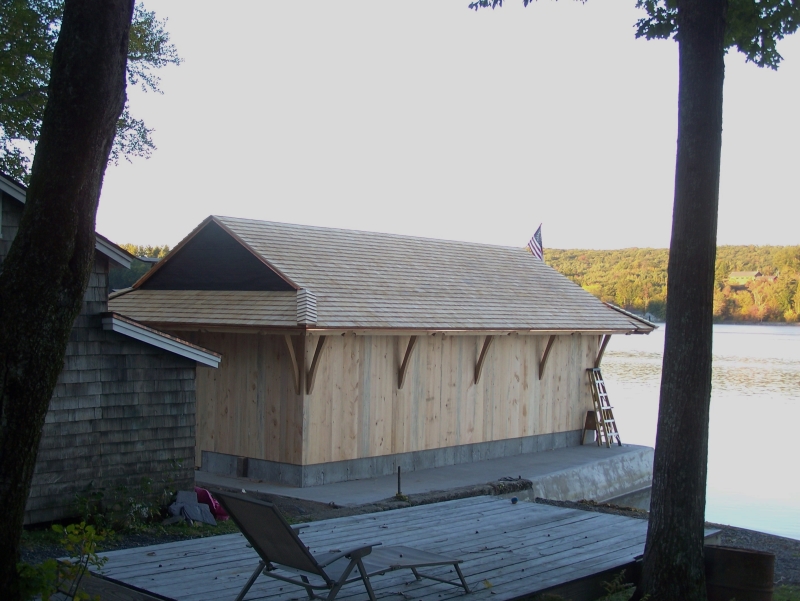
We were especially happy with how the hip corners and eve purlins turned out visually.

Custom Boat House_Boat house completed with siding_Green Mountain Timber Frames_Luke Larson

Next, the structure will receive beautiful salvaged windows, carefully restored, and a layer of cedar shingles on the walls. There will also be triangular windows in the peak. Take a look!

Boat house completed with siding_Green Mountain Timber Frames_Luke LarsonInterested in your very own timber frame boat house? Have another timber frame project in mind? Green Mountain Timber Frames specializes in historic timber frames and restoration projects, but we also erect new timber frames.

Contact us with any questions! Email Luke@GreenMountainTimberFrames.com or call 802.774.8972.

From Fatigued Old Barn to Beautiful Great Room

Reading this in your email? For a better view of the blog, click here

Meet the “Fatigued Old Barn”

It was a frigid Vermont winter day when we first visited this old barn back in February of 2015.  It was too cold, even for us seasoned Vermonters. With more than two feet of snow on the ground, I wished I had brought my snow shoes.

Here’s a glimpse of how the barn looked – on the left – when we first met.

Original Restored Barn_Green Mountain Timber Frames_Before (800x601)The owner had called us to ask if we could dismantle this aging barn and restore it as a new Great Room, attached to their home. The barn, built originally in the 1850s, was indeed a perfect match for the house, a two story country home also built in the 1850s. 

Original Barn and 1840s Home_Green Mountain Timber Frames_Before (800x601)

Original barn beside 1940s barn with wooden silo.  House is in the back ground, on the right.

Dating the Barn

Judging from the 43 foot hand hewn beams, I concluded that the barn must have been built in the middle of the 19th century. Tall trees were still being hewn by hand into long square timbers. Shorter timbers, such as posts, were sawn at a local mill. During that time, sawmills could accurately saw up to 20 feet of timber, so the hand hewing guys were called in for the longer timbers. I often wonder if those guys – the “old school” timber framers – must have felt like horses when automobiles started to become more prevalent.

The Transformation Begins

Step 1: Dismantling

Once the snow melted, we traveled to Cavendish, Vermont to begin the careful process of dismantling the barn. The barn looked far more inviting during spring.

historic wooden barn with red roofIn three weeks, a team of six men dismantled the 30 x 43 foot barn and shipped it to the Green Mountain Timber Frames shop in Middletown Springs.

Cavendish Historic Barn before restoration _Green Mountain Timber Frames

Barn being dismantled, starting from the top.

Step 2: Restoration at the Shop

Once at the shop, we carefully washed all the timbers. We then laid them out in their new configuration of 21 x 35 feet and did a lot of joinery work. Next we assembled the roof structure, de-nailed the roof boards, gave them a solid washing, made them straight again, and finally re-applied them to the roof rafters. We made sure everything was well labeled, and then shipped the restored frame back to the Cavendish house site.

You can see much of the process in the pictures below:

Antique barn Restoration_Green Mountain Timber Frames_Vermont_3 (800x601)

Laying out the restored hand hewn beams into the new design.

Antique barn Restoration_Green Mountain Timber Frames_Vermont_4 (800x601)

Roof rafters re-adjusted and fitted, waiting for original roof boards

Antique barn Restoration_Green Mountain Timber Frames_Vermont

Rafters with restored roof boards applied and then labeled

The Great Room is Born – in Two Days

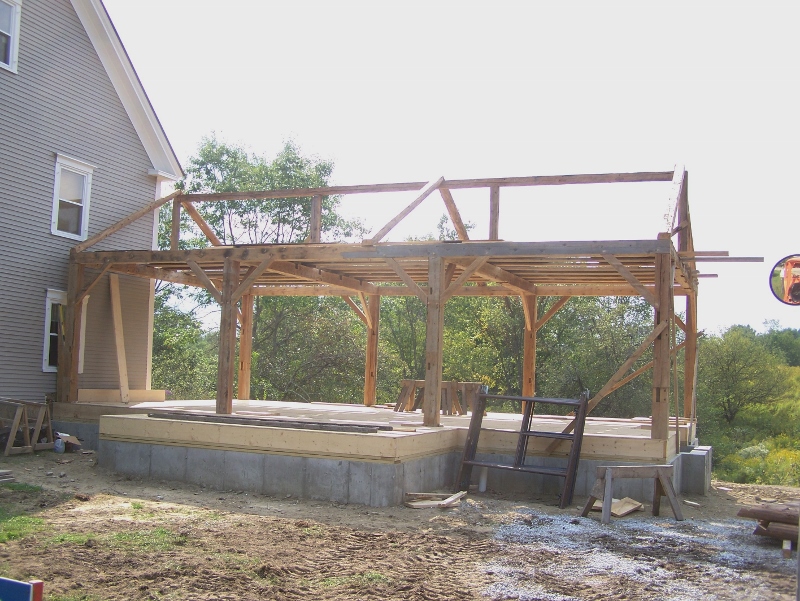
Because we had done the restoration work at our shop, re-erecting the frame for the new Great Room was a pretty straightforward task that took only two days.

In weather that was a far cry from the snowdrifts of February, we reassembled the frame under hot August sun with a team of four men and a mighty Lull (lift machine).

Erecting restored timber frame_Green Mountain Timber Frames_Vermont_Day1

Re-erecting the restored frame (the Lull is in orange)

Day One: Getting the Frame Up

During the first day, we spent about ten hours at the site. By day’s end we had most of the structure up, thanks to the help of the Lull and an experienced crew.

Erecting restored timber frame_Green Mountain Timber Frames_Vermont_Day1_2 (800x601)

Frame is up by the end of day one with a few roof rafters

Day Two: Raising the Rafters

Day two was even more fun as we placed all the roof rafters – always an exciting part of a barn restoration project – and experienced the structure taking its final shape. After hundreds of hours of our labor, the refurbished frame went together like a Lincoln Log set.  It’s gratifying each time to watch new life breathed into a formerly very distressed timbered, old barn.
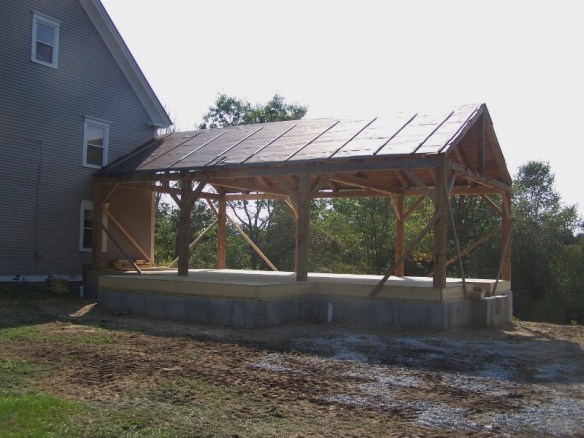
Erecting restored timber frame_Green Mountain Timber Frames_Vermont_Day2

Finished frame. The roof is protected by tar paper, ready for the next stage.
Erecting restored timber frame_Green Mountain Timber Frames_Vermont_Day2_4 (800x601)

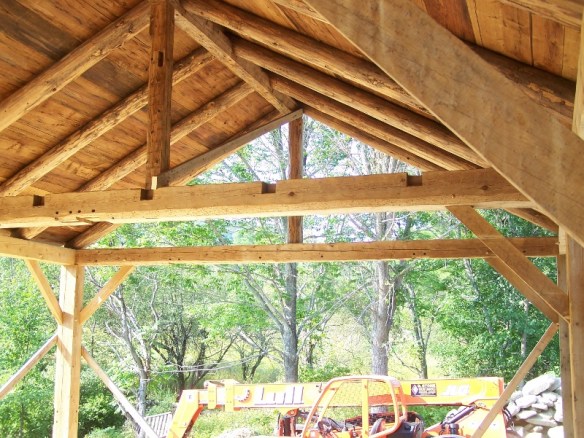
View from beneath the roof of the restored frame, with our friend the Lull behind.

The plans to complete this barn frame include a fireplace, large glass doors, a screened porch and a mudroom entryway. Truly it will become a GREAT room.

Coming Up Next:

This was a challenging and rewarding restoration project. Our next blog will feature a stunning new timber frame boat house, designed and built by Luke Larson and his crew. Stay tuned!

Post and Beam Sign Frame for the Vermont Farmers Food Center

Reading this in your email? For easier reading – Click here.

Most of the time here at Green Mountain Timber Frames, we restore 18th and 19th century barns and turn them into new timber frame homes, barns, great rooms and more.

But this summer, just for fun, a different project came into the mix when I was asked to put together a very “organic” sign frame for Rutland County’s Vermont Farmers Food Center.

Reclaimed Wood_Green Mountain Timber Frames_wooden sign for Rutland VT Farmers market

Here’s the frame. The sign itself will be attached soon.

Reclaimed Wood_reclaimed Timbers_wooden sign

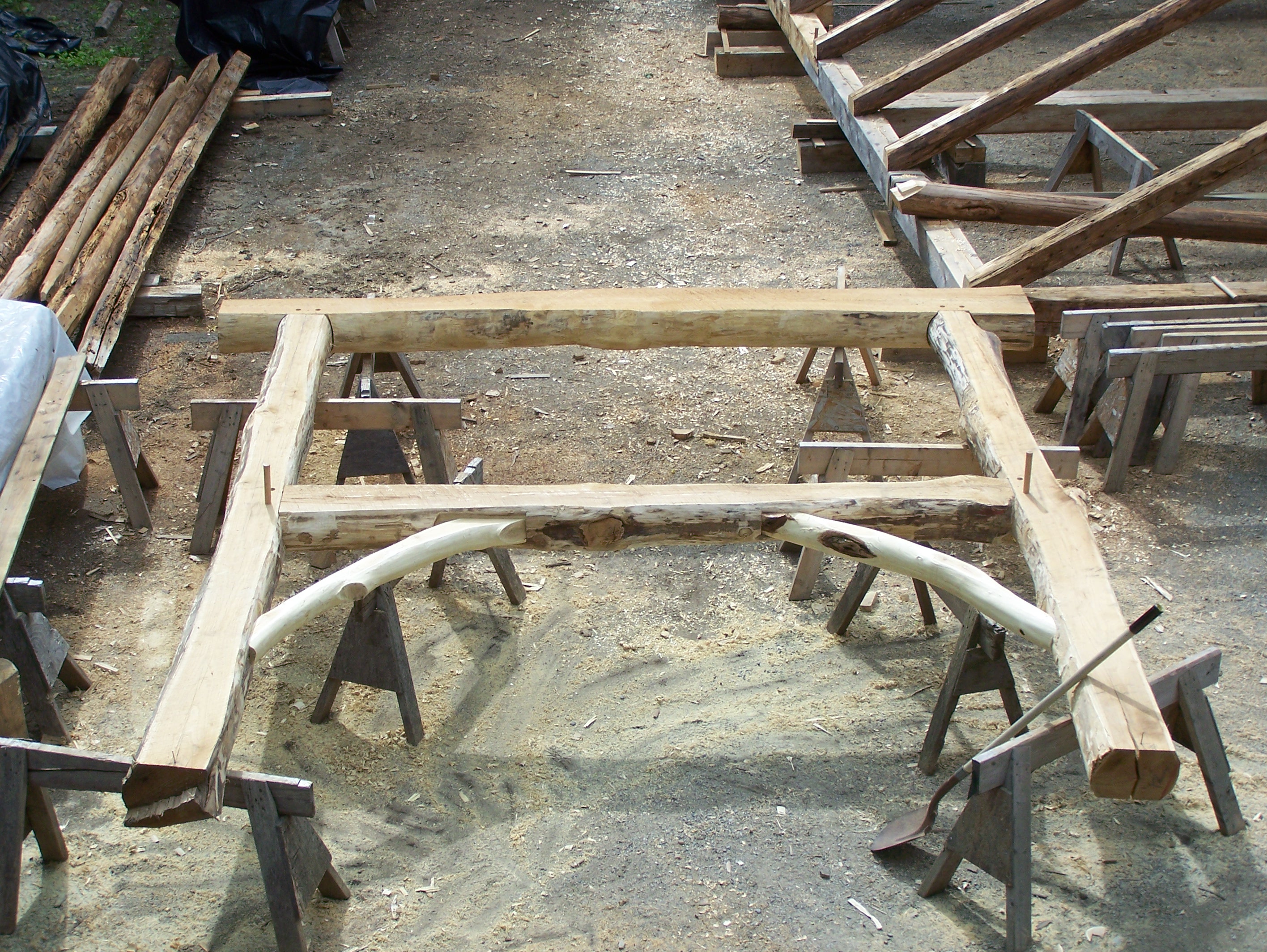
You can still see the curve and shape of the tree in the two braces and heavy timbers.

How does one make a timbered sign frame out of half round locust trees?

To begin the process, I chose to use local locust wood.  I found the logs at Ken Gagnon’s saw mill in Pittsford, VT. Armed with these rugged timbers, I was ready to begin building.

Why locust trees?

I used locust because their wood is comparable to “pressure treated” wood. Locust naturally has many of the properties of pressure treated wood, without any chemicals needed to preserve the wood’s fiber. Remarkably, locust can easily withstand being exposed to the elements for 50+ years.

Building the sign frame

Ken Gagnon sawed flat sides on the front and back of the sign timbers, making it much easier for us to do the joinery. I carefully studied the surfaces to decide the placement of each timber.

Because locust wood is very hard, we used a chain mortiser to make the mortises (pockets). This time-saving piece of modern equipment is very exact, and reduces wear and tear on our arms. However, I still had to scribe and chisel the rounded sides of the four beams to make them fit together tightly when the joinery was completed.

Chiseling Timber Frames_ Green Mountain Timber Frames

Expert timber framer Luke Larson works on joinery.

Joinery in Timber Frame Sign_ Green Mountain Timber Frames

Tools used in making a joint.

We connected the beams using mortise and tenon joints. Once erected, this joinery allows the frame to be a very strong structure, even in heavy winds.  Because the wood is locust, the joints won’t rot.

Below you will see the two pieces being joined:Rutland Vermont Sign_Timber Frame Joinery_ Green Mountain Timber FramesThe Diagonal Braces
As we were building the sign, I felt that adding in some locust limbs for the diagonal braces would enhance the look.

Locust Wood in Timber Frame Sign by Green Mountain Timber FramesHeading out to the woods, I found some locust trees. I cut some limbs that had natural curves. We pealed off the bark and eventually carved tenons on both ends of each piece.

Tenoned Joinery in Locust Wood_green mountain timber framesAll in all, it was a fun project that took the Green Mountain Timber Frames team about 50 volunteer hours to complete.

Interested in your own timber frame structure?

Our main focus is on historic properties and timber frame homes, but we have other talents as well!  Interested in furniture that compliments a timbered home or something else special?

Let us know! 802.774.8972

Restoration of a Hand Hewn Pine Barn Frame, c. 1840 – Part II

Reading this in your email? For easier reading – Click here.

Remember this hand hewn frame, made of pine timbers, that we highlighted in last week’s blog? Old Barn home_Original Location Well – the good news is – restoration is complete! After 8 days of focused work with a superb team of seven, the barn is fully restored and in use. Restoration of new england barn home At 21 feet wide x 30 feet long, it spent nearly 175 years protecting hay in a meadow in Benson, Vermont. This barn has had quite a journey since 1840.

We became involved a few years ago when we took down the barn, restored the structure and erected it at our workshop. It was put to good use there, protecting building materials, while we waited for a new owner; and in time the right family came along.

We’ve spent the past two weeks restoring the frame for the new owners in Pomfret, VT. In last week’s blog, I wrote about the process of dismantling and re-erecting the antique timber frame in Pomfret.

I also showed how we applied the roof boards and started on the siding, using materials from another historical barn.

Getting the Arches JUST Right
One of the challenges of restoring this barn was making sure the arched doorways looked just right. The picture below shows the process of creating the arches. Forming the arch on a historic barn_Green Mountain Timber FramesAnd here are some of our talented crew members pondering the arches to make sure they are just right! Green Mountain Timber Frames _Professional Contractors in VermontHere you can see the nearly completed results! Forming the arch on a historic barn_Green Mountain Timber Frames2Applying the Siding
Last week, we put on two layers of siding, one ½ an inch thick and the second one 1 inch thick. We put the two layers on, overlapping each other, to keep the driving rain and snow from seeping through the cracks.

restored siding on historic barn

A close up look at the restored siding

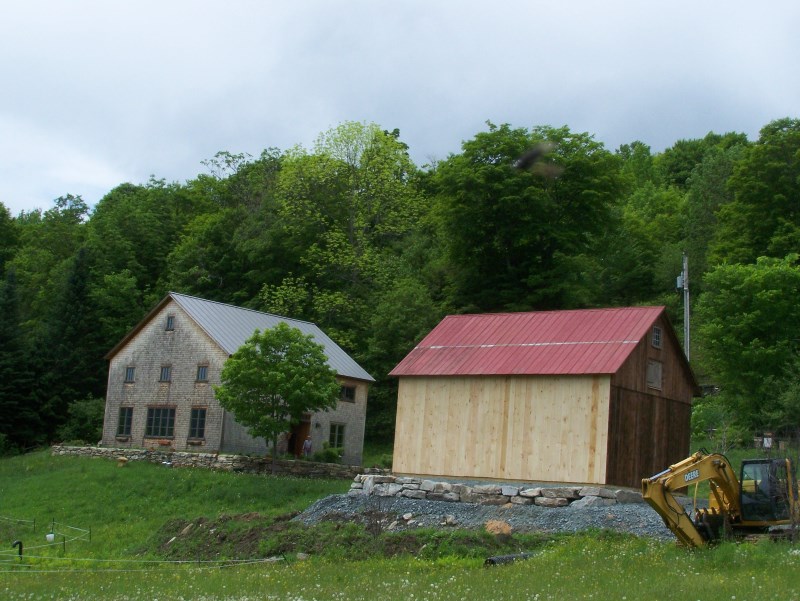
As always – we love to recycle! For this project, we used exterior siding from four different barns and the door is also on its second life. You can see the original barns here on our available frames pagevermont scenic view with historic barnIn the view above, you can see the recycled red roof taken from another barn project we also have in progress.

Reclaimed Wood versus New Wood
Economics and availability often come into play with a project, as reclaimed siding can be four times more expensive than new. In this case, the owners chose to use new siding on the back side of their barn. It is hidden safely from view and can not be seen from the house or the road. Give it another thirty years and it will look vintage, too.

restored historic barn

Rear view showing new siding

Now Let’s Step Inside…
From the interior of the barn, we can see the beautiful hand hewn timbers of the original frame.hand hewn timber frame wooden beams restored timber frame in new englandThe upper loft might make a wonderful overflow guest room in the summertime.

Loft view of restored historic barn home_Green Mountain Timber Frames_Vermont

The Loft

There’s a large, open main level with the relatively spacious half loft. Eventually, a modest stairway will replace the metal ladder that you see in the view below. Internal view of timber frame barnIt was, as always, a pleasure to save another barn – and create a new-old barn for another wonderful client. The point was to have it look like it has been there for one hundred years. Did we succeed? side view of post and beam barn homeThis year has been a busy one here at Green Mountain Timber Frames. We’ve dismantled no fewer than seven barns and houses in the last year and they are each in various stages of restoration.

Want your very own piece of American history? Think that barn living might be for you? Give me a call at 802.774.8972 or email Luke@greenmountaintimberframes.com.

Vermont’s Finest…? Outhouses

Reading this in your email? For easier reading – Click here.

In my meanderings across New England to look at old barns, I often come across unexpected treasures. Antique outhouses fit that category. While there isn’t much market for a renovated timber frame outhouse or modernized backyard latrine, these outhouses were a basic necessity for everyone in the past!

timber frame outhouse

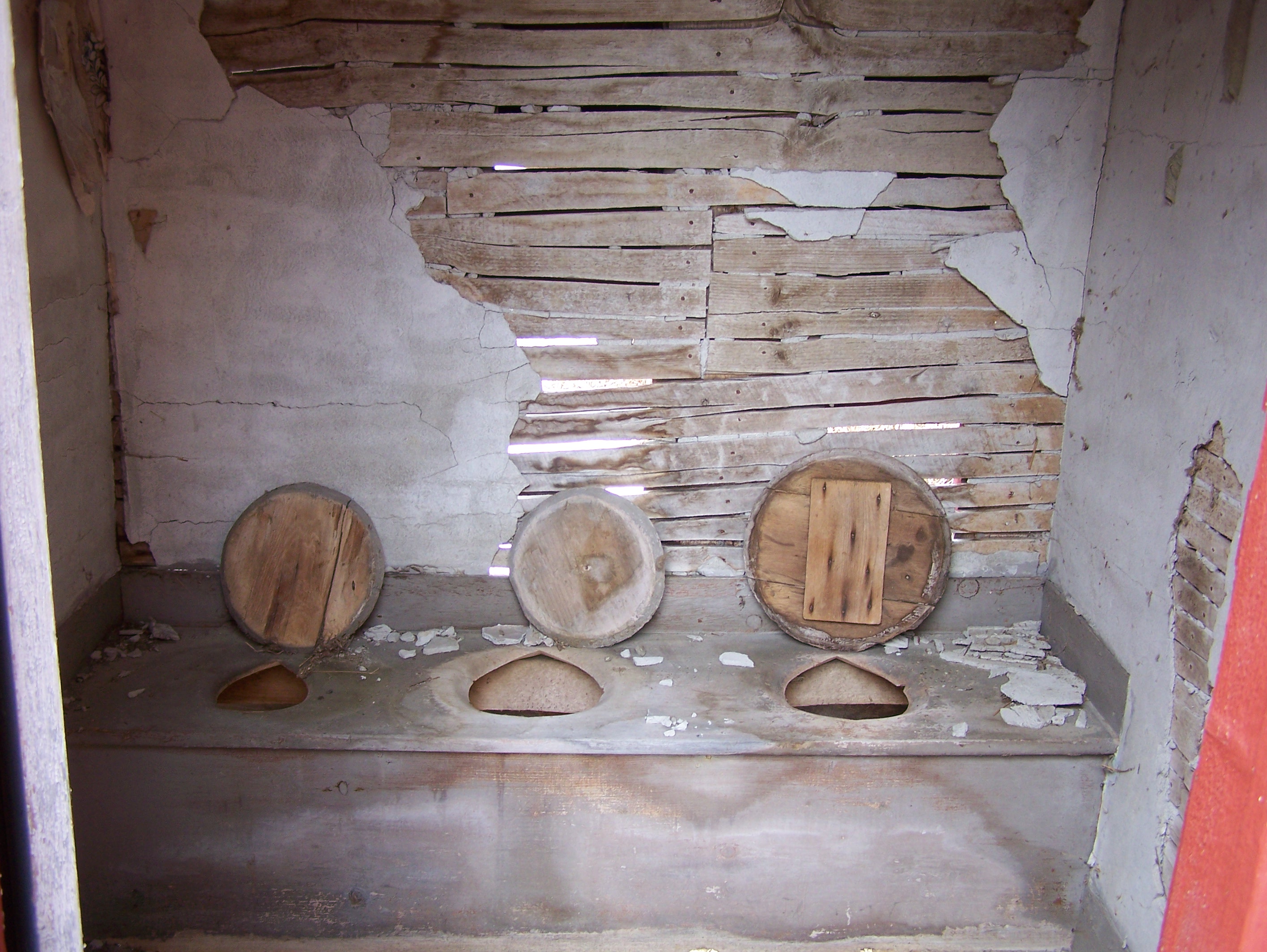
Once while looking at an historic barn in Wells, VT, I came across this grand specimen;  perfect for the whole family to enjoy together.

old timber frame outhouse

Baby bear, Mama bear, Papa bear

Since I couldn’t very well take the commodes back home with me, I couldn’t resist taking a snap shot. This particular backyard bathroom stood approximately 100 feet from the house. Can you imagine how many clothes you’d have to put on in the winter to head out to the throne room?

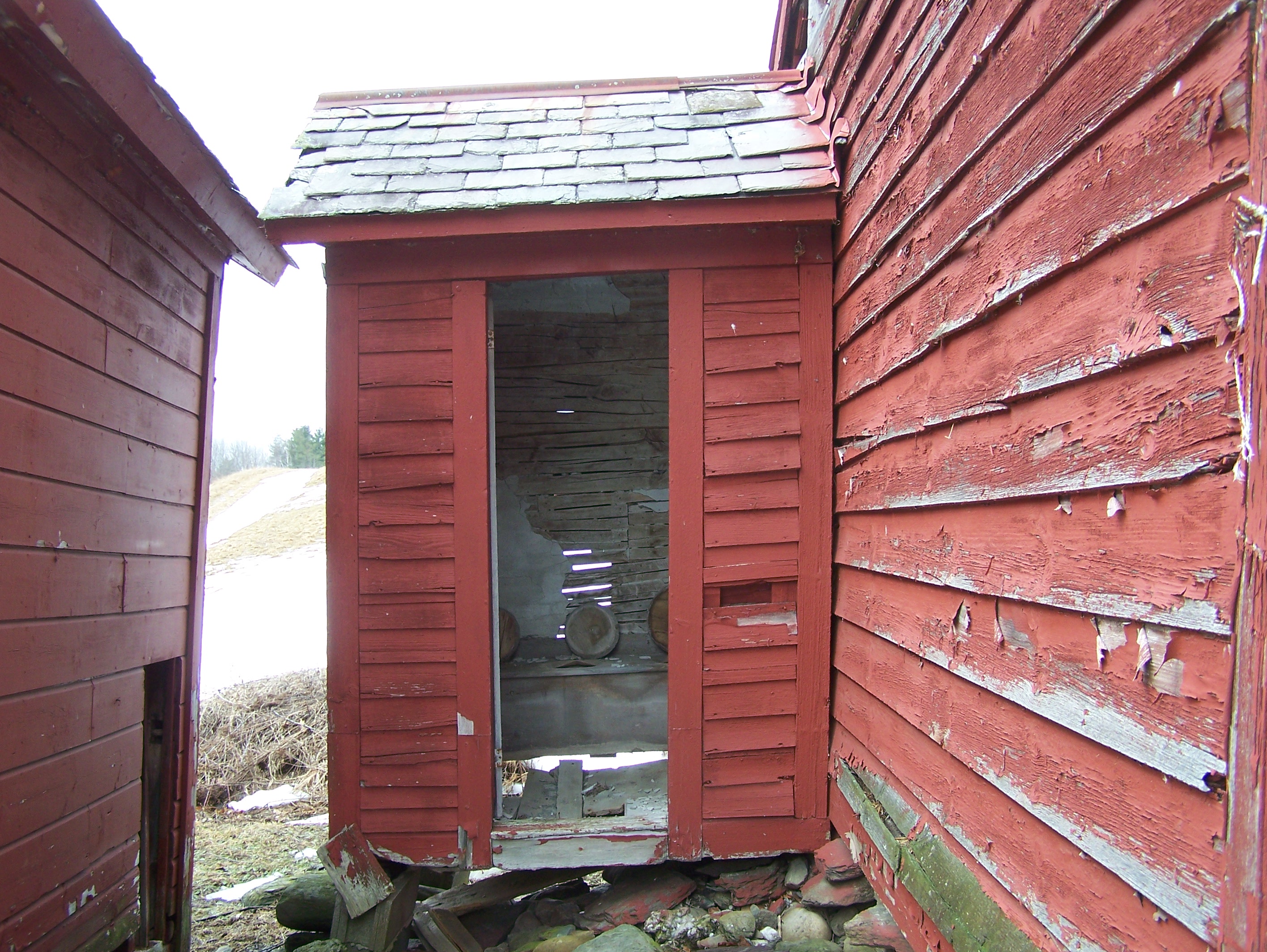
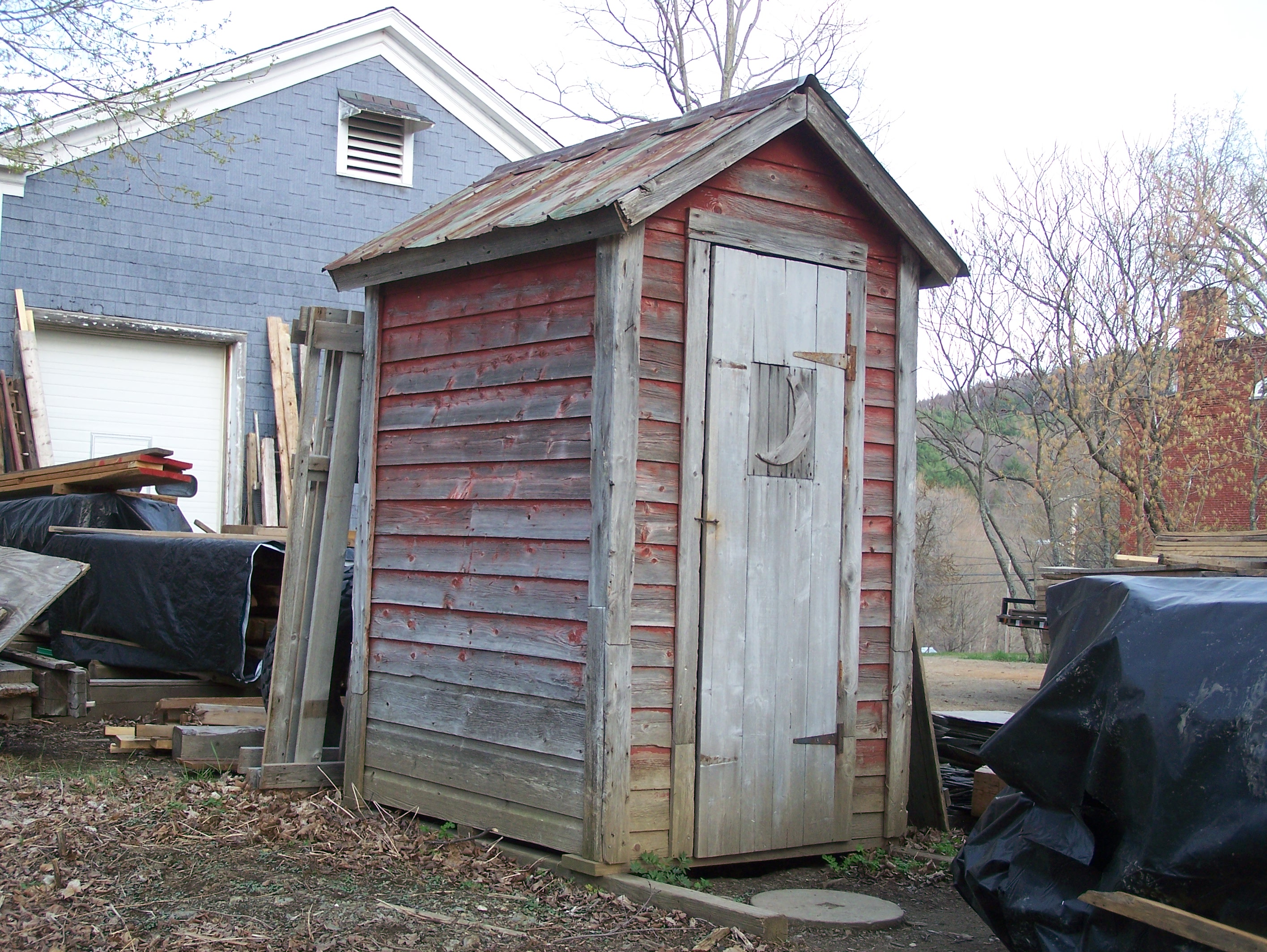
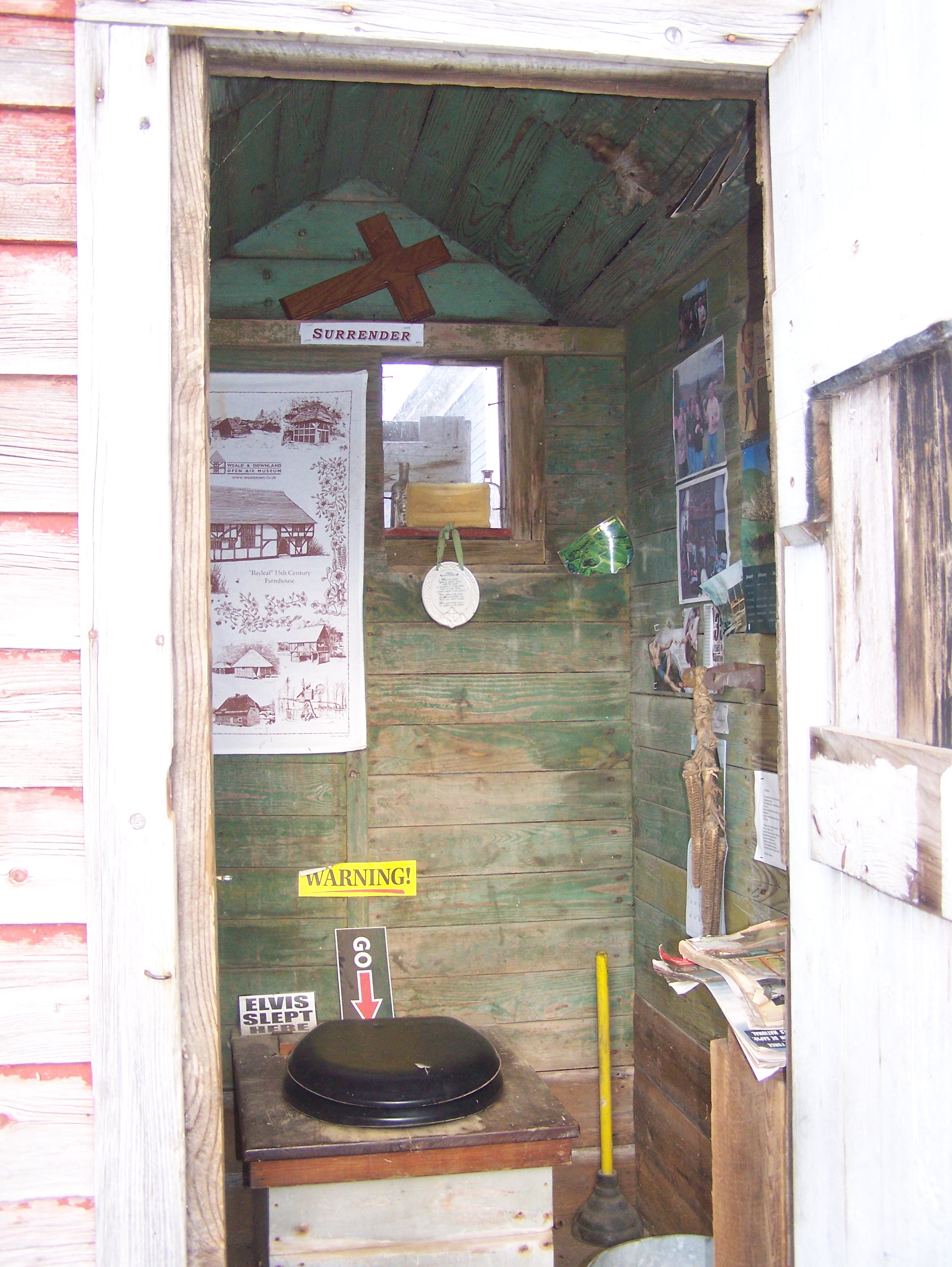
Below is an outhouse that came from Pawlet, Vermont and was built around 1900. It stood out back behind another old timber frame barn I came to evaluate. This was one well-appointed little stall. It even came with corn cobs to use in a pinch. And do they ever pinch!

antique vermont timber frame outhouse

Exterior view of a fine looking Vermont wooden outhouse

timber frame outhouse in vermont

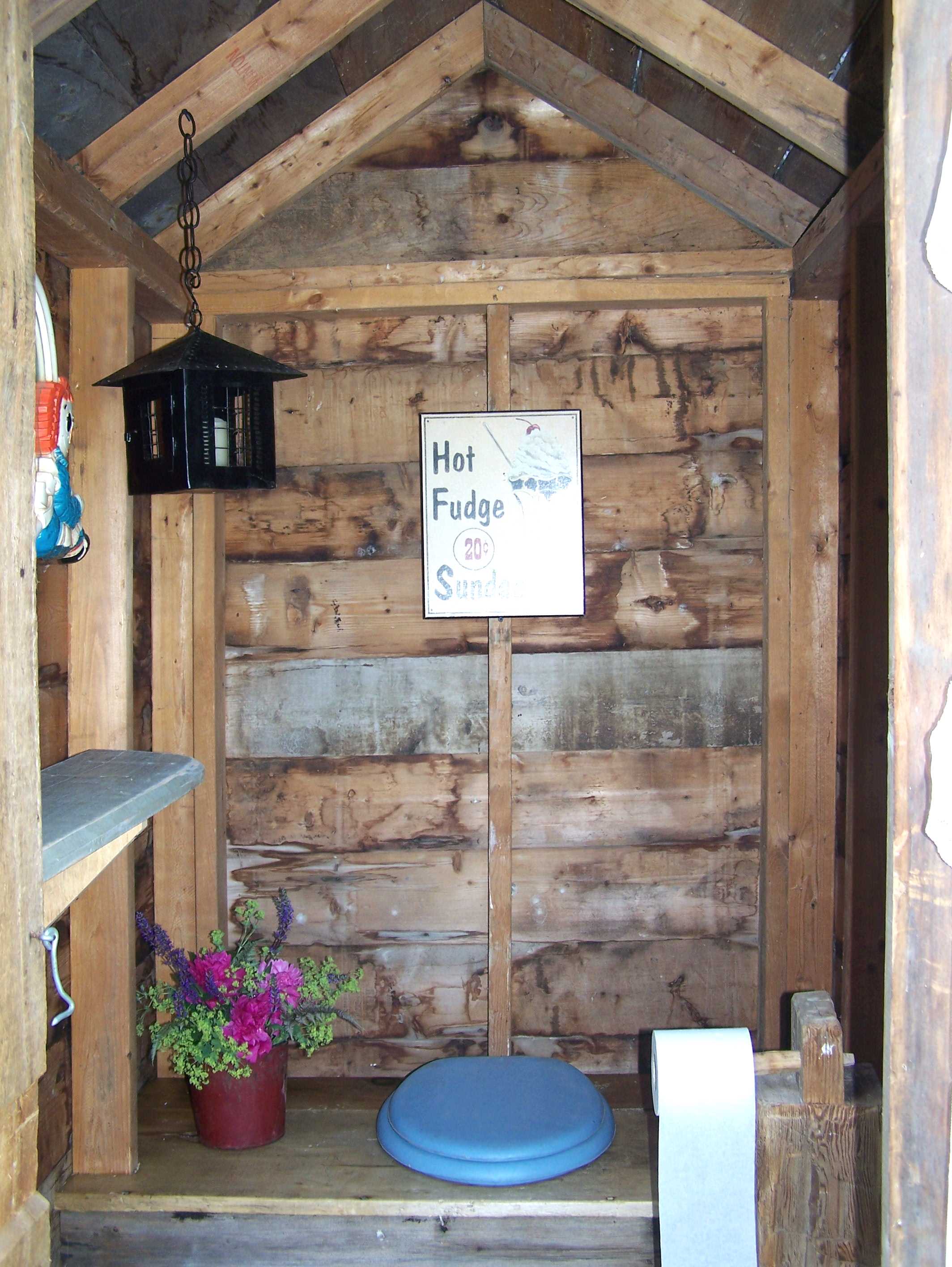
Interior view of Pawlet outhouse

Below is a backyard beauty inspired by some of the “one holers” I’ve happened upon in my barn hunting. One of our daughters built it to accompany a timber frame cabin she constructed in our back field, with just a bit of help from ol’ Dad.

antique wood outhouse in vermont

I like how she added a special feminine touch.

Vermont timber frame outhouse - Copy

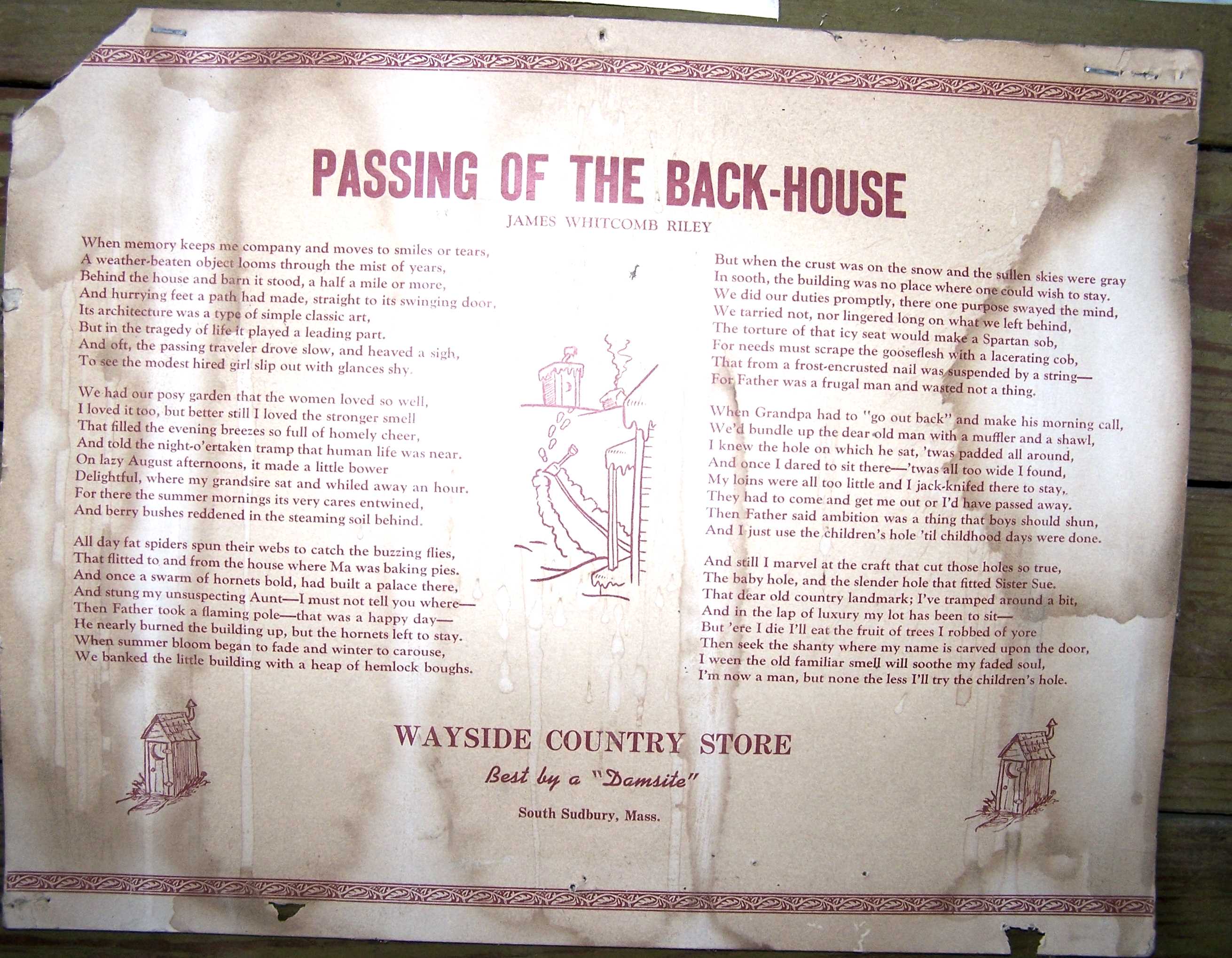
And now, while we’re on the topic, here’s a poem to ponder – Passing of the Back-House,” by James Whitcomb Riley:
(You can click on the picture to enlarge the text, or go to the link).

sign in vermont timber frame outhouse

If you are looking for a fine wooden outhouse (or regular timber frame house) made from the finest of Vermont restored wood, we can be your crew! Give me a call at 802.774.8972 or email Luke@greenmountaintimberframes.com.

The Bitter-Sweet of Mud Season Barn Restoration

Reading this in your email? For a better view of the blog – click here!

Mud Season – the bitter/sweet time of year.

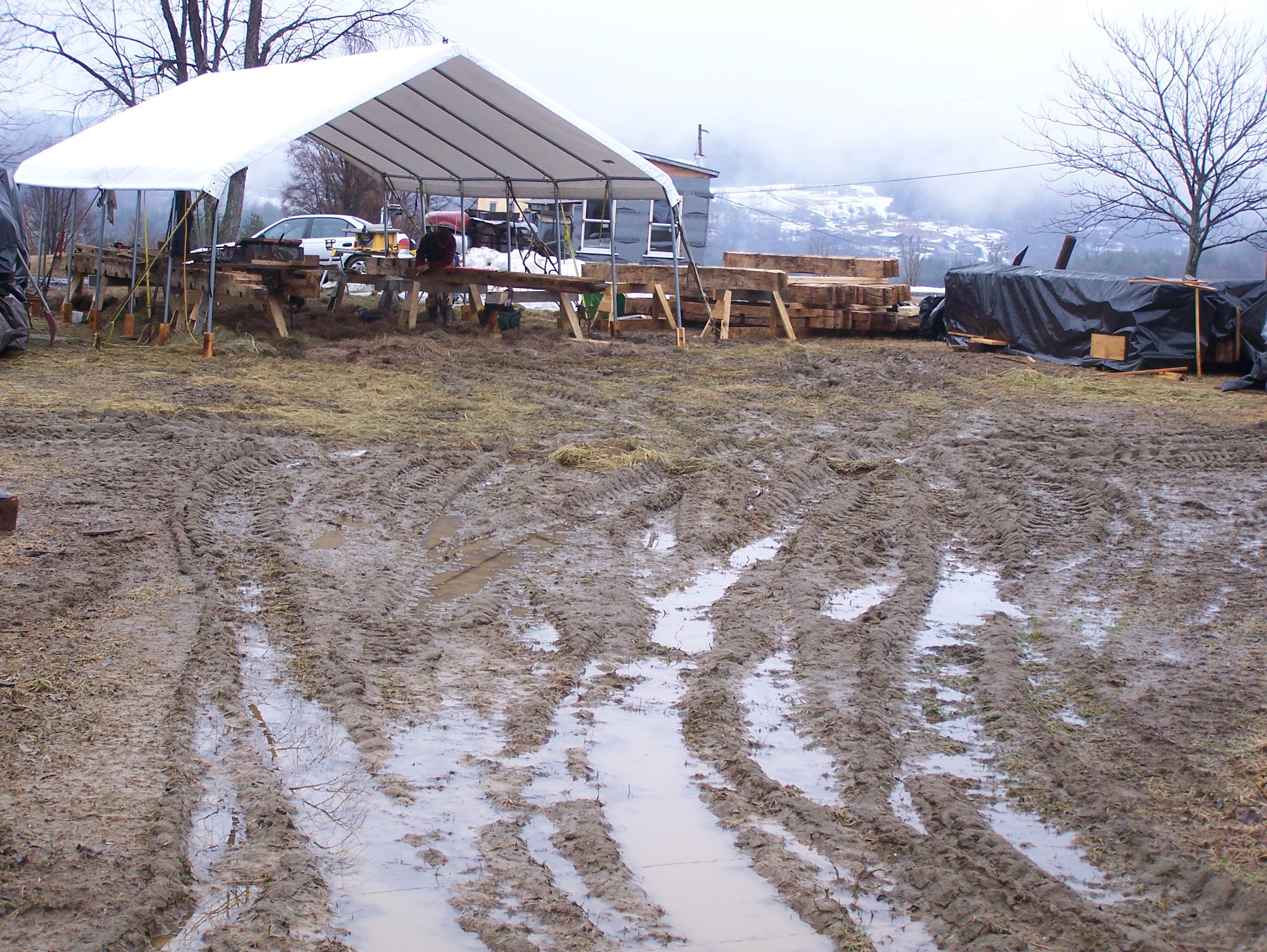
While the temperatures have at long last inched their way above the zero mark, here in rural Vermont the ground is still solid. Timber framing in the famous mud of New England’s spring beats the challenge of working in snow squalls and sub-zero temps, but it’s still not for the faint of heart!

Sure, our winter coats and work gloves have been shed but now we must muddle through our work area.

Mud Season in Vermont Building restored barn homes

Proof that mud season has arrived

As more snow melts, the damp ground slowly releases the grip of winter, churning out a soft, murky surface under our feet that you can sink into up to the ankles.

Construction continues nonetheless, so we throw down a carpet of hay to make the work area easier to traverse. Timber Framing in the Mud Vermont

There is, of course, a wonderful silver lining. Not only is old man winter behind us, but best of all, mud season means the maple sap is flowing! Cold nights and warm days bring the sweetness of spring.

Sugar house in maple season_Stacy Birch Photography

Sugar house in maple season – Photo by Stacy Birch

Going – Going – Going … Gone!

Reading this in your email? For a better view of the blog – click here!

How do you dismantle a timber frame for restoration?
Here’s an overview of the process: 

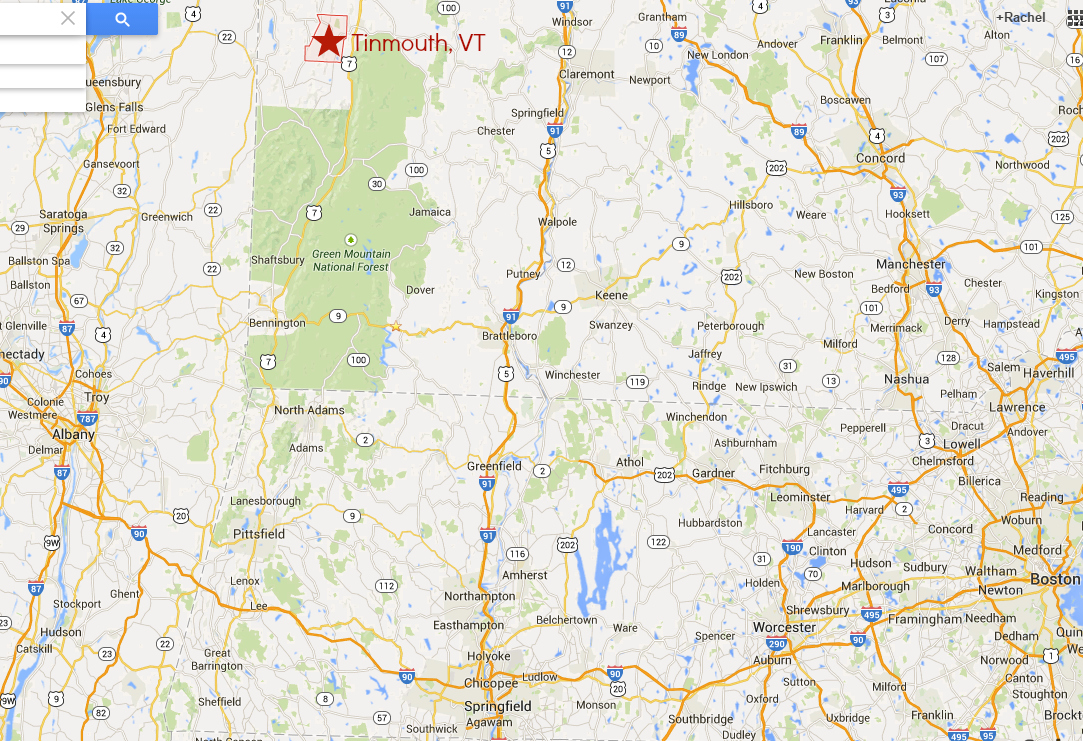
Going… Before barn restoration_Vermont barn home Going… Historic timber frame in vermont Going… Dismantling timber frame for restoration and preservation GONE! fomer site of historic barn home Thanks to all of your help and support, this timber frame from Tinmouth, VT is now being restored at the Green Mountain Timber Frames workshop in Middletown Springs.

After carefully skinned the old timbered house, we took it apart, timber by timber, making sure to label meticulously along the way. Over the next two months, we will professionally restore the timbers, before reassembling the frame in New York. Look forward to the results in late summer, when we re-erect these historic beams for another 235 years! In the mean time, we hope you will stay tuned with our blog!

Saved! Historic Timber Frame Barn Home Finds New Owner

Reading this in your email? For a better view of the blog - click 
here!

A few weeks back we wrote about this beautiful colonial American barn home that was
about to be destroyed.

Side view of historic house

Now, just two months later, I am pleased to share the great news that we have found a new owner for the Hod Hepburn house.

It’s hard to describe how grateful I am – how thrilling it is to know that there are others out there who share my passion for history and who are willing to invest in saving these beautiful pieces of America’s past.

If it wasn’t for the power of modern technology, and the wide reach of this very blog, I am certain that this house, built originally in 1780, would now be nothing more than rubble.

The house was built originally in Tinmouth VT but will be reassembled and restored in New York.

Tinmouth Vermont Old Barn Frame

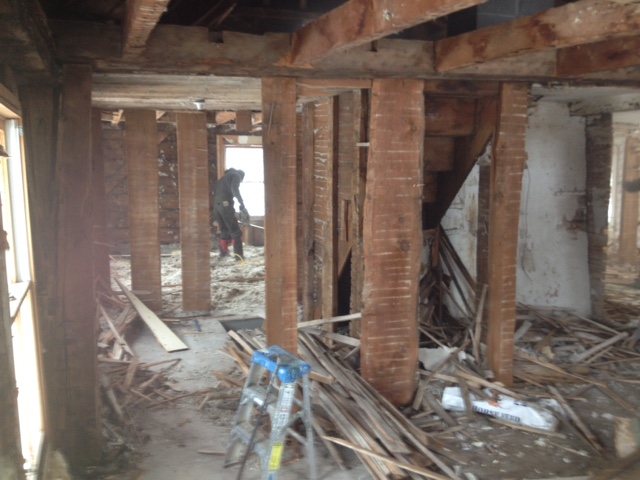
Despite the cold weather and many feet of snow, we are already moving forward on dismantling the frame. The first step is to clean out the centuries of dirt, dust and artifacts from the large barn home. Here’s a glimpse of what the interior looked like before we got started:

Interior of barn frame

PreMucking out of timber frame barn

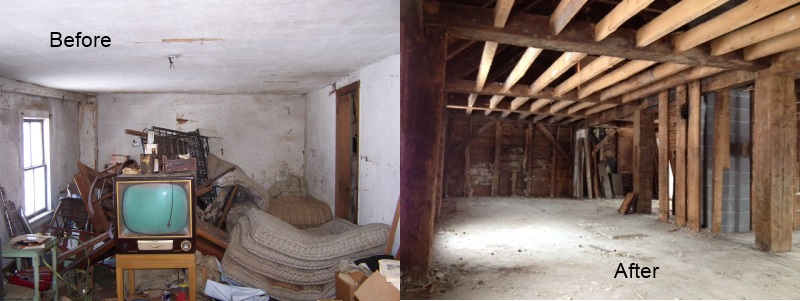
We’ve spent the last week cleaning up the house and opening up the plastered walls. This before and after shot will give you a good sense of what I mean:

Before and After Clean Up of Barn

Below you can see the rear view, before and after. Try to ignore the tar paper and note the post medieval roof system!

Before and after timber frame dismantling and restoration

Once “muck-out” is complete, we will move on to labeling all of the timbers and carefully removing them. We will restore each of the hand hewn beams at our local workshop. From there, we will ship the frame off to New York where we will reassemble the restored frame.

Below are some videos of the inside of the house. In this first one, we take a walk through the rooms of the home and see all of the treasures left behind from decades ago. There’s also an unusual, small stairway:

In this video, you can see the second floor, post-dismantling:

Check out the clip below to see how the attic looked before dismantling began.

And here’s the spectacular view from the roof, sans roof boards.

Thank you again for helping us save this post and beam house!

Know of another barn in need of saving? Looking for your own historic barn to call home? Contact us! We’d love to help.