
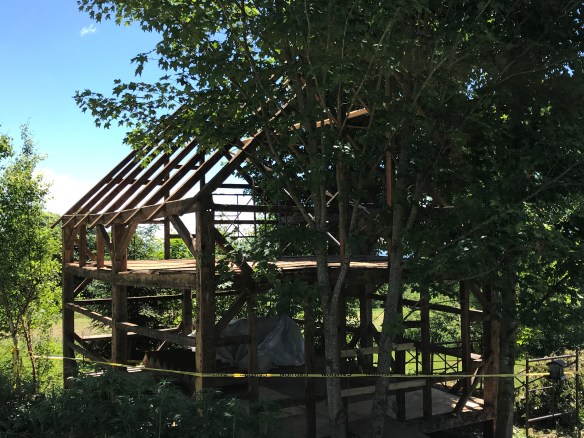
We are now two weeks into the careful dismantling of a beautiful timber barn – for sale – that dates from around 1880. This timber frame is not as old as many of the structures that we take down and restore here at Green Mountain Timber Frames, but the high quality of the frame more than justifies our efforts to save it. At 34 x 48 feet, this wonderful vintage frame is a big one!
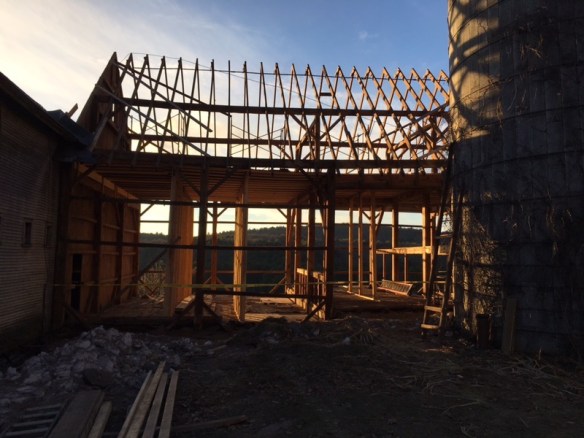 The barn’s foundation, roof and sills are deteriorated, and would be very difficult and costly to repair in place. We have purchased the barn and now it is in our court to take down the frame, restore it, and find a new home for this majestic and historic building.
(Let us know if you are interested in seeing the barn!)
Taking Down the Timber Frame Barn: Step by Step
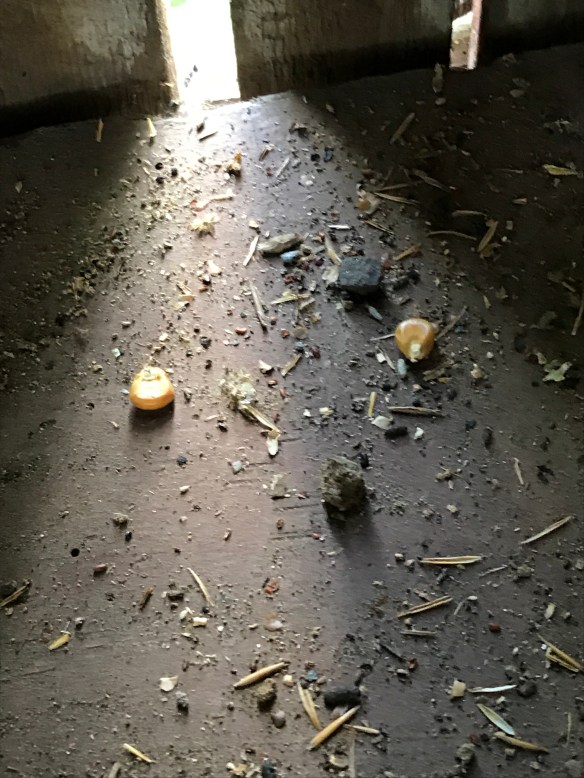
Our first step was to remove an enormous amount of hay from the inside of the building. Thankfully, we had some pitchforks handy.  The hay piled inside the barn had been hiding a very interesting feature of this barn. The smallest bay, which is where the animals were kept, had built in wooden gutters for removing manure.
Discoveries in an Old Barn
The clever system had two trap doors that could be opened, allowing the waste to be dropped into wagons or carts below for spreading on the nearby fields. There was also a trough in front of the animals where they could be fed. It is really amazing to see the wear marks on the floor from hooves. We can tell where the antsy cow lived many years ago!  We made another discovery while opening up the walls of this barn. Between layers of siding, honey bees had built a hive at some point in the past.
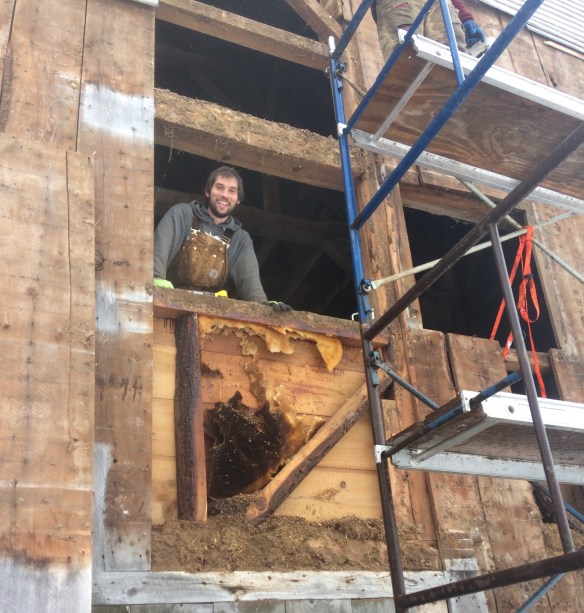 We collected the brittle wax comb, and I am excited to make candles out of it. Once we find a new home for this barn and re-erect it, I can imagine a celebratory meal in the restored frame- lit by the wax of this bee hive.
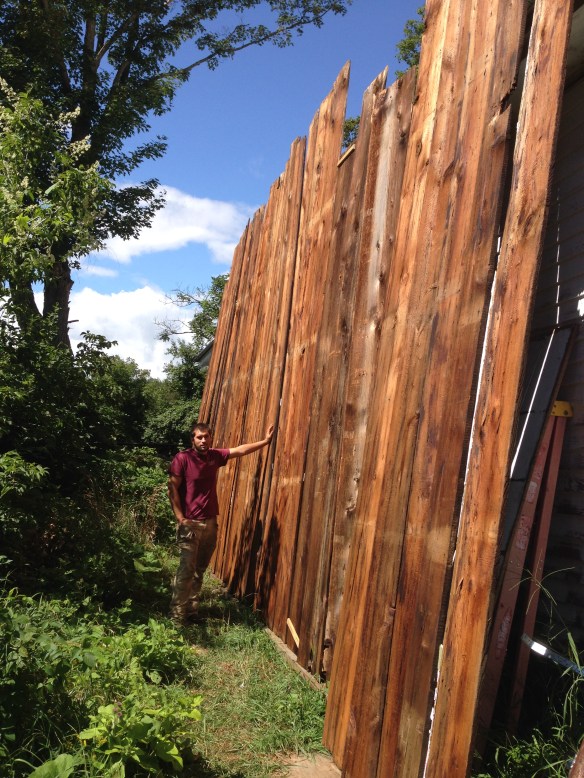
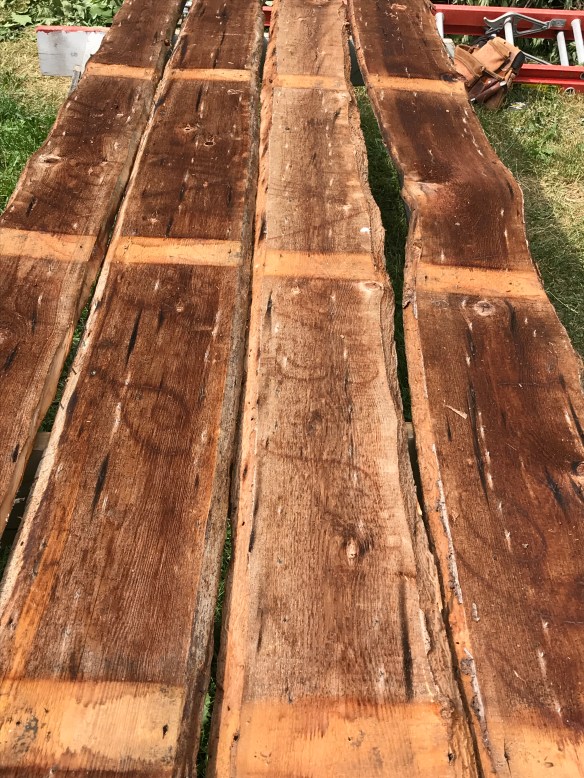
  As we removed the wide hemlock wall boards, we labeled each one so they can be installed back in the same location. Many of the timber boards are over 15 inches wide, and the patina on them is spectacular.
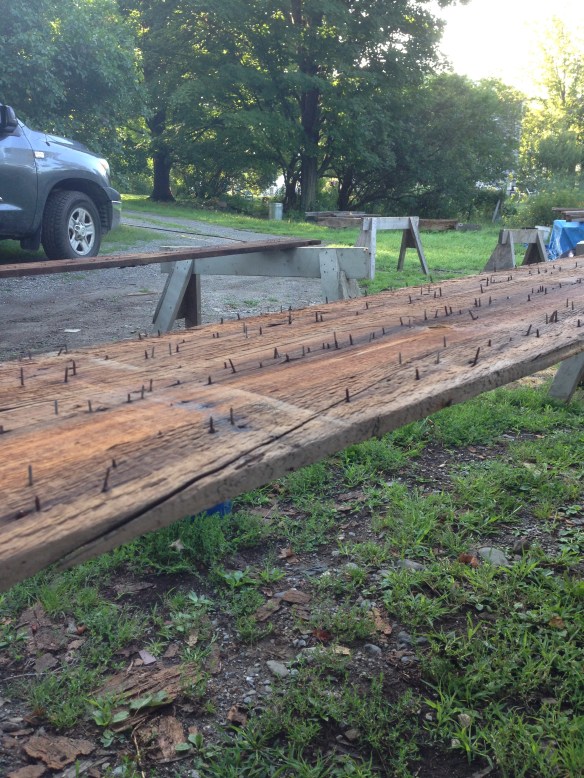
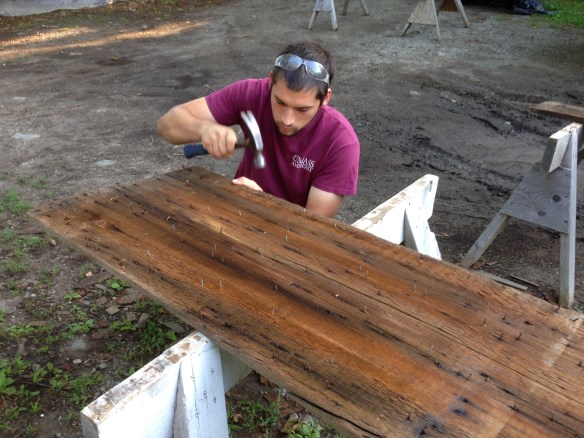
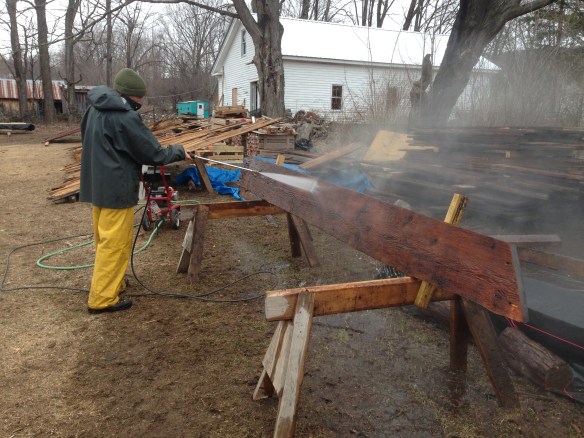
We can’t wait to wash them, but the temperature will have to get up above freezing for that process to take place and winter really seems eager this year in Vermont. 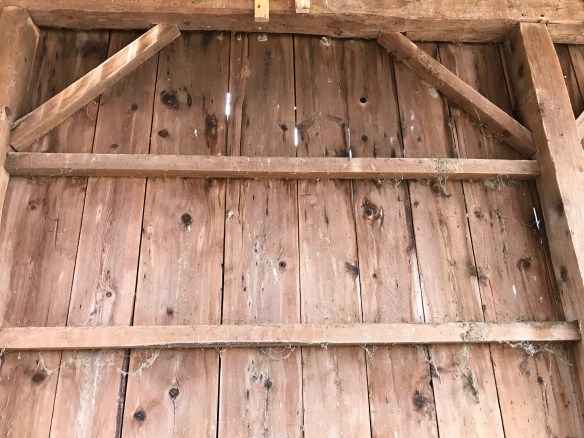
Removing the Slate Roof
Once we had the barn cleaned out and many of the siding boards removed, we went on to remove the roof system. This barn still had its original roof- large purple slate from the nearby quarries.
Here we are removing the slate piece by piece.
It was unusual for us to be removing the original roof from a building, as most of our older frames went through at least two, and often four, generations of roofing material before they come under our care. Much of the slate is still good and we will set it aside with the frame for future use. 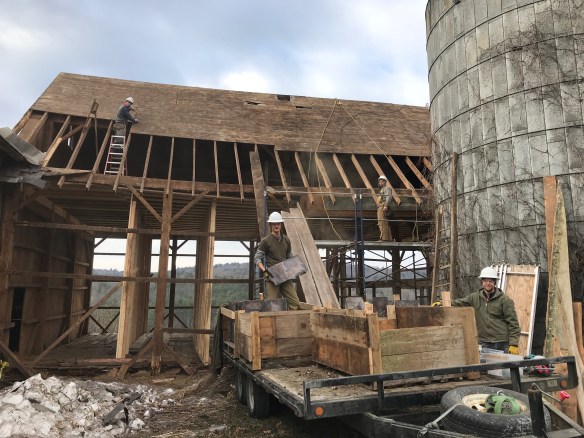 In order to be as safe as possible, we built a temporary second floor in the barn. This allows us to do most of the board and rafter removal from this deck rather than from the top of the roof or from long ladders. This barn is so large that it took fifty sheets of plywood to create this safe work platform!
  The effort building the deck paid off, as we removed and labeled each roof board.
 Let me share a couple more interesting features of this barn:
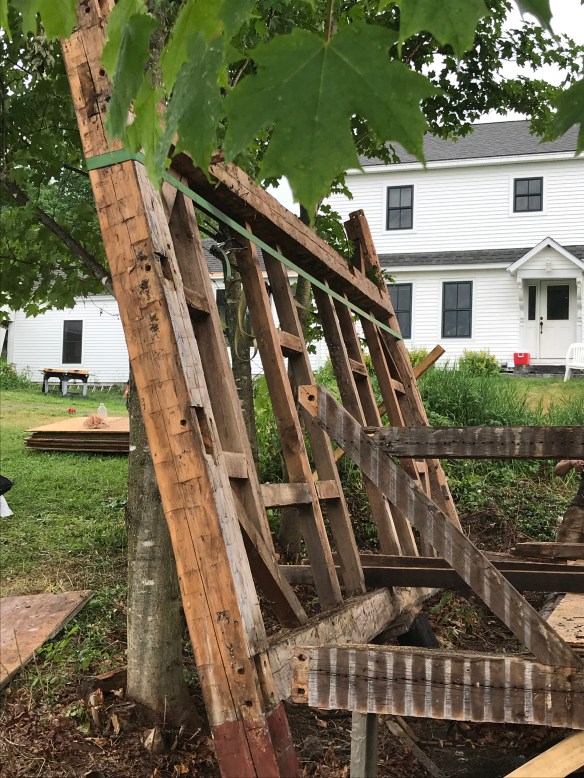
All farmers know how hard it is to keep large barn doors on a building. Inevitably, it seems, they get caught by a gust of wind and torn off the building. Well, it must have been someone with life experience who designed this structure. They built a giant pocket door system and hung the 13-foot-tall doors on tracks on the inside of the barn.
In order to create this space for the doors, secondary posts were added in the doorway bents. In this way, gusts of wind could not get at the doors when they were opened.  A good luck horseshoe was nailed to one side of the door opening.
  It was exciting to get lots of light on the upper queen system. These timbers support the rafters at mid-span, making the roof strong enough to carry the weight of all that slate as well as Vermont’s winter snow. There is a unique and beautiful scarf joint that was used to get the queen plates to span the whole 48 feet.
Here is a close-up of the scarf joint: While the queen plate is made out of two timbers, the main top plate that creates the eve of the building is not. Incredibly, these hand-hewn timbers are the full length of the barn at 48 feet and 2 inches! Imagine the size of the old-growth tree that was required, as well as the difficulty of getting these beams in place without the use of modern equipment.
These 48-foot timbers are a testament to the skill of the timber framers who crafted this barn, as well as to the strength of a community that would come together to hoist such a barn into place. We are honored to now be the caretakers of this structure.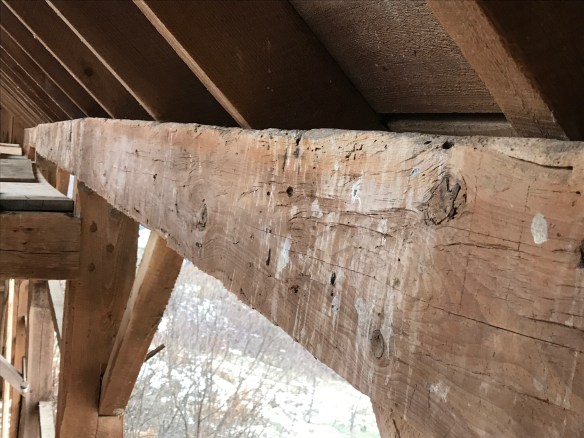
You can see drawings of the barn here on our site.
This old barn is for sale!
If you are interested in this barn, or another timber frame structure, let us know!

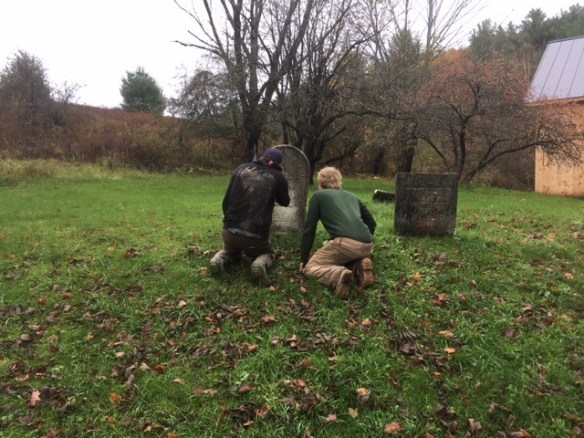


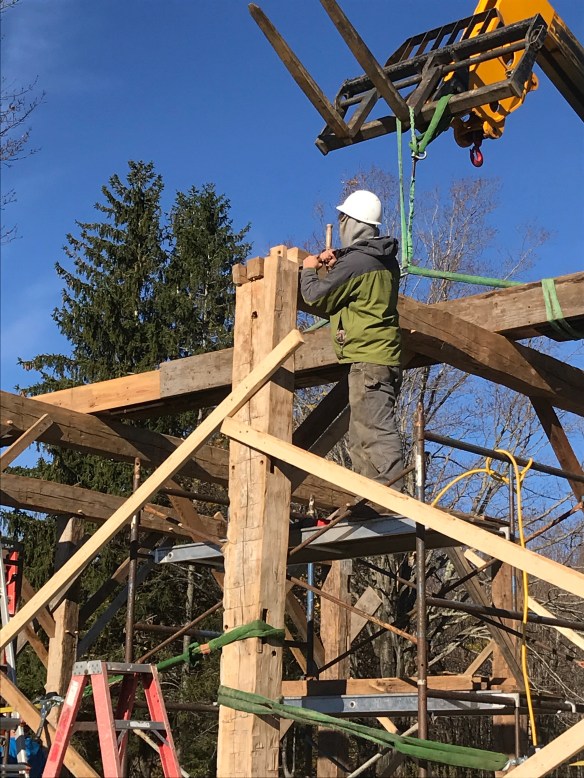
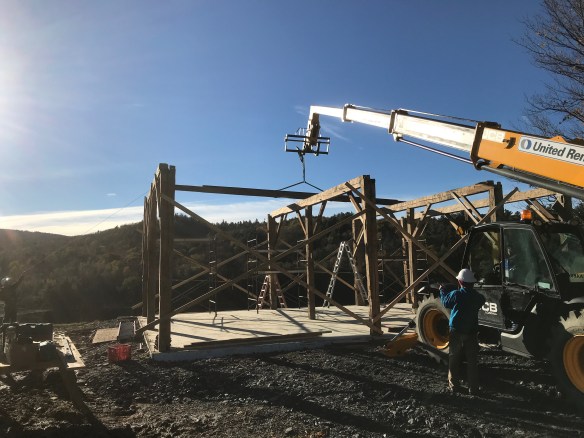

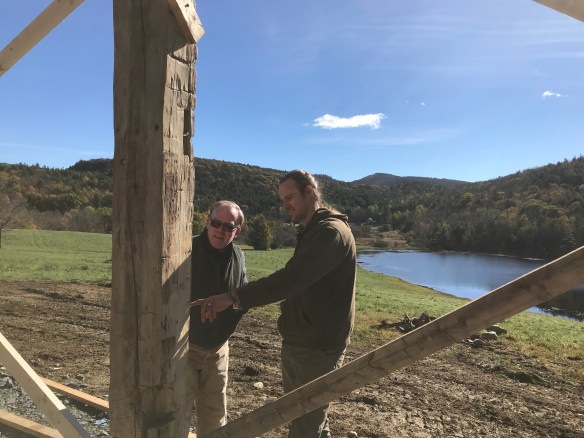
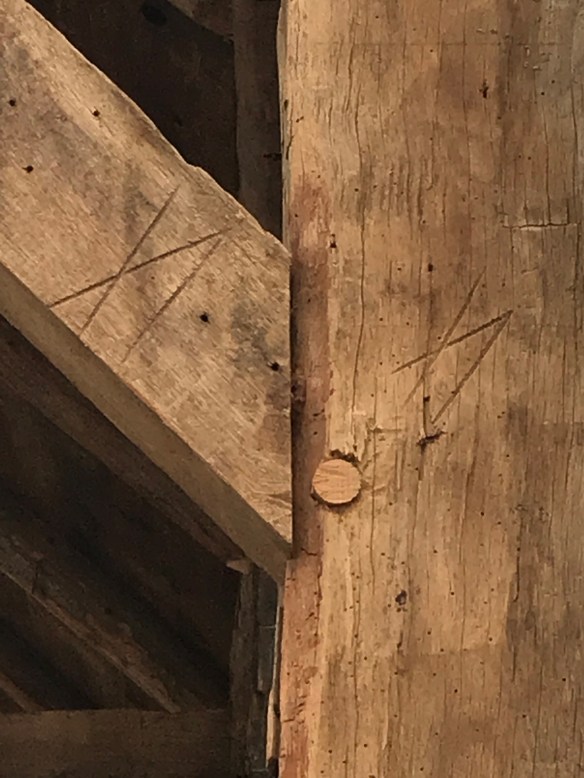

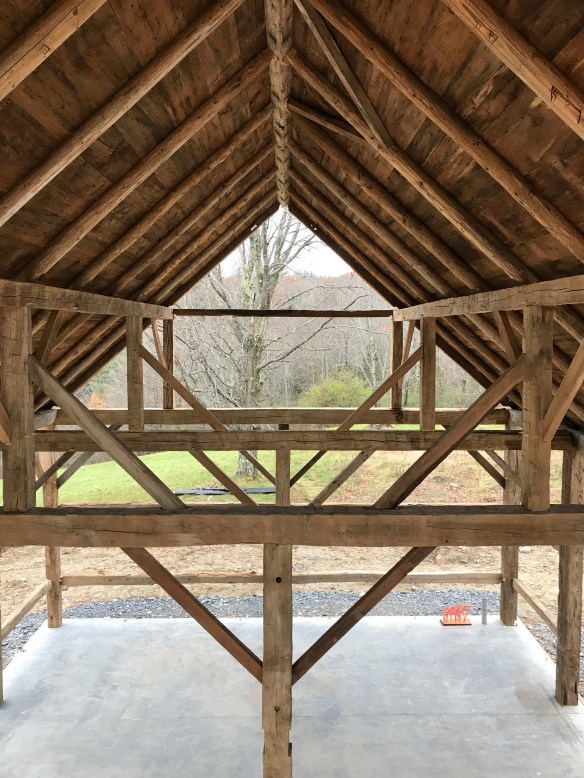

 We had been called because the foundation under a large gunstock timber frame is crumbling, and the property owners would like to see this barn saved and re-homed before it deteriorates further. This barn was worth the long drive from our home base. The posts and timbers are beautiful, and even the braces are hand hewn.
 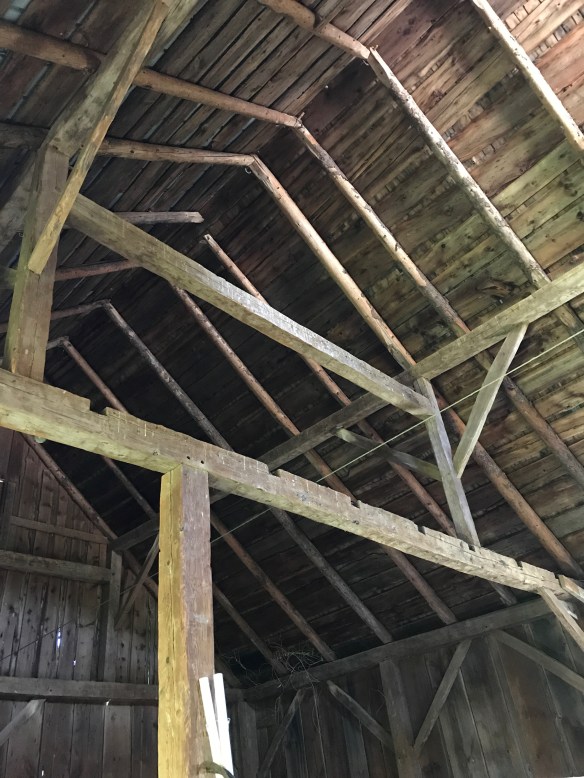 We will be carefully disassembling this beautiful and worthy barn in the coming months, after which we will restore the timber frame. Stay tuned for more information as we get this structure measured, drawn to scale, and listed as an available frame on our webpage.
 There, next to the barn, was a decrepit old silo, with vines growing up the side. It looked like the turret of some old agricultural castle, and I pushed my way through wild grapes and wild cucumber vines to find the opening.
  The roof had collapsed and I could see vegetation reclaiming the interior. The old stone foundation was mossy and I could imagine the excitement of the farm crew many years ago as they laid these rocks in a neat circle to define the storage space for their crops- no doubt in between the daily chores of feeding the animals, tending the fields along the Connecticut River and milking the cows.
 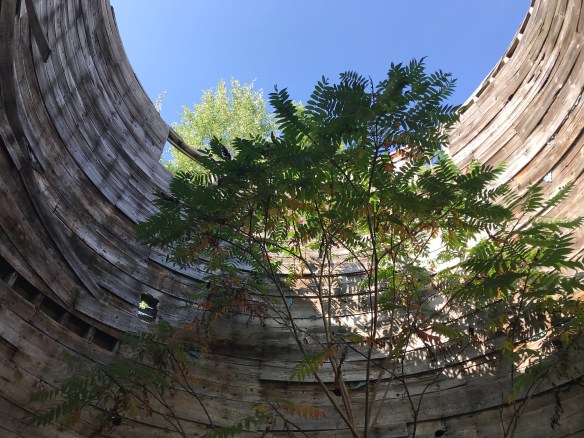 Unlike most of the old wooden silos that have vertical boards held together with steel rings, this one had vertical studs with thin boards bent to match the radius inside and outside. A sumac tree had sprouted, and its upper branches were capturing the afternoon sunlight as I peered in. A single four pane window was in the top of the silo wall, and in the early days this would have let that same sunlight into the interior to illuminate for the farmer how much of the summer’s bounty remained as the winter months progressed. I am so glad we will be catching the large barn before it, too, is reclaimed by vines and trees.
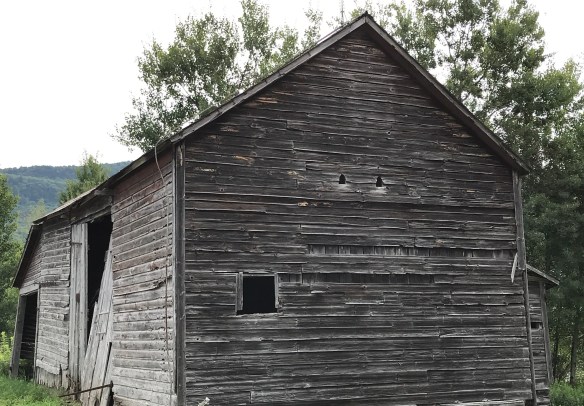
 I asked about the little barn, and was granted permission to explore it. The owners had not been in it for a very long time, and suspected it was nothing that would be of interest or that could be salvaged. I went in for a closer look.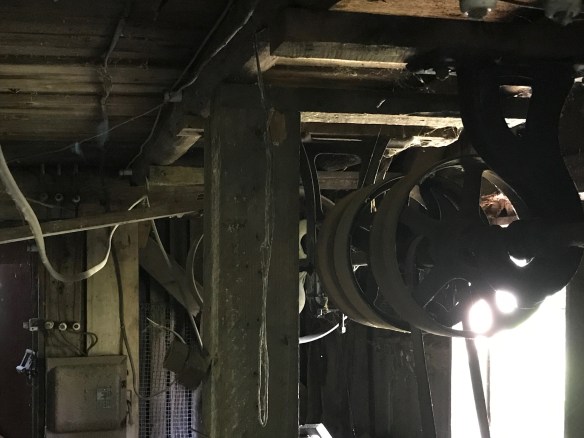
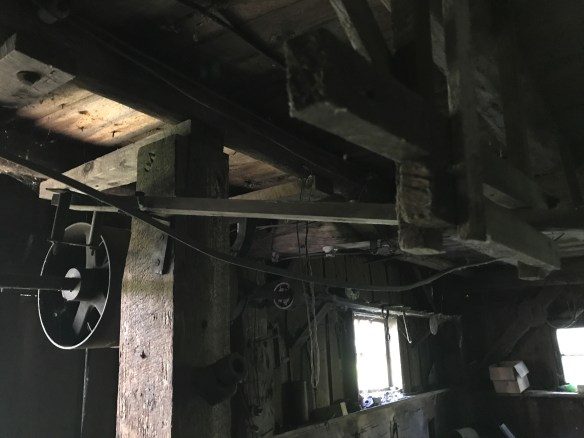 The incredible durability of old-growth timbers was apparent as I inspected the hand-hewn timber frame. In spite of the trees pressing in, the frame is worthy of restoration, and we agreed to purchase this 14×18 foot frame. Once restored and erected on a new foundation, it will make a remarkable cabin with sleeping quarters on the second floor. We will be listing this corn crib on our webpage soon.
 I cannot wait to spend a day inside this barn with our dedicated team doing our best to decipher and document the creative web of belt-driven machines and jigs. We will then begin popping out the hardwood pegs, disassembling the timber frame joinery, and labeling all of the wooden joints. In time, this frame too will have a new home and a continued evolution of usefulness. The constant variable throughout these progressions will be the stout integrity of the structure and its aesthetic beauty.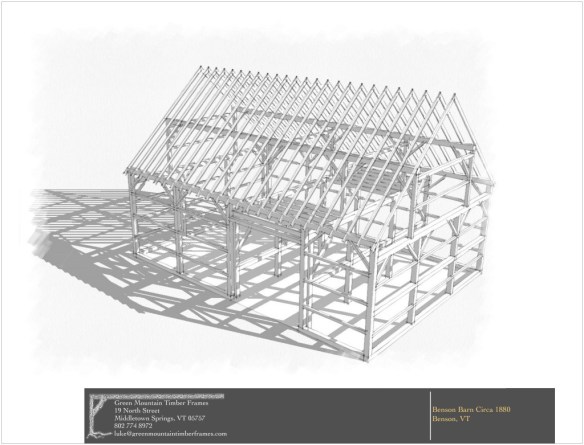








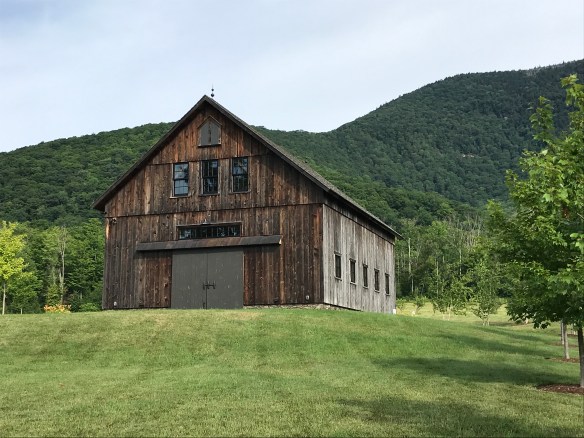
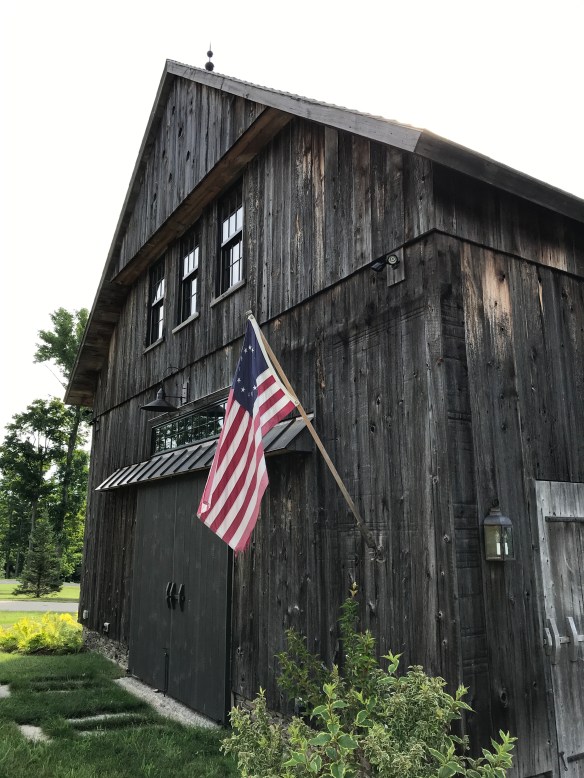
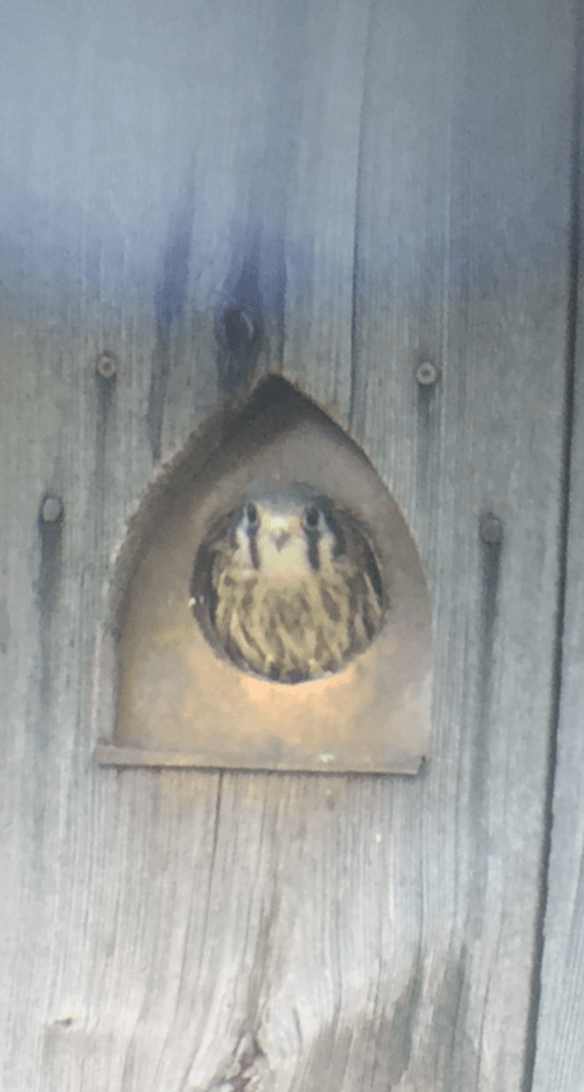
 When we sided our barn using vintage boards, we cut six holes in the upper section. Copper flashing was used to keep water from going in. Five of the doors are faux, and the sixth has a hole that leads into a nesting box.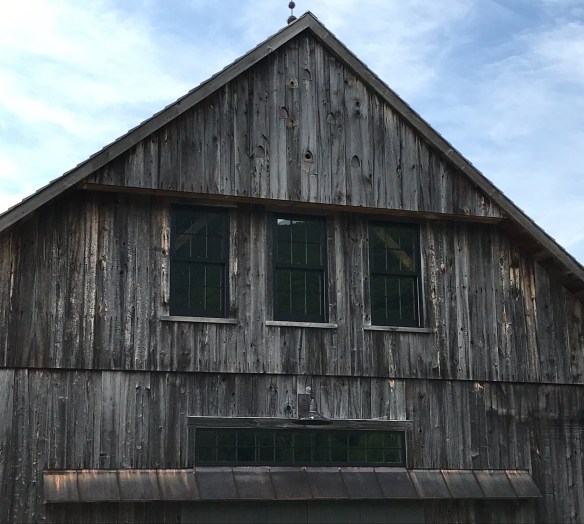








 A Blog about Old Barns ~ from Green Mountain Timber Frames