The Amos Hodsdon House Needs a New Owner

Reading this in your email? For easier reading – Click here.

We at Green Mountain Timber Frames have a friend and fellow “restorationist” and we are very excited to be collaborating with him on a new project. It’s an incredible opportunity to preserve the “Amos Hodsdon House,” built in 1837.

1904 Hodsdon postcard without text cape house green mountain timber frames

Ben’s story

Hodsdon dismantle crew green mountain timber frames

Meet Ben Heywood, center

Meet Ben – An Expert in Restoration

Ben Heywood moved into the area a few years ago after a career of preservation and restoration work in the Cape Cod area. Since moving to Vermont, he has become a friend as well as a consultant on some of our projects. He has aided us in assessing the fine details of houses dating from the 1800s. He has a wealth of knowledge regarding trim, window and door styles and the dating of buildings. He has done incredible work restoring original entryways, windows, and cupboards. On a recent weekend visit, I asked Ben how he got interested in restoration.

“I was born in Gardner, Massachusetts, in 1951. There were dozens of abandoned 18th and early 19th century houses in a 40 or 50 mile radius. In the course of many Sunday family rides in the station wagon, my father would drop me at these so I could snoop around. It was arranged that I’d be picked up about a half hour later. All kinds of different architecture… it was great! It took no time at all for me to understand the difference between the handcrafted specimens and the numerous postwar boxes popping up everywhere. I also bought and devoured all the Eric Sloane books by age 16. All this sent me in the preservation direction.”

Ben’s First Home Restoration

Ben moved to Falmouth and purchased his first “vintage” house in 1978 for the price of $1! It was a circa 1815 three quarter cape with a center hall and three fireplaces. It had the original doors, wainscot, finish trim and floors. As Ben told me, “I assembled some buddies and had it down in three weeks. I’ll never forget having to buy a liability policy from Lloyd’s of London as I was young and not yet firmly established. Insurance for four weeks cost me 500 times what I had paid for the house! Most everybody thought I was nuts at the time- until they saw the place restored!”

In the decades that followed, Ben disassembled and restored around 20 period houses. He did restoration in place on another 20!

Bodfish house cape house green mountain timber frames

Ben completed the restoration of the “Bodfish” house in 1982, which overlooks Cape Cod bay.

In 2008, Ben decided to find one last gem of a house that he would restore for himself as he moved to Vermont and into retirement. Enter: the remarkable house built by Amos Hodsdon in 1837.

Hodsdon house vintage photograph cape house available green mountain timber frames

The Hodsdon house, built in 1837

Now, due to life changes and a desire to downsize his construction plans, Ben has decided not to use this house as his own. The beautiful historic Hodson House is available for sale!

And we at Green Mountain Timber Frames want to help our friend find a new family to make this house into their home.

About the Vintage House

After looking at many vintage buildings, Ben decided on a house in Carroll County, New Hampshire, named after Charles Carroll who died in 1832 as the last surviving signer of the Declaration of Independence. Carroll County was created in 1840 with Ossipee as its seat. Ben learned this history lesson after his search of Carroll County deeds came up empty. Eventually, he realized that the county lines had changed three years after the deed to the property changed hands from father to son, and so was filed in Strafford County!
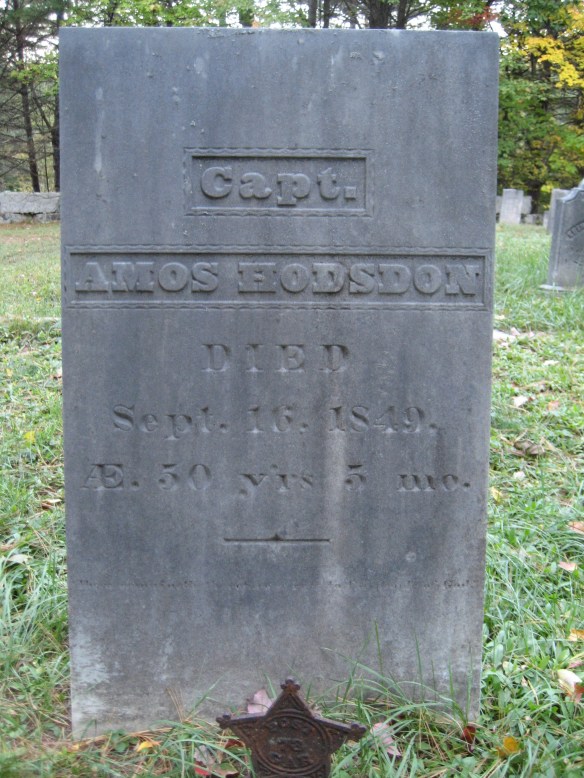
Hodsdon grave stone green mountain timber frames

Ben found the gravestone of Captain Amos Hodsdon
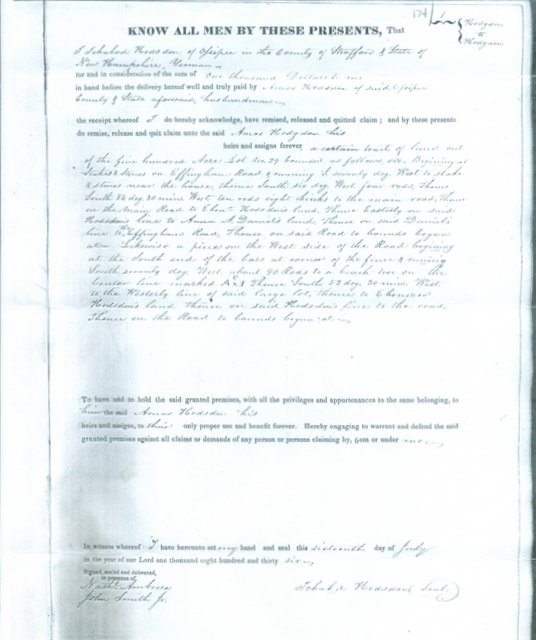
deed Hodsdon vintage cape house green mountain timber frames

Here is the deed showing the transfer of property from father to son

When Ben discovered the old Hodson place, the house was incredibly unaltered and in good “frame health,” for its age. It had been abandoned for ten years and had been occupied by an elderly couple before that. The kitchen had a typical cast iron sink mounted in what was surely a period dry sink. There was a rusty old spigot and pipe that ran into a tank heated by the wood stove! The last residents of the house had still been carrying water into the house from a six foot diameter dug well with a flat stone cover. Best of all… the house had never had a bathroom!

Ben assembled a crew and began dismantling the frame.
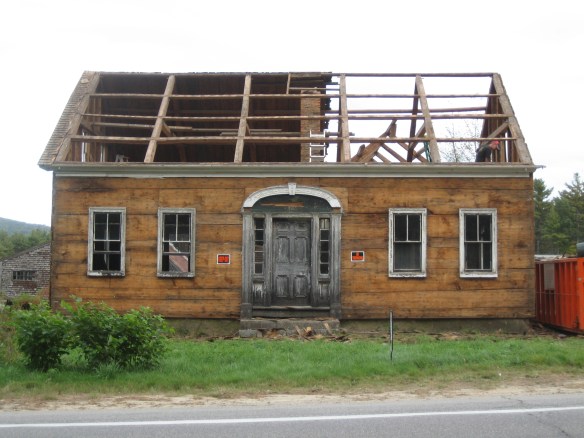
Hodsdon partially dismantled frame green mountain timber frames

The roof boards come off

Hodsdon rafter system vintage house

Here is a 46 foot purlin in the rafter system!
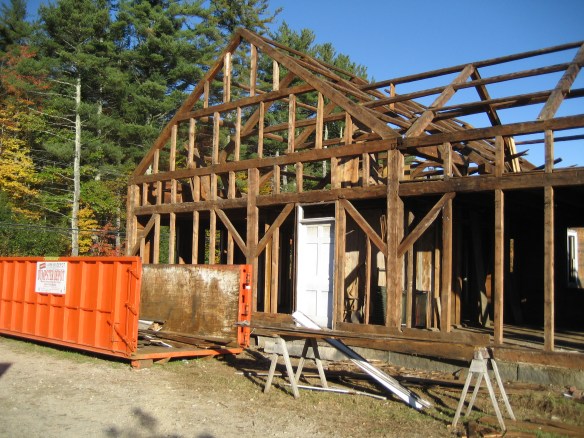
Hodsdon frame opened up green mountain timber frames

The exposed frame

The Frame Awaits a New Owner

The frame is down, carefully stored and awaiting a new home. It is available as a complete package, including the beautifully restored trim work, original flooring materials, interior trim and wainscoting panels, the windows, and the entry. Even the staircase is ready to go back in!

Above you can see the tired entryway, and then the doorway after Ben’s incredibly meticulous restoration work.

When the house came into Ben’s caretaking, the decorative fan work over the entrance had been removed and flat boards had been nailed up. Ben studied the “shadow lines,” which are marks and weathering patterns on the wood, in an attempt to figure out through detective work what the original had looked like. Then, in a fortuitous turn of events, a friend discovered this old photograph of the house. It confirmed Ben’s guess at what had graced the entrance originally, and wait till you see what he created!
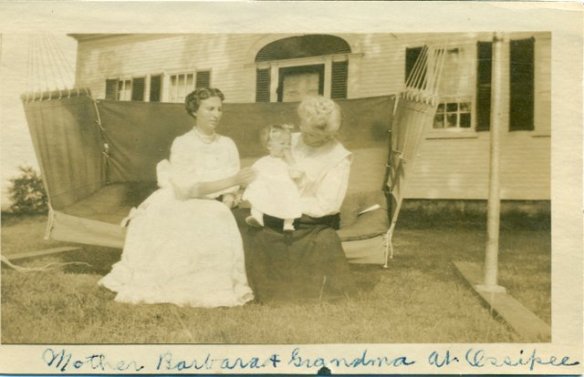
Cape House Green Mountain Timber Frames

This photo is the best rendition of the entranceway in the background. Oh, and the people in the foreground look fantastic too!!

Restored fan over entry Hodsdon house green mountain timber frames

Here you can see the incredible recreation of the decorative fan work over the doorway- all based on an early 1900’s photo!

Expertly restored windows Hodsdon cape house green mountain timber frames

Ben has even restored all the original windows!

This house boasts roughly 3,700 square feet of vintage living space. The crew at Green Mountain Timber Frames will do a complete restoration of the timber frame itself, and we are looking for someone who has always wanted to live in a beautiful New England style home!

Interested in this frame?

Know someone who may be able to help us find a home for this historical treasure? Please pass the word around that this wonderful structure is available and help us find a new “forever” location for this gem!

Contact us!

(802) 774-8972 or Luke@GreenMountainTimberFrames.com

Cavendish Barn Restoration Update – The Grand Finale!

Reading this in your email? For easier reading – Click here.

We recently completed the restoration and renovation of an historic timber frame from Cavendish, Vermont.


The project kicked off when we first visited the frame back in the winter of 2015. We’ve written about this barn frame before, while in the thick of the restoration process, and wanted to deliver the coda now that the project is complete.

The Background

The owners of the frame wanted to save a barn on their property; it was in bad shape and needed to be taken down before it collapsed. We first visited the barn in the winter, dismantled it in the spring, and spent the summer restoring it at the Green Mountain Timber Frames shop.

In late summer, we erected the restored frame on a new foundation.

The Transformation of a Barn

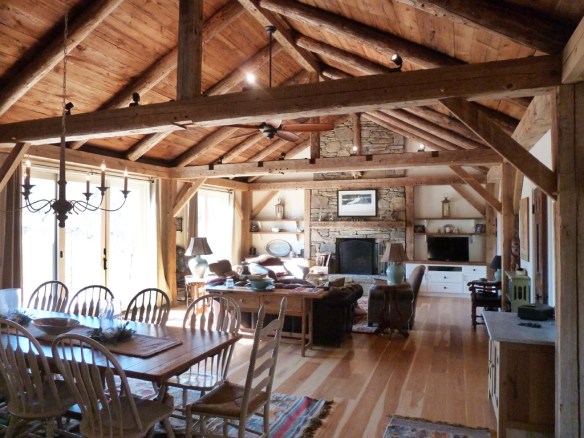
In the pictures below, you can see the entire process – from start to finish. From a wintery day in February when the sagging frame looked tired and in need of some TLC, to the beautiful great room it has become today.

Vermont timber frame in winter_Green Mountain Timber frames

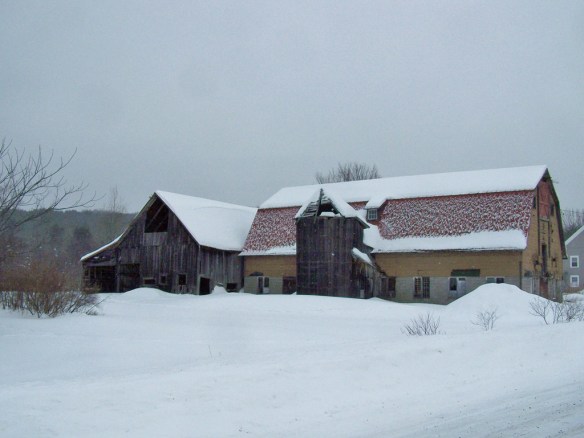
Our first look at the Cavendish barn in Feb 2015

Dismantling historic timber frame barn

Spring prevails, and dismantling begins!

green mountain timber frames restoration process in cavendish vermont

A look at the last timbered wall section we took down. Once on sawhorses, we popped out each vintage peg, labeled every joint, and disassembled.

restoring post and beam structure

Restoration begins at the GMTF shop

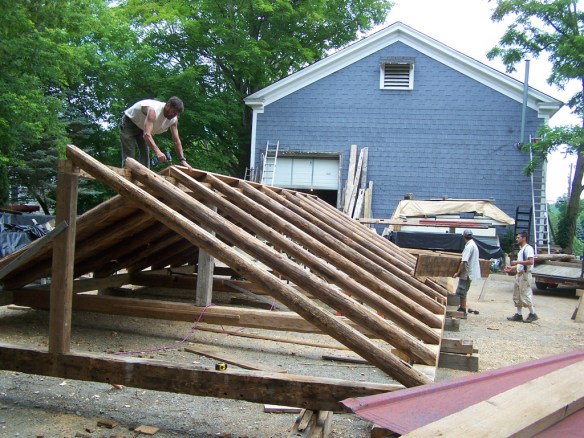
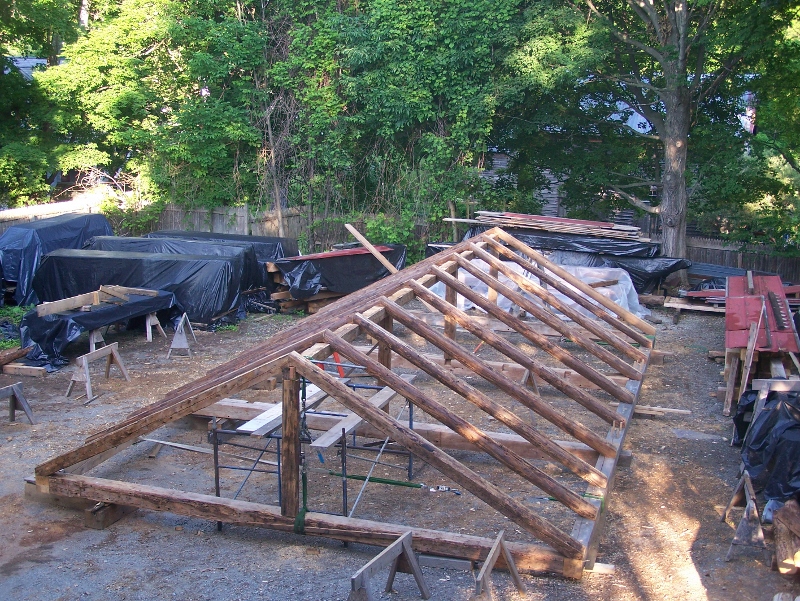
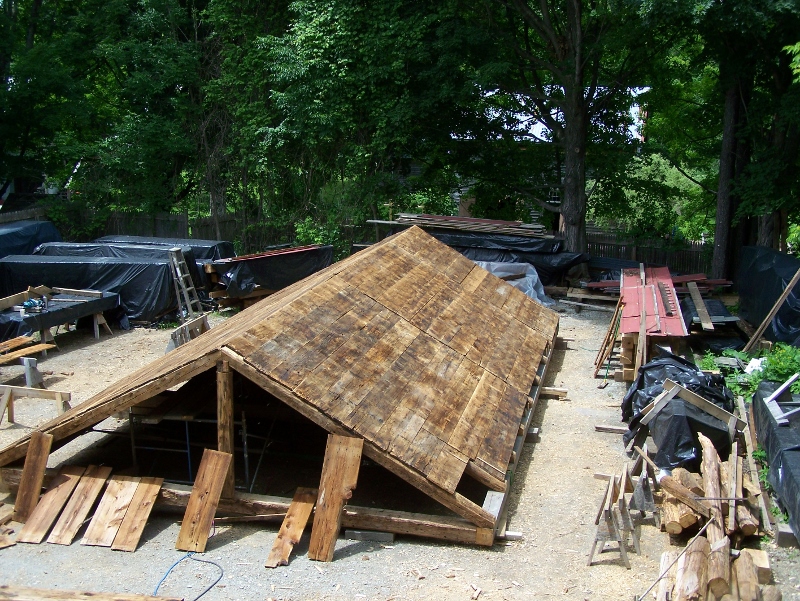
The image below shows us adjusting the roof rafters to fit the new design of the great room. We pre-assembled the rafters, applied the original roof boards, carefully labeled each rafter and board, and then dismantled the roof before finally shipping the frame back to its home of origin.

restoring post and beam barn from 1850s

Restoration of new england barn from 1850s

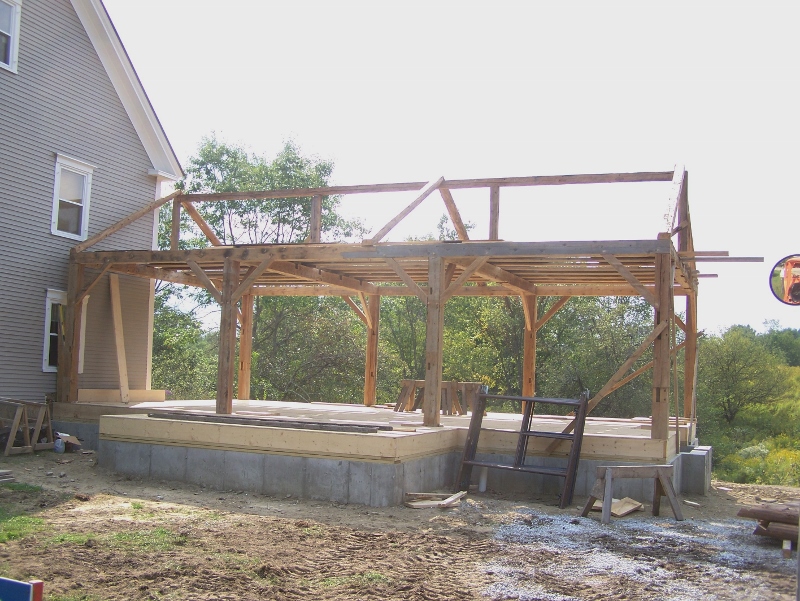
Redesigned frame assembled on a new foundation about 100 yards from where it was first crafted nearly 200 years ago!

After the frame was firmly in place, another general contracting company  completed the project – The Severy Brothers  of Ludlow, VT. The next two pictures show how they used “SIPs” (structural insulated panels). The panels are fastened to the outside of the frame, which provides superb insulating value while showcasing all of the wooden elements on the interior. In the second picture, you can see the front entry taking shape.New barn home made from restored wood timber frame

Cavendish VT Barn frame with insulated panels

Exterior view of front entry with SIP panels

timber frame interior

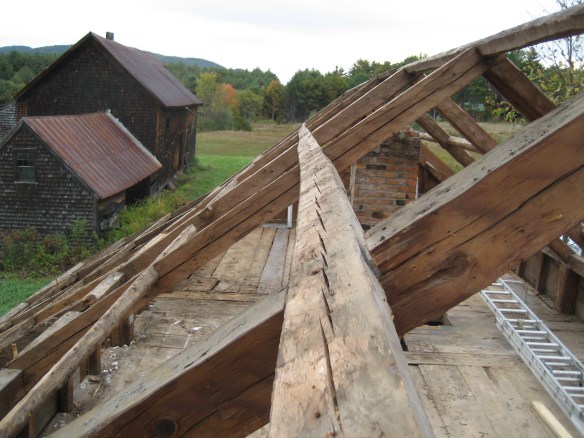
The re-erected frame, pre fireplace. Note the beautiful ridge beam!

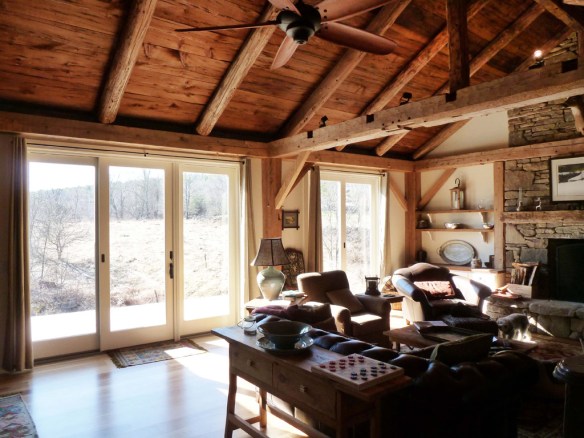
post and beam architecture in historic great room

The fireplace was created with stone found on the farm property

Barn door entryway to new england great room_green mountain timber frames.JPG

Sliding barn door into main house

restored timber frame home_green mountain timber frames

Large sliding doors capture the beautiful Vermont landscape

Exterior of Cavendish Barn Frame with front entry_Green Mountain Timber Frames

Timber porch entry into the great room

It was truly a pleasure to work on this barn frame. We love it when the opportunity arrises to restore a frame while keeping on its original location! Do you have an historic barn on your property that is in need of attention? We would love to see it!


Want to see some other projects we’ve done at Green Mountain Timber Frames?
Check out our completed timber frame projects!

Glamping – The Timber Frame Glass House


Reading this in your email? For easier reading – Click here.

I’m always looking for a new and exciting timber frames to build, so when the opportunity to create a one-of-a-kind post and beam glass cabin came my way – I jumped!

Glamping a timber frame glass house

Why camp…when you can glamp?

GLAMPING:

noun. 1. a form of camping in which participants enjoy physical comforts associated with more luxurious types of holiday. Word Origin. C21: blend of glamorous + camping.

A client of mine recently asked us to help glamorize the tent platform in her wooded Vermont backyard. Using salvaged timbers that Luke and I had on hand, we turned a simple raised platform into a glamper’s dream. The tiny timber frame glass house we built makes for an unmatched camping experience – and will stand for decades to come.

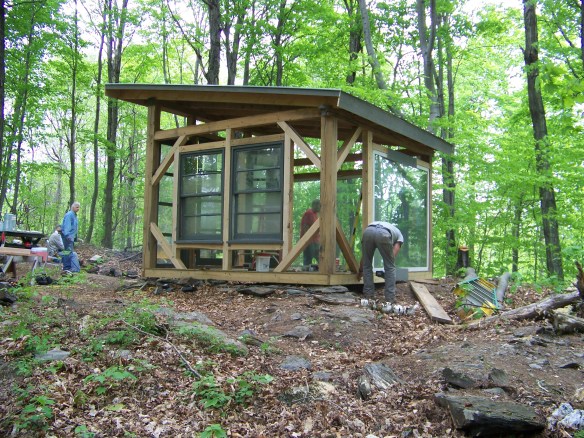
We started the construction by building a frame using reclaimed white oak timber and some leftover hemlock beams. Below you can see the skeleton of the 12′ x 12′ shed.


The client had acquired several glass windows and doors. A real Vermonter, she gathered a group of friends to transport the glass panels all the way through the woods to the site of her new glass house.

hoisting beams for glass house construction

We used the two large panels of glass (measuring an impressive 6′ x 8′ each!)  as the sides of the house.
timber frame vermont glass house

Because the structure is largely glass, it presented a bit of a construction challenge. We needed to include enough “wind braces” to make sure that the structure can withstand the howling winds of a New England winter. You can see the cross beams and braces in the image below.

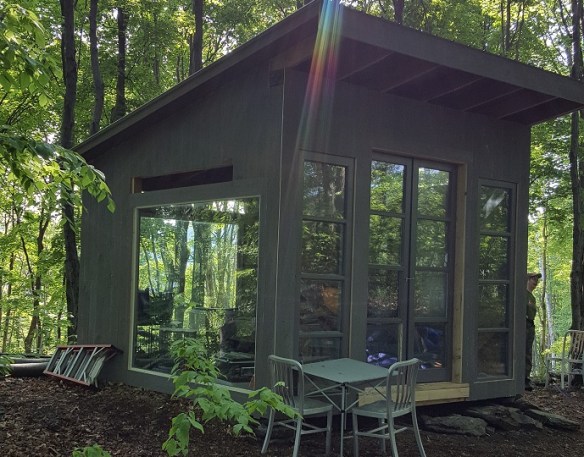
glass house by green mountain timber framesAs for the walls that are not made of glass, we covered them with traditional siding. The final structure is truly one-of-a-kind – made up of 70% glass – and allowing for a nearly unobstructed view of the surrounding woods.

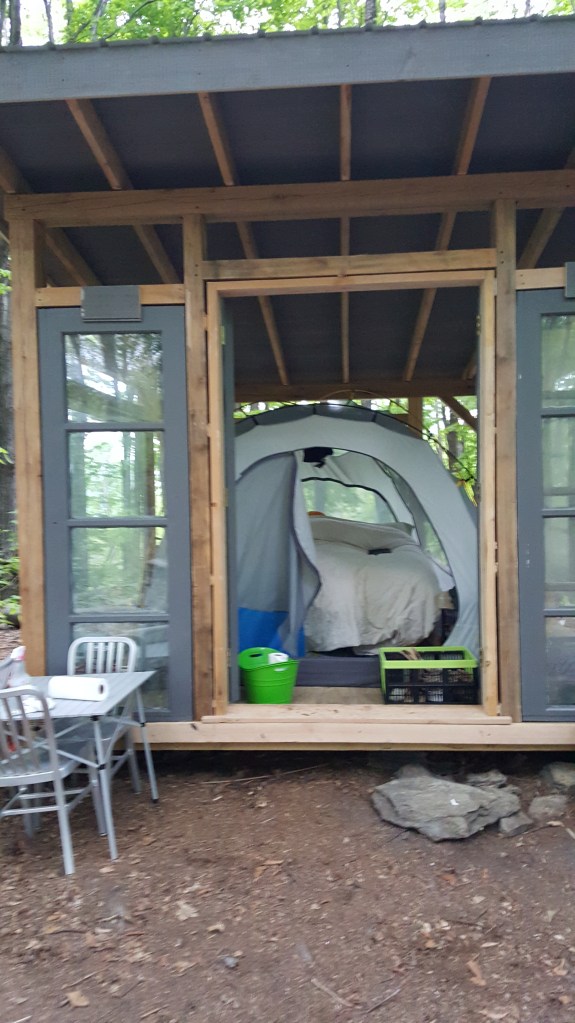
Glamping in a timber frame glass house

My friend couldn’t wait for the siding to be applied so spent the first night in a tent in the cabin.  The black flies and skeeters are wicked bad just now.

Secretly, we’re hoping our client lets us camp out here as well! The temptation of a night of camping under the stars, without mosquitoes – seems almost too good to be true!

Want to see some other projects we’ve done at Green Mountain Timber Frames?
Check out our completed timber frame projects!


Dutch Cape House from c. 1800

Reading this in your email? For easier reading – Click here.

One early morning, before dawn in November, two brothers were readying for an early morning deer hunt. Hunting culture in rural Vermont dates back to the original residents, and continues still. On this particular morning, breakfast was cooked, weapons readied, and excitement no doubt was rising!

I can imagine that the black of night began dissipating, and the hunters hurriedly finished their planning and headed out into the breaking daylight. A chair had been left too close the roaring wood stove and a couple hours later, a passerby saw smoke billowing from the house. Fortunately for those young men, for Green Mountain Timber Frames, and for the future owner of this beautiful timber frame, the fire was put out and the house survived!

IMG_3277

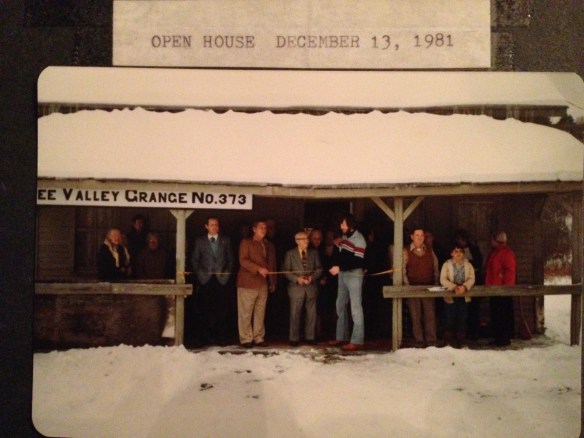
Since that early morning fire, this little house has served the farming community well. When the local grange had to move out of a nearby building, the family that owned this cape generously offered the space. After many community work days, the grange moved in for weekly meetings and community events. The National Grange of the Order of Patrons and Husbandry is a national organization that began shortly after the Civil War. The group works to promote community bonding and education around agriculture.

IMG_3091

This frame dates from around 1800, when Vermont was still a young state. It was placed in a little hollow between knolls with a stream nearby and land was cleared around it for farming. The house was built using oak, chestnut, and beach trees- no doubt the very trees that were cut down to begin opening up fields for livestock.

IMG_3252

This frame has four bents and stands true even after 200+ years and a close call with fire!

It is fascinating to get to study so many local timber frames and ultimately to get a sense of who built these structures many generations ago! This particular house is a Dutch style of timber framing. The bents are close together and the floor joists are built strong enough to span the whole 24 feet of width.

IMG_3238

A clear span of 24 feet makes this an open canvas for future room design.

This little building measures 24 feet by 26 feet. It is perfect for a small cabin or house, for an addition onto another building, or as a small storage or animal barn.

IMG_3237

The posts and top plate are 10 x 10 inches – a solid little house!

A Spacious Second Floor

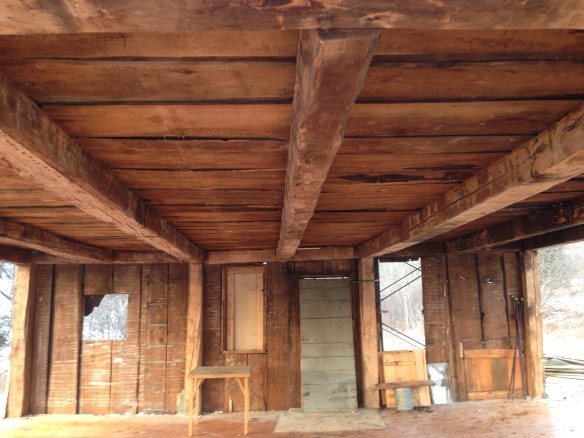
One of the reasons we fell in love with this structure, and just had to save it, was the spacious second floor. The posts extend quite far above the second floor, creating a tall “knee wall.” There is plenty of head room upstairs.

The rafter system has a five sided ridge beam with braces to the rafters. Unfortunately, the rafters and ridge beam were damaged by the close call with fire and by subsequent roof leaks over the years. We will be replicating the original roof system however and it will once again be strong and beautiful.

IMG_3235

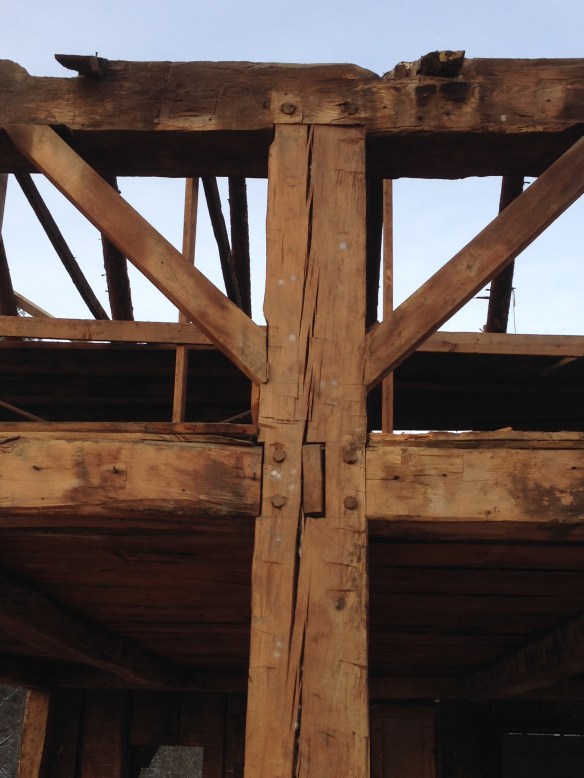
The posts extend up beyond the 2nd floor, creations a spacious second floor living area.

IMG_3231

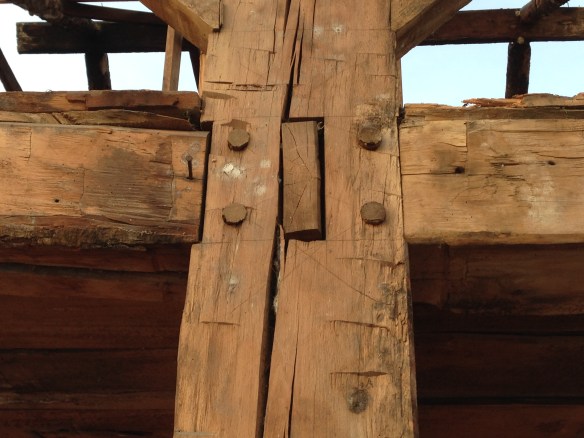
Here you can see braces strengthening the structure.

The Ingenious Basement

The ingenuity and creativity of the builders of this home are demonstrated in the basement of the house. Underneath the floor system, we discovered a very rugged food storage room or “root cellar” built with rough hewn logs, stone, and brick.

I have no doubt that it was filled with ice from the nearby river before the spring thaw, and that it was filled with squash, potatoes and other vegetables in the fall! Surely, it also was an excellent place to make and keep that hard cider that Vermonters loved (and still do)! It also doubled as a very strong foundation for a wood stove on the second floor. Imagine the original residents filling this little room with the fruits of their labors, and then relishing the food during the bitter winters.

IMG_3274

Let’s keep those garden vegetables and root crops good all winter!

Once again, we consider it such a privilege to cross paths across the span of generations with the pioneers, carpenters, farmers, and families who have built and dwelt in this structure. We are also grateful to the family that saw the historical value of the house and allowed us to disassemble it once it could not be kept up in its original location. The restoration of this timber frame will take place over the future months and it will once again be ready to house future generations.

Interested in this timber frame or another historic property?

Contact Green Mountain Timber Frames at
luke@GreenMountainTimberFrames.com, or
802.774.8972


A Comparison of Timber Frame v. Stick Built Construction

Reading this in your email? For easier reading – Click here.

This week’s guest blog is from builder and timber framer, Glenn Tarbell. Glenn has collaborated on many projects with Green Mountain Timber Frames over the last two decades.  Recently, he built this beautiful timber frame garage for a client. 

Final Timber Frame Garage.jpg

Why Use Timber Frame Construction?

Recently I had a customer who wanted a new garage. They live in a beautiful wooded area with large oak trees near a wetland. Their house is not large and has a low sloping roofline. The siding is rustic, rough sided pine that is stained. They asked me to build a two bay garage.

Timber Frame v. Stick Built

I inquired if they would be interested in a timber frame garage rather then a traditional stick built garage if the pricing was not considerably higher. They loved the idea of a timber frame and we began the design process. The pricing for a timber frame style building was only slightly higher, so we decided to go with it!

Designing the New Garage 

In the design phase, we talked a lot about the height of the new building. The customer did not want a garage looming over everything. We talked about enclosed and not enclosed bays, power needs, and building materials for the roofing, siding and the timbers. They also needed storage for kayaks and canoes and windows on the south face for garden starts.

We decided that the final building would be a barn-garage. We would create a structure that looked like a barn with an extension for the traditional hay hook or, as we discussed, a canoe hook. The customer had a rope system with a vintage pulley that has already pulled the boats into the upper half story for the winter.

The structure we finally designed has one fully enclosed bay with an overhead door and a shed roof off one side for the second bay. We ultimately choose this look for two reasons: height and looks.

6_plate section for the shed roof

Building the Barn – The Construction Process

When it came time to start building the garage, we chose hemlock wood for the frame. This is a ridged softwood that works well for timber frames. We cut the joinery traditionally using chisel, saw and chain mortiser. Then, we dry fitted all the parts of the frame at my shop. Seeing the mortise and tenons fit together and then seeing the bent sections laid on the sawhorses was wonderful. Dry fitting the frame gives a sense of what the building will become, while also allowing for us to check for accuracy in layout.

2_All the bents are up

Here we are drilling 1-inch holes for the wooden pegs.

The barn posts are six by six, the girts are eight by eight, the rafters are four by four and the braces are three by six. As a big pile of wood it does not look like much, even with the joinery cut. But on raising day, wow, it takes on a look of its own.

4_4x4 rafters in place

Here you can see all the bents assembled and the frame with shed walls erected.

And here’s a look at the new garage once the roof sheathing and trim were on:

7_Roof sheathing and trim

Pricing Timber Frame v. Stick Built Construction

When pricing this kind of project and determining the cost difference between timber frame and stick built construction, I have to look at the two styles of building with the thought, “What steps will be different?” Siding will be applied in the same manner in both building styles, as will trim, roofing and sheathing. The only real difference then, is the framing.

It took nine days to cut out the timber frame and tip it up, including roof sheathing.

3_Drilling holes for pegs

The frame with all the 4×4 rafters in place.

To build a traditional stick built garage with roof sheathing, it may take seven to eight days to get to the same point. Therefore, the difference in this project was two days of labor.

Timber Framing – A Worthwhile Investment

In the end I think timber frame construction makes more sense both financially and aesthetically. Even if it takes a bit longer and requires a slightly larger initial investment, (usually 15-20% more) a new timber frame is strong. Barns built this way have lasted hundreds of years.

Standing in a timber frame feels good. You can see the craftsmanship of the builder and know that the history of barns and houses built this way dates back hundreds of years. So whether you build a new timber garage or use a vintage timber frame barn as the frame for a garage, from my experience timber framing is usually the way to go. It’s cost effective and the building can last for centuries if the roof is maintained.

Interested in your own timber frame barn or home? Let us know!

We’d be glad to hear from you! 

Luke – Green Mountain Timber Frames
luke@GreenMountainTimberFrames.com
802.774.8972

Spacious, Hardwood 1840s Timber Frame – For Sale

Reading this in your email? For easier reading – Click here.

We’ve named it the Meadow Barn. 

1_”34’x46’ hand hewn, hardwood timbered barn frame”

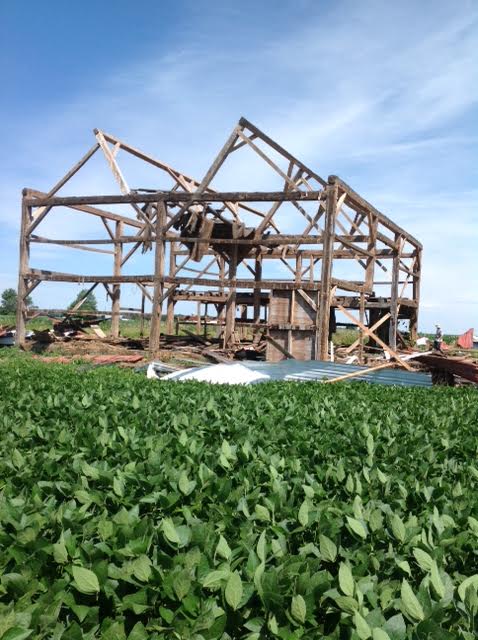
This beautifully kept timber frame barn, hailing all the way from Northern Indiana, was built amidst the prairies and the corn fields.

Former “meadow barn” surrounded by soybeans

Throughout the winter, the barn was used to store hay. The 34 X 46 foot structure stood far from the farmhouse itself, but strategically within the fields so that the balers wouldn’t have to transport the hay too far. Come springtime, the farmers could come back for the hay.

Who Built This Beautiful Barn?

The timber frame was likely built by New England timber hewers. Around the same period, in the 1840s, New England was adapting to water-powered saw mills. This meant the demand for craftsmen, who were skilled in creating square timbers using only axes and adzes, was on the way out. So the hewers headed west for new opportunities. 

What Makes This Barn So Remarkable?

While New Englanders had cut down most of the eastern hardwood trees and started building  with soft woods like pine, hemlock and spruce, Northern Indiana offered forests rich with hard wood timber. This frame was built from beautiful, first-cut red and white oak, beech, black walnut and ash.

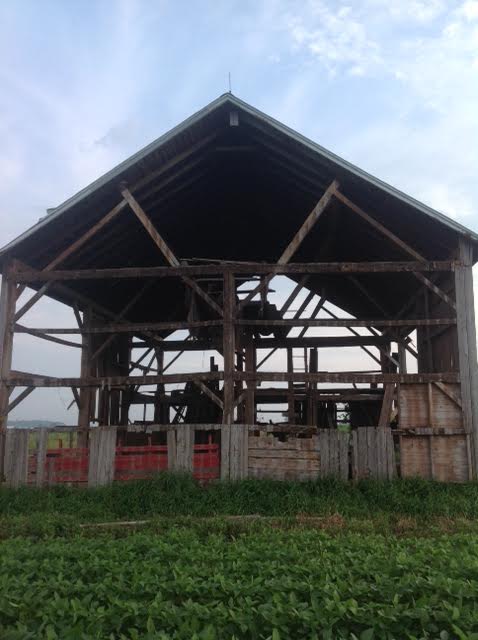
Pic 2_Gable end wall, loft space possible in roof rafters

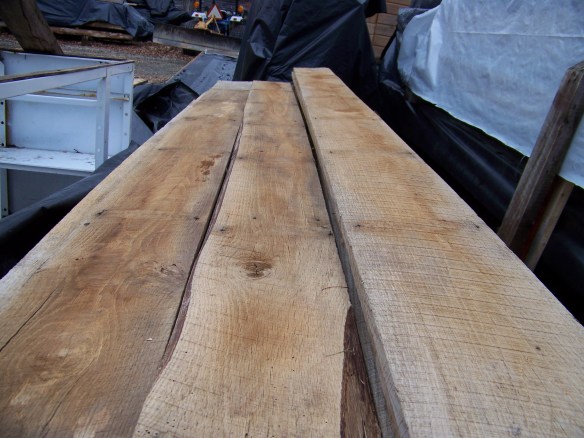
Wonderful White Oak Roof Boards

Because hard woods were still prevalent in Indiana, even the roof boards on this barn are hard wood. In fact, the white oak boards are so beautiful, the new owner could use them to make stunning flooring.

White Oak Roof boards restored by Green Mountain Timber Frames.JPG

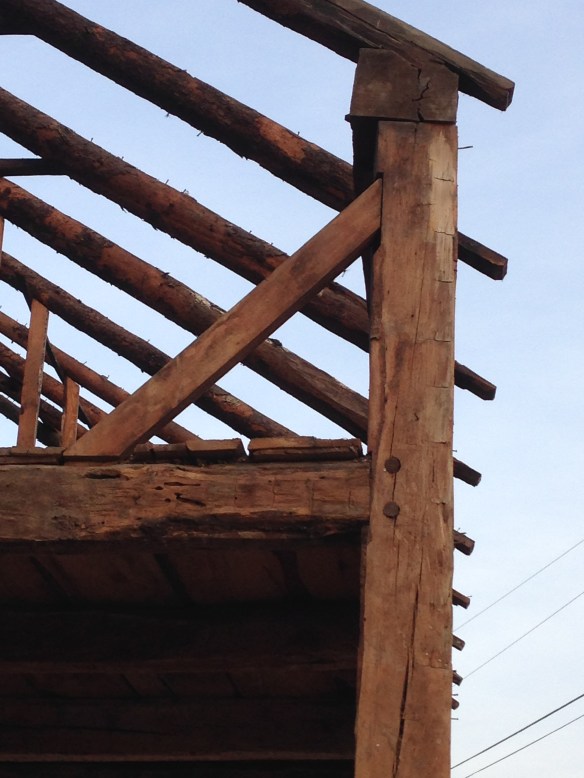
In the picture below, you can see the full length, hand hewn timbers.

Pic 4,_Loft space evident

The following picture showcases the soft, warm colors of the hardwood.

Lovely color of hardwood hewn timbers

Standing the Test of Time – An Old Barn in Excellent Condition

The frame itself is in excellent condition, with straight lines that have stood up to over 165 years of grueling winters and winds in the mid-western plains.

Picture 6_Simple geometry survives  165+ years of prairie winds

Endless Possibilities

Spacious and sturdy, this frame offers an expansive 1560 square feet of space, with the option for a second floor. We could easily add in a loft system in the rafters.

This barn frame could become a great room or a complete home. It could also become a restored barn, restaurant, studio or vintage vehicle storage.

Want to Call This Beautiful Frame Your Own?

Give us a call at (802) 774.8972 or email Luke@GreenMountainTimberFrames.com

All in a Day’s Work

Reading this in your email? For easier reading – Click here.

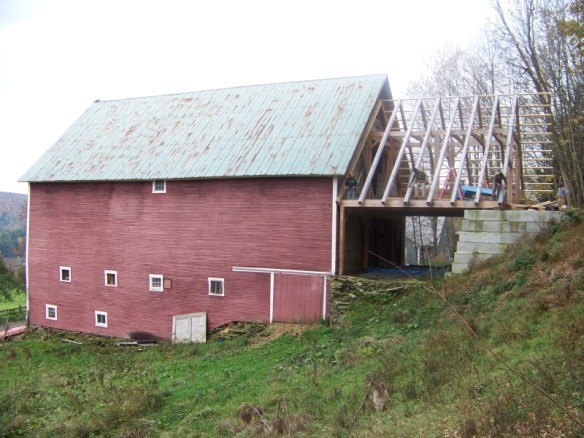
It’s amazing what you can accomplish in one day’s work! With a good team, beautiful cloudy Vermont skies and some hard work, we managed to install a new metal roof on this timber frame barn addition in ten hours with finish trim.

Timber frame_post and beams in Vermont_Green Mountain Timber Frames_8am

This particular timbered bridge addition was built by another crew, but since they weren’t available to complete the roof, we were asked to do the job. As a lover of all things timber, we couldn’t bear to see this new frame open to the Vermont elements any longer.

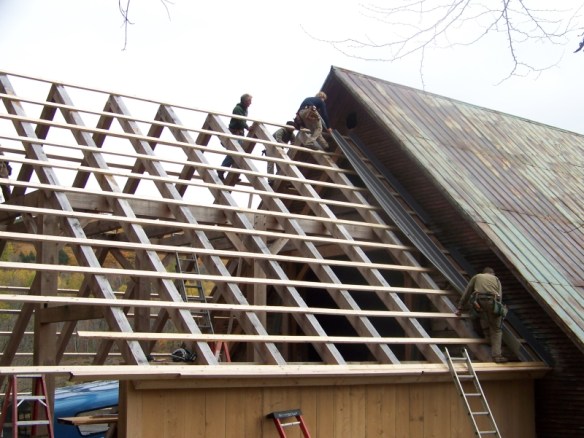
Our crew of seven left home at 6 am for the two hour drive to eastern VT. Starting with the raw frame at 8 am, we installed 2×4 nailers.

Working on roof of historic timber frame_green mountain timber frames_vermont

Then, we did the necessary finish on the roof trim and added flashing to the existing barn. Next, we screwed metal roofing to the 2×4 nailers.

applying roof boards_green mountain timber frames_custom barn homes

This particular barn has a beautiful gable window that adds an elegance to the building. The original builders did fine work. We believe the barn was built in the 1870s.
Gable Barn Window on Restored Timber Frame_Green Mountain Timber Frames

Closeup of Gable Barn window_Barn Restoration_green mountain timber frames

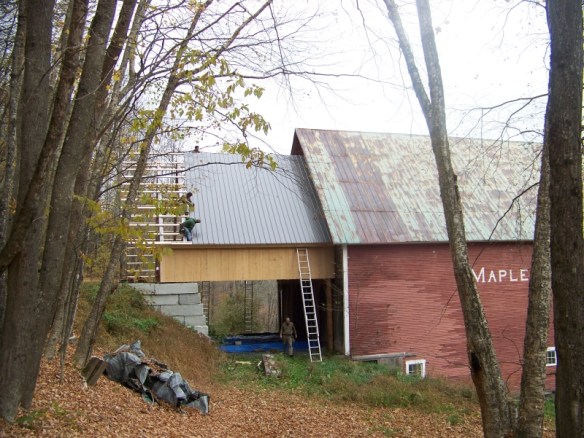
With the new roof safely and securely in place, the owner is relieved the structure is finally covered. We, too, are pleased that this rugged new timber frame isn’t taking on water anymore. Best of all, it’s a 40-year roof, so none of us will have to come back. I don’t think I’ll be doing roofs into my 11th decade!

If you drive by Maple Avenue Farm in the back hills of Vermont, you can see the new roof for yourself. There are not many four-story bank barns left in Vermont. Especially with a timber frame bridge to access the upper levels of this 1870s former dairy barn.

new roof on restored timber frame_post and beam architecture_green mountain timber framesMeanwhile, we’re always happy to take on another project! Looking for a timber framer in Vermont? Give us a call at 802.774.8972!

From Fatigued Old Barn to Beautiful Great Room

Reading this in your email? For a better view of the blog, click here

Meet the “Fatigued Old Barn”

It was a frigid Vermont winter day when we first visited this old barn back in February of 2015.  It was too cold, even for us seasoned Vermonters. With more than two feet of snow on the ground, I wished I had brought my snow shoes.

Here’s a glimpse of how the barn looked – on the left – when we first met.

Original Restored Barn_Green Mountain Timber Frames_Before (800x601)The owner had called us to ask if we could dismantle this aging barn and restore it as a new Great Room, attached to their home. The barn, built originally in the 1850s, was indeed a perfect match for the house, a two story country home also built in the 1850s. 

Original Barn and 1840s Home_Green Mountain Timber Frames_Before (800x601)

Original barn beside 1940s barn with wooden silo.  House is in the back ground, on the right.

Dating the Barn

Judging from the 43 foot hand hewn beams, I concluded that the barn must have been built in the middle of the 19th century. Tall trees were still being hewn by hand into long square timbers. Shorter timbers, such as posts, were sawn at a local mill. During that time, sawmills could accurately saw up to 20 feet of timber, so the hand hewing guys were called in for the longer timbers. I often wonder if those guys – the “old school” timber framers – must have felt like horses when automobiles started to become more prevalent.

The Transformation Begins

Step 1: Dismantling

Once the snow melted, we traveled to Cavendish, Vermont to begin the careful process of dismantling the barn. The barn looked far more inviting during spring.

historic wooden barn with red roofIn three weeks, a team of six men dismantled the 30 x 43 foot barn and shipped it to the Green Mountain Timber Frames shop in Middletown Springs.

Cavendish Historic Barn before restoration _Green Mountain Timber Frames

Barn being dismantled, starting from the top.

Step 2: Restoration at the Shop

Once at the shop, we carefully washed all the timbers. We then laid them out in their new configuration of 21 x 35 feet and did a lot of joinery work. Next we assembled the roof structure, de-nailed the roof boards, gave them a solid washing, made them straight again, and finally re-applied them to the roof rafters. We made sure everything was well labeled, and then shipped the restored frame back to the Cavendish house site.

You can see much of the process in the pictures below:

Antique barn Restoration_Green Mountain Timber Frames_Vermont_3 (800x601)

Laying out the restored hand hewn beams into the new design.

Antique barn Restoration_Green Mountain Timber Frames_Vermont_4 (800x601)

Roof rafters re-adjusted and fitted, waiting for original roof boards

Antique barn Restoration_Green Mountain Timber Frames_Vermont

Rafters with restored roof boards applied and then labeled

The Great Room is Born – in Two Days

Because we had done the restoration work at our shop, re-erecting the frame for the new Great Room was a pretty straightforward task that took only two days.

In weather that was a far cry from the snowdrifts of February, we reassembled the frame under hot August sun with a team of four men and a mighty Lull (lift machine).

Erecting restored timber frame_Green Mountain Timber Frames_Vermont_Day1

Re-erecting the restored frame (the Lull is in orange)

Day One: Getting the Frame Up

During the first day, we spent about ten hours at the site. By day’s end we had most of the structure up, thanks to the help of the Lull and an experienced crew.

Erecting restored timber frame_Green Mountain Timber Frames_Vermont_Day1_2 (800x601)

Frame is up by the end of day one with a few roof rafters

Day Two: Raising the Rafters

Day two was even more fun as we placed all the roof rafters – always an exciting part of a barn restoration project – and experienced the structure taking its final shape. After hundreds of hours of our labor, the refurbished frame went together like a Lincoln Log set.  It’s gratifying each time to watch new life breathed into a formerly very distressed timbered, old barn.

Erecting restored timber frame_Green Mountain Timber Frames_Vermont_Day2

Finished frame. The roof is protected by tar paper, ready for the next stage.

Erecting restored timber frame_Green Mountain Timber Frames_Vermont_Day2_4 (800x601)

View from beneath the roof of the restored frame, with our friend the Lull behind.

The plans to complete this barn frame include a fireplace, large glass doors, a screened porch and a mudroom entryway. Truly it will become a GREAT room.

Coming Up Next:

This was a challenging and rewarding restoration project. Our next blog will feature a stunning new timber frame boat house, designed and built by Luke Larson and his crew. Stay tuned!

Post and Beam Sign Frame for the Vermont Farmers Food Center

Reading this in your email? For easier reading – Click here.

Most of the time here at Green Mountain Timber Frames, we restore 18th and 19th century barns and turn them into new timber frame homes, barns, great rooms and more.

But this summer, just for fun, a different project came into the mix when I was asked to put together a very “organic” sign frame for Rutland County’s Vermont Farmers Food Center.

Reclaimed Wood_Green Mountain Timber Frames_wooden sign for Rutland VT Farmers market

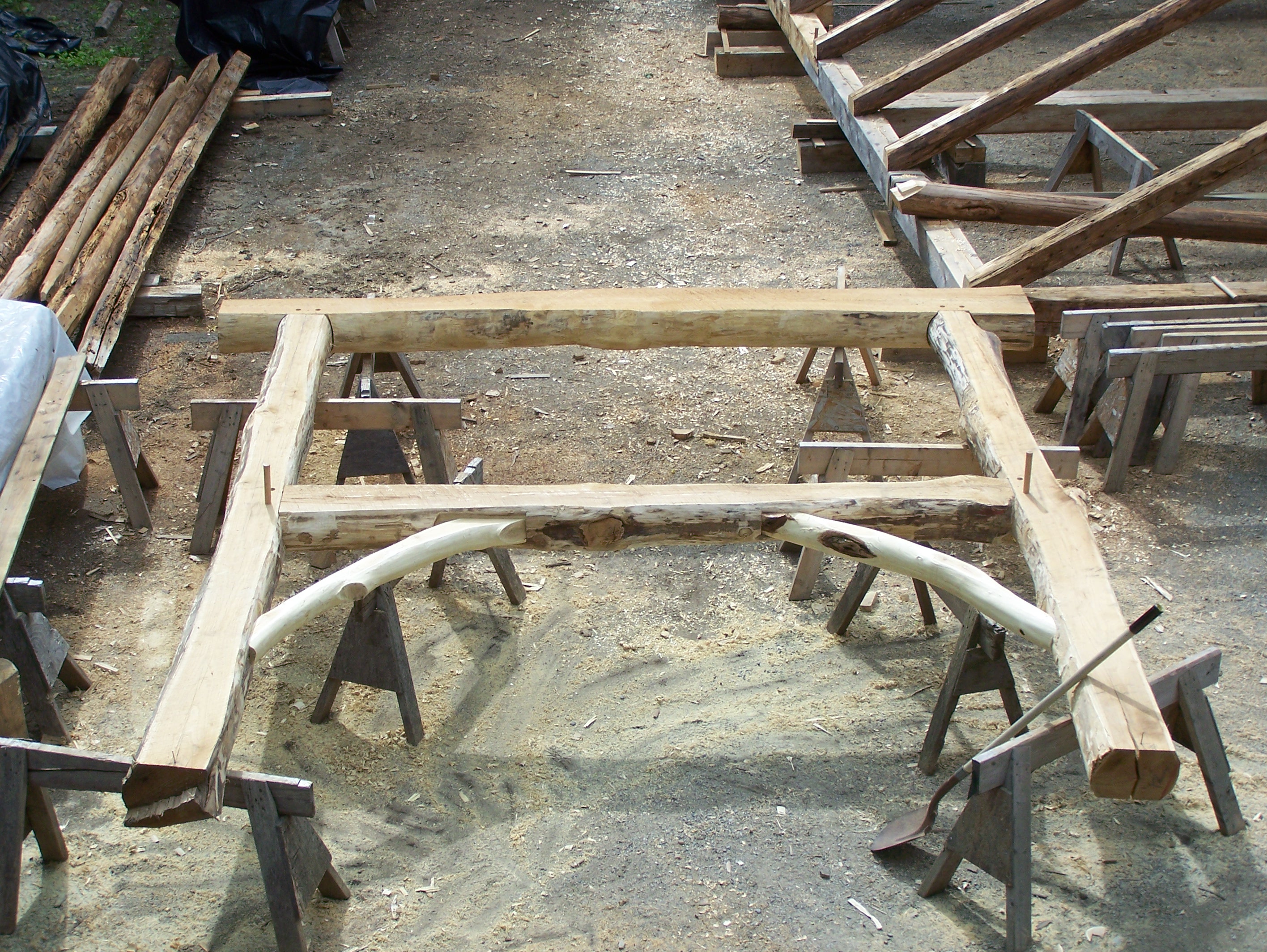
Here’s the frame. The sign itself will be attached soon.

Reclaimed Wood_reclaimed Timbers_wooden sign

You can still see the curve and shape of the tree in the two braces and heavy timbers.

How does one make a timbered sign frame out of half round locust trees?

To begin the process, I chose to use local locust wood.  I found the logs at Ken Gagnon’s saw mill in Pittsford, VT. Armed with these rugged timbers, I was ready to begin building.

Why locust trees?

I used locust because their wood is comparable to “pressure treated” wood. Locust naturally has many of the properties of pressure treated wood, without any chemicals needed to preserve the wood’s fiber. Remarkably, locust can easily withstand being exposed to the elements for 50+ years.

Building the sign frame

Ken Gagnon sawed flat sides on the front and back of the sign timbers, making it much easier for us to do the joinery. I carefully studied the surfaces to decide the placement of each timber.

Because locust wood is very hard, we used a chain mortiser to make the mortises (pockets). This time-saving piece of modern equipment is very exact, and reduces wear and tear on our arms. However, I still had to scribe and chisel the rounded sides of the four beams to make them fit together tightly when the joinery was completed.

Chiseling Timber Frames_ Green Mountain Timber Frames

Expert timber framer Luke Larson works on joinery.

Joinery in Timber Frame Sign_ Green Mountain Timber Frames

Tools used in making a joint.

We connected the beams using mortise and tenon joints. Once erected, this joinery allows the frame to be a very strong structure, even in heavy winds.  Because the wood is locust, the joints won’t rot.

Below you will see the two pieces being joined:Rutland Vermont Sign_Timber Frame Joinery_ Green Mountain Timber FramesThe Diagonal Braces

As we were building the sign, I felt that adding in some locust limbs for the diagonal braces would enhance the look.

Locust Wood in Timber Frame Sign by Green Mountain Timber FramesHeading out to the woods, I found some locust trees. I cut some limbs that had natural curves. We pealed off the bark and eventually carved tenons on both ends of each piece.

Tenoned Joinery in Locust Wood_green mountain timber framesAll in all, it was a fun project that took the Green Mountain Timber Frames team about 50 volunteer hours to complete.

Interested in your own timber frame structure?

Our main focus is on historic properties and timber frame homes, but we have other talents as well!  Interested in furniture that compliments a timbered home or something else special?

Let us know! 802.774.8972

Restoration of a Hand Hewn Pine Barn Frame, c. 1840 – Part II

Reading this in your email? For easier reading – Click here.

Remember this hand hewn frame, made of pine timbers, that we highlighted in last week’s blog? Old Barn home_Original Location Well – the good news is – restoration is complete! After 8 days of focused work with a superb team of seven, the barn is fully restored and in use. Restoration of new england barn home At 21 feet wide x 30 feet long, it spent nearly 175 years protecting hay in a meadow in Benson, Vermont. This barn has had quite a journey since 1840.

We became involved a few years ago when we took down the barn, restored the structure and erected it at our workshop. It was put to good use there, protecting building materials, while we waited for a new owner; and in time the right family came along.

We’ve spent the past two weeks restoring the frame for the new owners in Pomfret, VT. In last week’s blog, I wrote about the process of dismantling and re-erecting the antique timber frame in Pomfret.

I also showed how we applied the roof boards and started on the siding, using materials from another historical barn.

Getting the Arches JUST Right
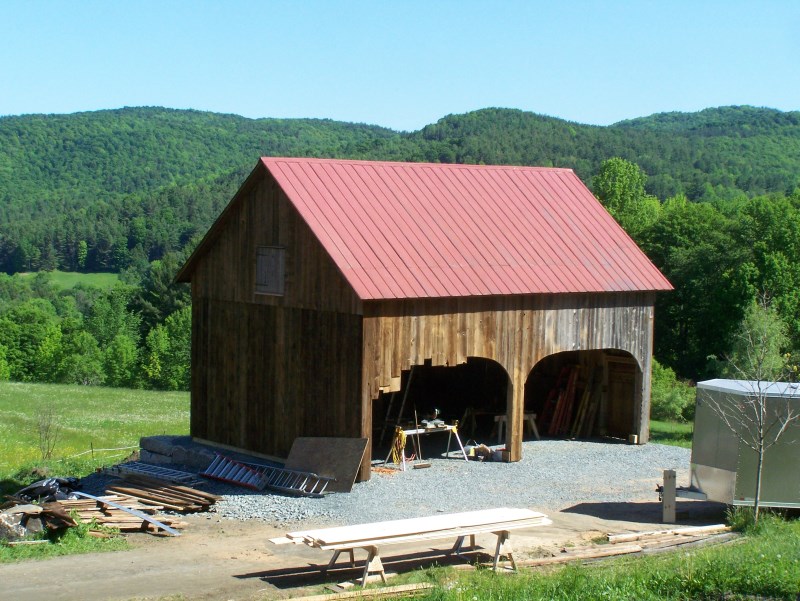
One of the challenges of restoring this barn was making sure the arched doorways looked just right. The picture below shows the process of creating the arches. Forming the arch on a historic barn_Green Mountain Timber FramesAnd here are some of our talented crew members pondering the arches to make sure they are just right! Green Mountain Timber Frames _Professional Contractors in VermontHere you can see the nearly completed results! Forming the arch on a historic barn_Green Mountain Timber Frames2Applying the Siding
Last week, we put on two layers of siding, one ½ an inch thick and the second one 1 inch thick. We put the two layers on, overlapping each other, to keep the driving rain and snow from seeping through the cracks.

restored siding on historic barn

A close up look at the restored siding

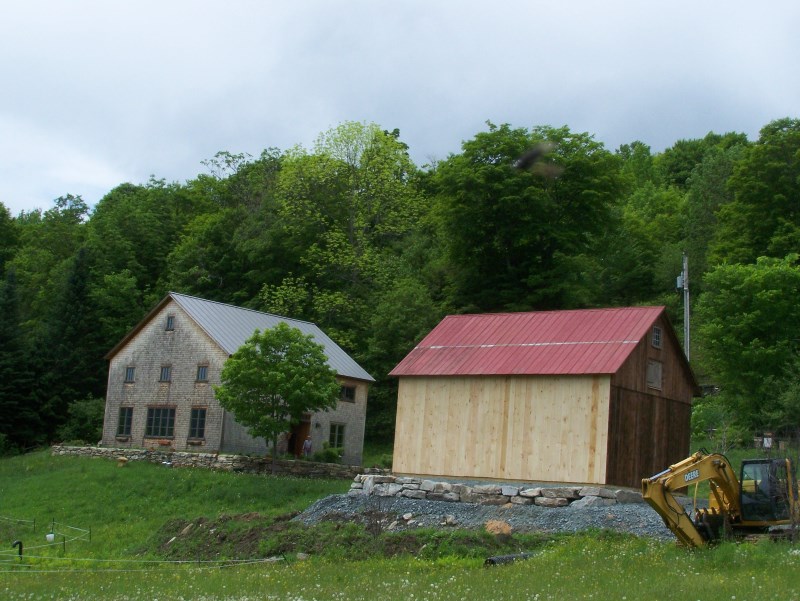
As always – we love to recycle! For this project, we used exterior siding from four different barns and the door is also on its second life. You can see the original barns here on our available frames pagevermont scenic view with historic barnIn the view above, you can see the recycled red roof taken from another barn project we also have in progress.

Reclaimed Wood versus New Wood
Economics and availability often come into play with a project, as reclaimed siding can be four times more expensive than new. In this case, the owners chose to use new siding on the back side of their barn. It is hidden safely from view and can not be seen from the house or the road. Give it another thirty years and it will look vintage, too.

restored historic barn

Rear view showing new siding

Now Let’s Step Inside…
From the interior of the barn, we can see the beautiful hand hewn timbers of the original frame.hand hewn timber frame wooden beams restored timber frame in new englandThe upper loft might make a wonderful overflow guest room in the summertime.

Loft view of restored historic barn home_Green Mountain Timber Frames_Vermont

The Loft

There’s a large, open main level with the relatively spacious half loft. Eventually, a modest stairway will replace the metal ladder that you see in the view below. Internal view of timber frame barnIt was, as always, a pleasure to save another barn – and create a new-old barn for another wonderful client. The point was to have it look like it has been there for one hundred years. Did we succeed? side view of post and beam barn homeThis year has been a busy one here at Green Mountain Timber Frames. We’ve dismantled no fewer than seven barns and houses in the last year and they are each in various stages of restoration.

Want your very own piece of American history? Think that barn living might be for you? Give me a call at 802.774.8972 or email Luke@greenmountaintimberframes.com.