The Amos Hodsdon House Needs a New Owner

Reading this in your email? For easier reading – Click here.

We at Green Mountain Timber Frames have a friend and fellow “restorationist” and we are very excited to be collaborating with him on a new project. It’s an incredible opportunity to preserve the “Amos Hodsdon House,” built in 1837.

1904 Hodsdon postcard without text cape house green mountain timber frames

Ben’s story

Hodsdon dismantle crew green mountain timber frames

Meet Ben Heywood, center

Meet Ben – An Expert in Restoration

Ben Heywood moved into the area a few years ago after a career of preservation and restoration work in the Cape Cod area. Since moving to Vermont, he has become a friend as well as a consultant on some of our projects. He has aided us in assessing the fine details of houses dating from the 1800s. He has a wealth of knowledge regarding trim, window and door styles and the dating of buildings. He has done incredible work restoring original entryways, windows, and cupboards. On a recent weekend visit, I asked Ben how he got interested in restoration.

“I was born in Gardner, Massachusetts, in 1951. There were dozens of abandoned 18th and early 19th century houses in a 40 or 50 mile radius. In the course of many Sunday family rides in the station wagon, my father would drop me at these so I could snoop around. It was arranged that I’d be picked up about a half hour later. All kinds of different architecture… it was great! It took no time at all for me to understand the difference between the handcrafted specimens and the numerous postwar boxes popping up everywhere. I also bought and devoured all the Eric Sloane books by age 16. All this sent me in the preservation direction.”

Ben’s First Home Restoration

Ben moved to Falmouth and purchased his first “vintage” house in 1978 for the price of $1! It was a circa 1815 three quarter cape with a center hall and three fireplaces. It had the original doors, wainscot, finish trim and floors. As Ben told me, “I assembled some buddies and had it down in three weeks. I’ll never forget having to buy a liability policy from Lloyd’s of London as I was young and not yet firmly established. Insurance for four weeks cost me 500 times what I had paid for the house! Most everybody thought I was nuts at the time- until they saw the place restored!”

In the decades that followed, Ben disassembled and restored around 20 period houses. He did restoration in place on another 20!

Bodfish house cape house green mountain timber frames

Ben completed the restoration of the “Bodfish” house in 1982, which overlooks Cape Cod bay.

In 2008, Ben decided to find one last gem of a house that he would restore for himself as he moved to Vermont and into retirement. Enter: the remarkable house built by Amos Hodsdon in 1837.

Hodsdon house vintage photograph cape house available green mountain timber frames

The Hodsdon house, built in 1837

Now, due to life changes and a desire to downsize his construction plans, Ben has decided not to use this house as his own. The beautiful historic Hodson House is available for sale!

And we at Green Mountain Timber Frames want to help our friend find a new family to make this house into their home.

About the Vintage House

After looking at many vintage buildings, Ben decided on a house in Carroll County, New Hampshire, named after Charles Carroll who died in 1832 as the last surviving signer of the Declaration of Independence. Carroll County was created in 1840 with Ossipee as its seat. Ben learned this history lesson after his search of Carroll County deeds came up empty. Eventually, he realized that the county lines had changed three years after the deed to the property changed hands from father to son, and so was filed in Strafford County!
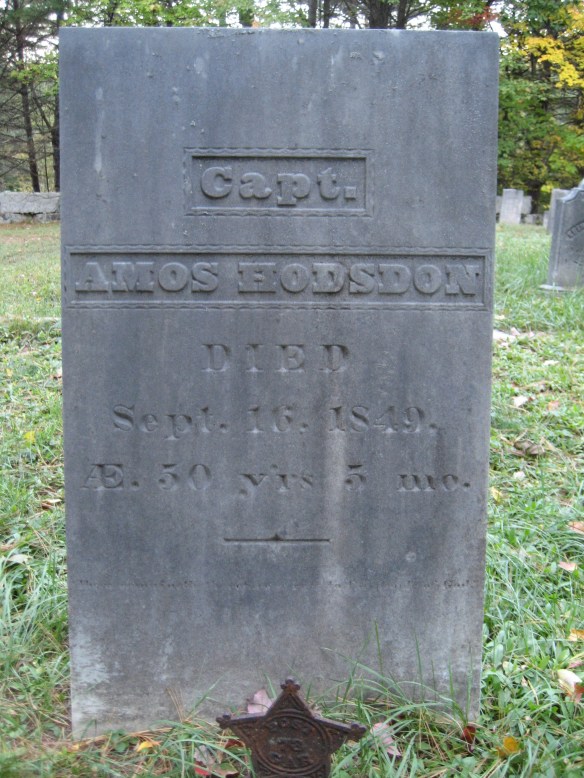
Hodsdon grave stone green mountain timber frames

Ben found the gravestone of Captain Amos Hodsdon
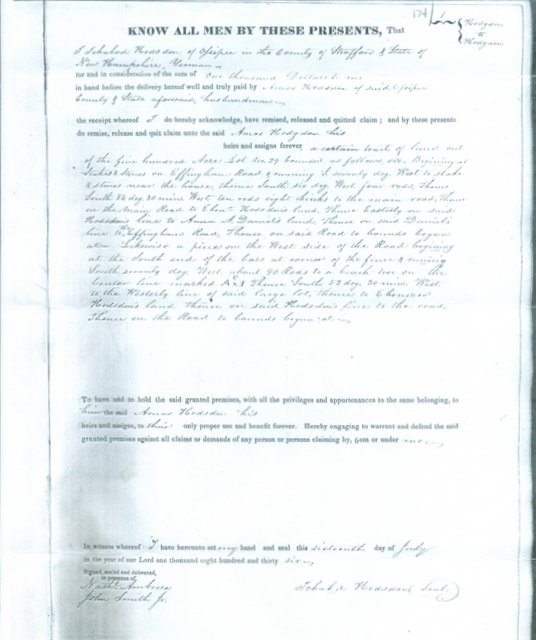
deed Hodsdon vintage cape house green mountain timber frames

Here is the deed showing the transfer of property from father to son

When Ben discovered the old Hodson place, the house was incredibly unaltered and in good “frame health,” for its age. It had been abandoned for ten years and had been occupied by an elderly couple before that. The kitchen had a typical cast iron sink mounted in what was surely a period dry sink. There was a rusty old spigot and pipe that ran into a tank heated by the wood stove! The last residents of the house had still been carrying water into the house from a six foot diameter dug well with a flat stone cover. Best of all… the house had never had a bathroom!

Ben assembled a crew and began dismantling the frame.
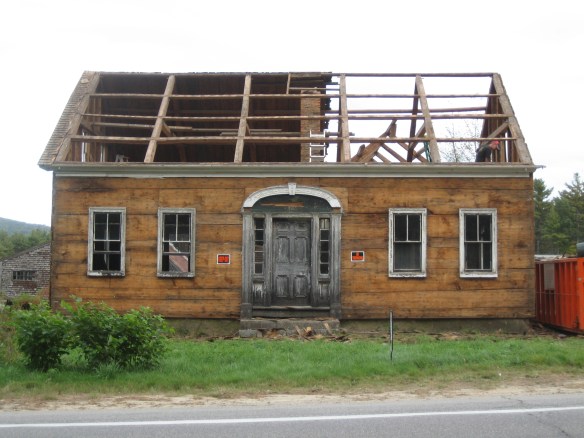
Hodsdon partially dismantled frame green mountain timber frames

The roof boards come off

Hodsdon rafter system vintage house

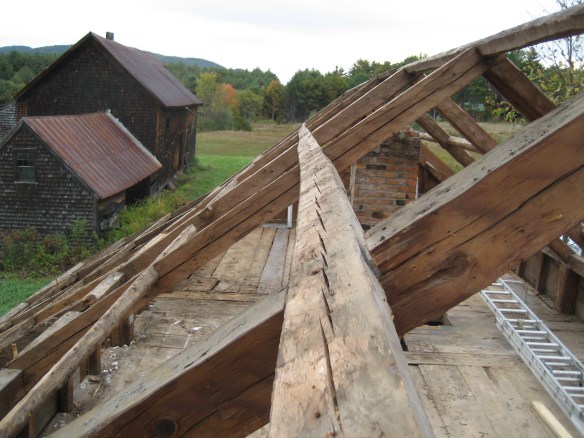
Here is a 46 foot purlin in the rafter system!
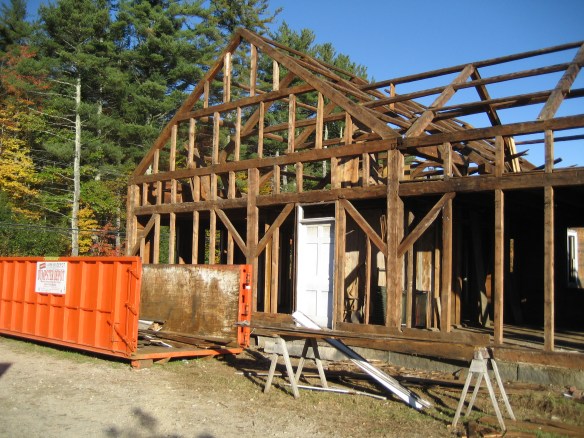
Hodsdon frame opened up green mountain timber frames

The exposed frame

The Frame Awaits a New Owner

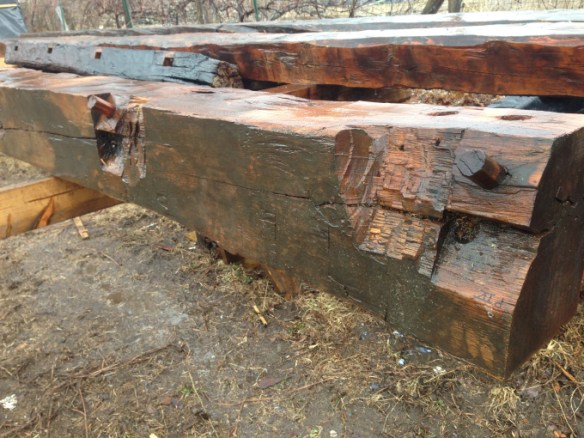
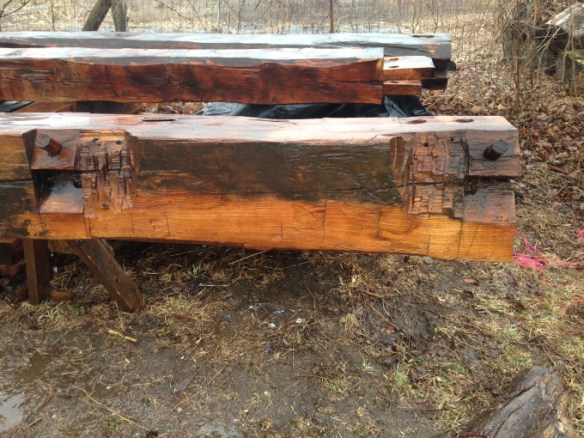
The frame is down, carefully stored and awaiting a new home. It is available as a complete package, including the beautifully restored trim work, original flooring materials, interior trim and wainscoting panels, the windows, and the entry. Even the staircase is ready to go back in!

Above you can see the tired entryway, and then the doorway after Ben’s incredibly meticulous restoration work.

When the house came into Ben’s caretaking, the decorative fan work over the entrance had been removed and flat boards had been nailed up. Ben studied the “shadow lines,” which are marks and weathering patterns on the wood, in an attempt to figure out through detective work what the original had looked like. Then, in a fortuitous turn of events, a friend discovered this old photograph of the house. It confirmed Ben’s guess at what had graced the entrance originally, and wait till you see what he created!
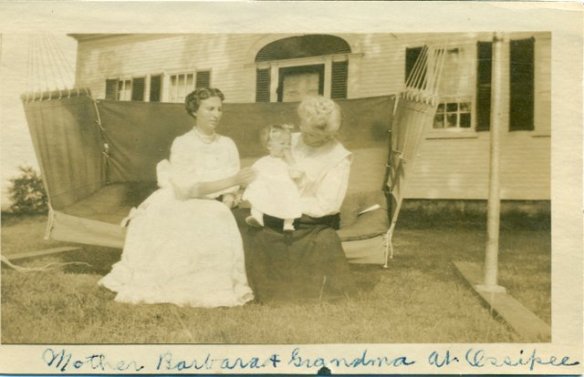
Cape House Green Mountain Timber Frames

This photo is the best rendition of the entranceway in the background. Oh, and the people in the foreground look fantastic too!!

Restored fan over entry Hodsdon house green mountain timber frames

Here you can see the incredible recreation of the decorative fan work over the doorway- all based on an early 1900’s photo!

Expertly restored windows Hodsdon cape house green mountain timber frames

Ben has even restored all the original windows!

This house boasts roughly 3,700 square feet of vintage living space. The crew at Green Mountain Timber Frames will do a complete restoration of the timber frame itself, and we are looking for someone who has always wanted to live in a beautiful New England style home!

Interested in this frame?

Know someone who may be able to help us find a home for this historical treasure? Please pass the word around that this wonderful structure is available and help us find a new “forever” location for this gem!

Contact us!

(802) 774-8972 or Luke@GreenMountainTimberFrames.com

Cavendish Barn Restoration Update – The Grand Finale!

Reading this in your email? For easier reading – Click here.

We recently completed the restoration and renovation of an historic timber frame from Cavendish, Vermont.


The project kicked off when we first visited the frame back in the winter of 2015. We’ve written about this barn frame before, while in the thick of the restoration process, and wanted to deliver the coda now that the project is complete.

The Background

The owners of the frame wanted to save a barn on their property; it was in bad shape and needed to be taken down before it collapsed. We first visited the barn in the winter, dismantled it in the spring, and spent the summer restoring it at the Green Mountain Timber Frames shop.

In late summer, we erected the restored frame on a new foundation.

The Transformation of a Barn

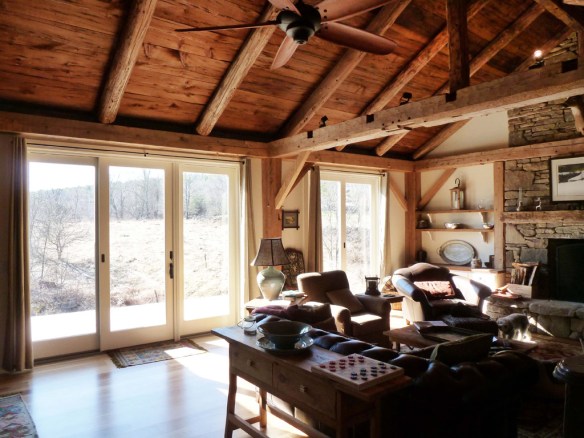
In the pictures below, you can see the entire process – from start to finish. From a wintery day in February when the sagging frame looked tired and in need of some TLC, to the beautiful great room it has become today.

Vermont timber frame in winter_Green Mountain Timber frames

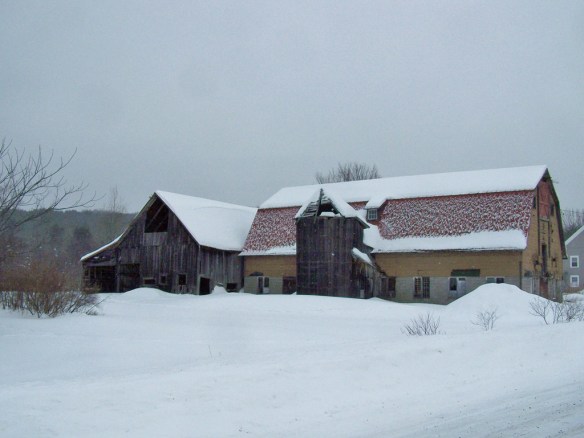
Our first look at the Cavendish barn in Feb 2015

Dismantling historic timber frame barn

Spring prevails, and dismantling begins!

green mountain timber frames restoration process in cavendish vermont

A look at the last timbered wall section we took down. Once on sawhorses, we popped out each vintage peg, labeled every joint, and disassembled.

restoring post and beam structure

Restoration begins at the GMTF shop

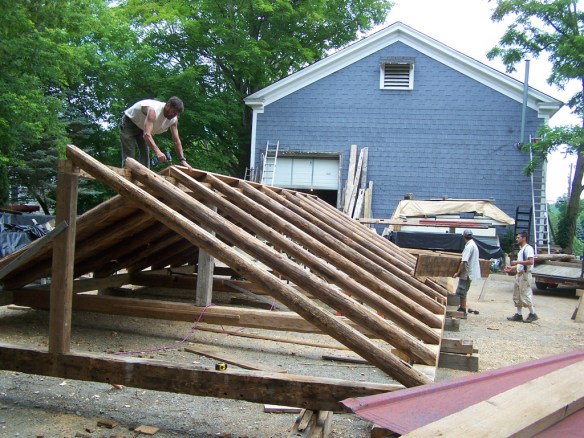
The image below shows us adjusting the roof rafters to fit the new design of the great room. We pre-assembled the rafters, applied the original roof boards, carefully labeled each rafter and board, and then dismantled the roof before finally shipping the frame back to its home of origin.

restoring post and beam barn from 1850s

Restoration of new england barn from 1850s

Redesigned frame assembled on a new foundation about 100 yards from where it was first crafted nearly 200 years ago!

After the frame was firmly in place, another general contracting company  completed the project – The Severy Brothers  of Ludlow, VT. The next two pictures show how they used “SIPs” (structural insulated panels). The panels are fastened to the outside of the frame, which provides superb insulating value while showcasing all of the wooden elements on the interior. In the second picture, you can see the front entry taking shape.New barn home made from restored wood timber frame

Cavendish VT Barn frame with insulated panels

Exterior view of front entry with SIP panels

timber frame interior

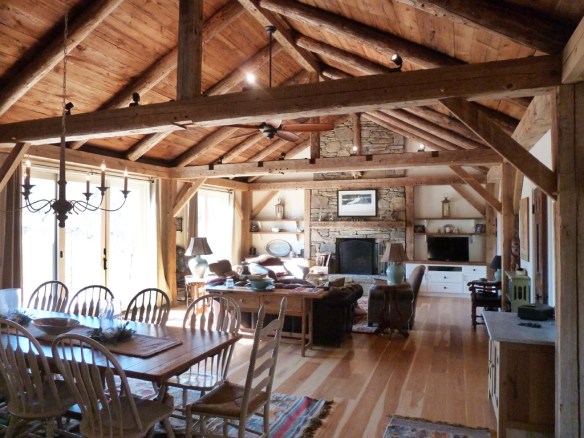
The re-erected frame, pre fireplace. Note the beautiful ridge beam!

post and beam architecture in historic great room

The fireplace was created with stone found on the farm property

Barn door entryway to new england great room_green mountain timber frames.JPG

Sliding barn door into main house

restored timber frame home_green mountain timber frames

Large sliding doors capture the beautiful Vermont landscape

Exterior of Cavendish Barn Frame with front entry_Green Mountain Timber Frames

Timber porch entry into the great room

It was truly a pleasure to work on this barn frame. We love it when the opportunity arrises to restore a frame while keeping on its original location! Do you have an historic barn on your property that is in need of attention? We would love to see it!


Want to see some other projects we’ve done at Green Mountain Timber Frames?
Check out our completed timber frame projects!

The Leaning Flag Pole of Pisa? – No More –

Reading this in your email? For easier reading – Click here.

Here at Green Mountain Timber Frames, we do more than save and renovate antique barn homes.  We like to take on a variety of projects to keep things interesting, to help out a friend or to support our local community.

At times, we’ve built gazebos. And we’ve been known to raise a glass and timber lean-to (a glamper’s delight!)

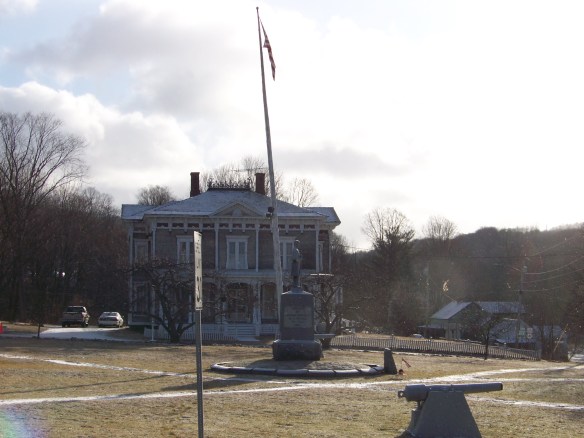
In a recent project, we were asked to help straighten up a leaning flag pole here in our hometown of Middletown Springs, Vermont. The flag pole was originally carved from spruce wood, harvested locally here in Middletown and erected on the town Green in 1947.

Leaning Flag Pole Construction _Green Mountain Timber Frames_Vermont

The pole has stood tall in the center of town for seven decades; but as the wood fatigued, it was starting to look a bit weary. (Apparently one too many Vermont winter winds had sent the pole leaning a little too far to the north.) In any event, our local Community Church – which owns the Green – made plans to set the pole straight, just in time for the Church’s participation in the 2016 National Day of Prayer, and the town’s annual Memorial Day Parade.

We began by releasing one of the steel pins that secured the flag pole to its concrete support frame. Then, we used a lull to lower the pole.

Lull and Flag Pole_Green Mountain Timber Frames_Vermont

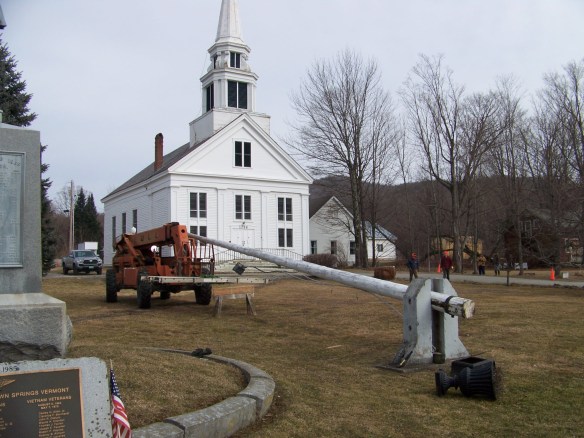
Below, you can see the lowered pole, with the Middletown Springs Community Church in the background – Dan’s family church.

Lowered Flag Pole_Green Mountain Timber Frames_Vermont

This was actually the second time Green Mountain Timber  Frames had lent a hand to straighten this flag pole. About 10 years back, we had lowered the pole and removed four feet of aging wood and put on a new coat of paint. This time around, we cut off another four feet before hoisting the pole up once more – good as a nearly 70 year old wooden spruce pole can be!

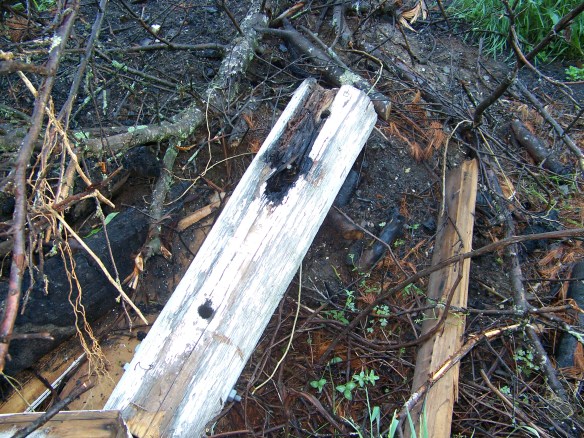
Below is a picture of the piece of wood we cut off. You can see the fatigue that caused the pole to tilt four feet out of plumb. Ready for the burn pile.

Cut wood from flag pole.jpg

In just about an hour’s time – and with the help of  two tractors – the slightly shorter pole,  now 46 feet tall,  was raised again.

That is Green Mountain Timber Frames’ shop in the background. Built in 1806, it was originally a Baptist Church. 

Lifting flag pole with tractors_Green Mountain Timber Frames_Vermont

Members of the Community Church gathered round the newly raised pole for the National Day of Prayer on May 6, 2016.

New Flag Pole for Day of Prayer_Green Mountain Timber Frames_Vermont

And here’s a shot of our very own Dan McKeen and his ‘children’s band’  strumming ukuleles on a float in the Memorial Day parade!

Dan McKeen of Green Mountain Timber Frames plays ukelele.jpg

In this final image, you can see the original strong concrete pillars that secure the pole in place.

Flag Pole with Concrete Pillars_Green Mountain Timber Frames_Vermont

Meanwhile, we’re ready with another 70 year solution to the fatigued pole. We are in the process of cutting down and skinning a brand new pole made of local larch or tamarack wood. Within a year, we plan to dry it out and permanently retire and replace the current old timer.

Have a timber frame project you’re considering? Let us know! We’d love to help!

Luke Larson
Middletown Springs, VT 05757

luke@GreenMountainTimberFrames.com
Tel: 802.774.8972

Glamping – The Timber Frame Glass House


Reading this in your email? For easier reading – Click here.

I’m always looking for a new and exciting timber frames to build, so when the opportunity to create a one-of-a-kind post and beam glass cabin came my way – I jumped!

Glamping a timber frame glass house

Why camp…when you can glamp?

GLAMPING:

noun. 1. a form of camping in which participants enjoy physical comforts associated with more luxurious types of holiday. Word Origin. C21: blend of glamorous + camping.

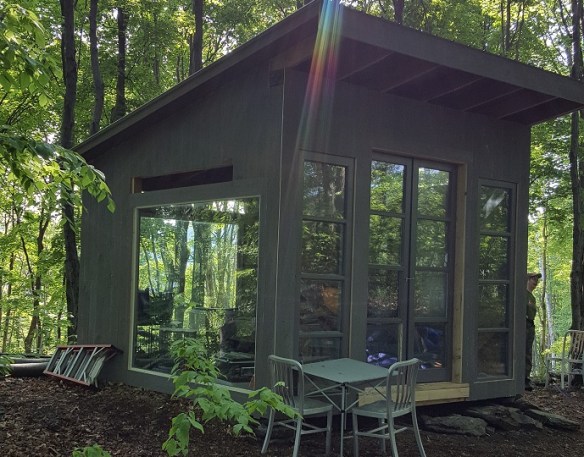
A client of mine recently asked us to help glamorize the tent platform in her wooded Vermont backyard. Using salvaged timbers that Luke and I had on hand, we turned a simple raised platform into a glamper’s dream. The tiny timber frame glass house we built makes for an unmatched camping experience – and will stand for decades to come.

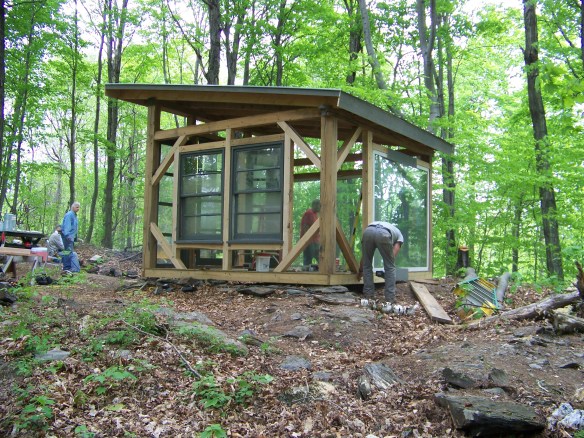
We started the construction by building a frame using reclaimed white oak timber and some leftover hemlock beams. Below you can see the skeleton of the 12′ x 12′ shed.


The client had acquired several glass windows and doors. A real Vermonter, she gathered a group of friends to transport the glass panels all the way through the woods to the site of her new glass house.

hoisting beams for glass house construction

We used the two large panels of glass (measuring an impressive 6′ x 8′ each!)  as the sides of the house.
timber frame vermont glass house

Because the structure is largely glass, it presented a bit of a construction challenge. We needed to include enough “wind braces” to make sure that the structure can withstand the howling winds of a New England winter. You can see the cross beams and braces in the image below.

glass house by green mountain timber framesAs for the walls that are not made of glass, we covered them with traditional siding. The final structure is truly one-of-a-kind – made up of 70% glass – and allowing for a nearly unobstructed view of the surrounding woods.

Glamping in a timber frame glass house

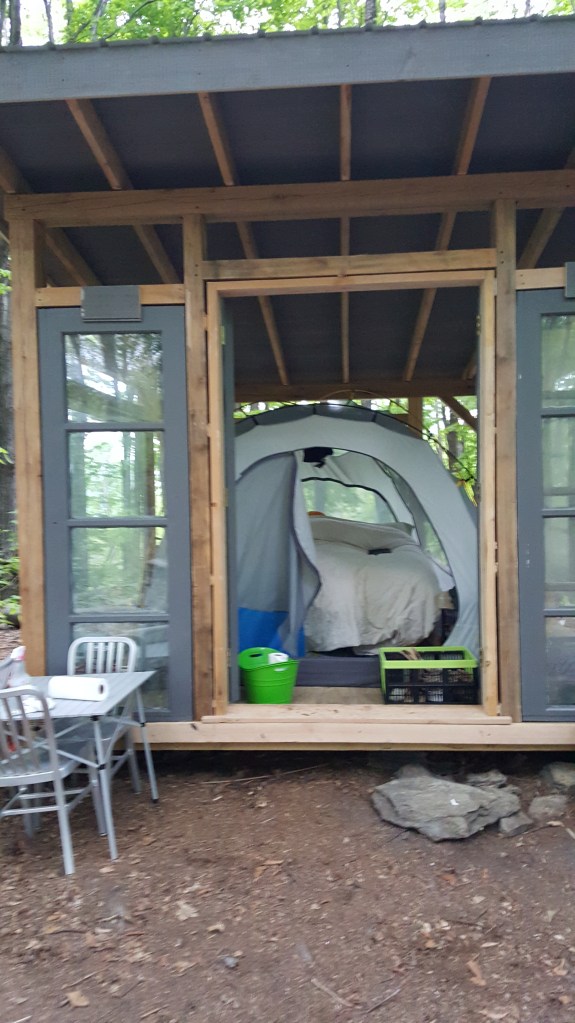
My friend couldn’t wait for the siding to be applied so spent the first night in a tent in the cabin.  The black flies and skeeters are wicked bad just now.

Secretly, we’re hoping our client lets us camp out here as well! The temptation of a night of camping under the stars, without mosquitoes – seems almost too good to be true!

Want to see some other projects we’ve done at Green Mountain Timber Frames?
Check out our completed timber frame projects!


Spring Cleaning!

Reading this in your email? For easier reading – Click here.

As one of the fist steps in the timber frame barn home restoration process, we power wash all the individual elements of a frame. This includes all the beams, every brace and each board that we are able to save and re-use.

Since winter in Vermont usually means sub-freezing temperatures, the piles of “dirty laundry” tend to pile up, waiting their turn with the washing team. Well, spring is here, and the washers are running!

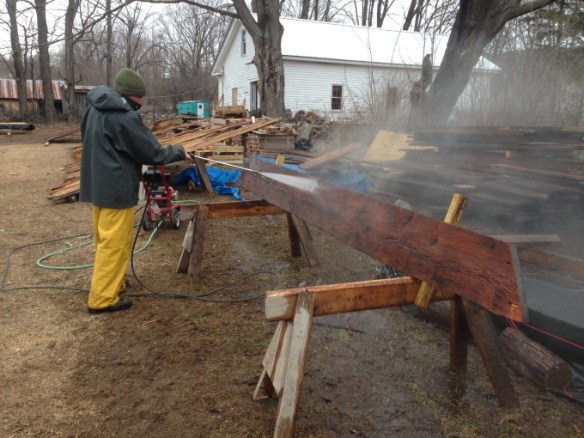
Power washing old barn board_Green mountain timber frames.jpg

Our newest team member, John, washing a thick vintage siding  board.

Think about cleaning your house and the way grime builds up. Now imagine the dirt that collects in the hidden places of a 200 plus year old house or barn! It can be… pretty amazing!

American chestnut hand hewn barn timber_Green Mountain Timber Frames.jpg

This 26 foot long top plate has not seen the light of day, or a cleaning, since it was hoisted into place 210 years ago!

Washing beams and boards can be a tedious, wet, and cold task. Yet we also find it very satisfying and even exciting to watch the real patina and natural beauty come forth from underneath the dirt.

Timber frame beam barn home beam_Green Mountain Timber Frames.jpg

Look at the difference! This American Chestnut timber has received one pass from the power washer on the lower section.

Washing timber frame knee brace_Green Mountain Timber Frames.jpg

What a contrast between the washed surface and the dirty one!

Hardwood knee brace from Vermont Timber frame.jpg

The final product of the cleansing is an amazing color that can not be replicated in new materials.

We do not use any soap in the washing. The water alone is enough to bring out the color. Wood ages as a result of exposure to air and light. While boards exposed to excessive sunlight turn silver, protected wood surfaces take on a beautiful glow.

Vermont barn beams for sale_Green Mountain Timber Frame.jpg

It took more than 200 years for this Beech timber to take on its patina.

The Art of Power Washing Old Timber Frames

Washing barn timbers and boards is not just a matter of pointing and shooting the stream of water at the materials. If we let the powerful water get too close to the wood, or if it strikes the surface at the wrong angle, the result is “raised hair” on the surface. Too much power in the spray slightly shreds the grain of the wood, causing the wood fiber to separate slightly on the surface, which can damage the patina and lead to a rough surface. Power washing takes patience. We can’t do too much, yet we must get the surface clean. The distance and angle from sprayer to old board has to be “just right!”

When the timbers and boards are washed, there are still steps to be accomplished. The boards must be dried before they can be stacked or else they will mold. We have to get creative in spreading the boards out to dry! We flip the boards halfway through the drying process. Eventually, we are ready to collect them carefully into piles for storage under cover.

Barn style home_wide timber boards.jpg

Vintage boards drying after washing.

The timbers and boards shown in these photos are from the 24 x 26 cape style house that we disassembled this past winter.

Stay tuned as we move towards a full restoration of this wonderful little timber frame! We better get back to work- the pressure washers are calling!


A Comparison of Timber Frame v. Stick Built Construction

Reading this in your email? For easier reading – Click here.

This week’s guest blog is from builder and timber framer, Glenn Tarbell. Glenn has collaborated on many projects with Green Mountain Timber Frames over the last two decades.  Recently, he built this beautiful timber frame garage for a client. 

Final Timber Frame Garage.jpg

Why Use Timber Frame Construction?

Recently I had a customer who wanted a new garage. They live in a beautiful wooded area with large oak trees near a wetland. Their house is not large and has a low sloping roofline. The siding is rustic, rough sided pine that is stained. They asked me to build a two bay garage.

Timber Frame v. Stick Built

I inquired if they would be interested in a timber frame garage rather then a traditional stick built garage if the pricing was not considerably higher. They loved the idea of a timber frame and we began the design process. The pricing for a timber frame style building was only slightly higher, so we decided to go with it!

Designing the New Garage 

In the design phase, we talked a lot about the height of the new building. The customer did not want a garage looming over everything. We talked about enclosed and not enclosed bays, power needs, and building materials for the roofing, siding and the timbers. They also needed storage for kayaks and canoes and windows on the south face for garden starts.

We decided that the final building would be a barn-garage. We would create a structure that looked like a barn with an extension for the traditional hay hook or, as we discussed, a canoe hook. The customer had a rope system with a vintage pulley that has already pulled the boats into the upper half story for the winter.

The structure we finally designed has one fully enclosed bay with an overhead door and a shed roof off one side for the second bay. We ultimately choose this look for two reasons: height and looks.

6_plate section for the shed roof

Building the Barn – The Construction Process

When it came time to start building the garage, we chose hemlock wood for the frame. This is a ridged softwood that works well for timber frames. We cut the joinery traditionally using chisel, saw and chain mortiser. Then, we dry fitted all the parts of the frame at my shop. Seeing the mortise and tenons fit together and then seeing the bent sections laid on the sawhorses was wonderful. Dry fitting the frame gives a sense of what the building will become, while also allowing for us to check for accuracy in layout.

2_All the bents are up

Here we are drilling 1-inch holes for the wooden pegs.

The barn posts are six by six, the girts are eight by eight, the rafters are four by four and the braces are three by six. As a big pile of wood it does not look like much, even with the joinery cut. But on raising day, wow, it takes on a look of its own.

4_4x4 rafters in place

Here you can see all the bents assembled and the frame with shed walls erected.

And here’s a look at the new garage once the roof sheathing and trim were on:

7_Roof sheathing and trim

Pricing Timber Frame v. Stick Built Construction

When pricing this kind of project and determining the cost difference between timber frame and stick built construction, I have to look at the two styles of building with the thought, “What steps will be different?” Siding will be applied in the same manner in both building styles, as will trim, roofing and sheathing. The only real difference then, is the framing.

It took nine days to cut out the timber frame and tip it up, including roof sheathing.

3_Drilling holes for pegs

The frame with all the 4×4 rafters in place.

To build a traditional stick built garage with roof sheathing, it may take seven to eight days to get to the same point. Therefore, the difference in this project was two days of labor.

Timber Framing – A Worthwhile Investment

In the end I think timber frame construction makes more sense both financially and aesthetically. Even if it takes a bit longer and requires a slightly larger initial investment, (usually 15-20% more) a new timber frame is strong. Barns built this way have lasted hundreds of years.

Standing in a timber frame feels good. You can see the craftsmanship of the builder and know that the history of barns and houses built this way dates back hundreds of years. So whether you build a new timber garage or use a vintage timber frame barn as the frame for a garage, from my experience timber framing is usually the way to go. It’s cost effective and the building can last for centuries if the roof is maintained.

Interested in your own timber frame barn or home? Let us know!

We’d be glad to hear from you! 

Luke – Green Mountain Timber Frames
luke@GreenMountainTimberFrames.com
802.774.8972

Spacious, Hardwood 1840s Timber Frame – For Sale

Reading this in your email? For easier reading – Click here.

We’ve named it the Meadow Barn. 

1_”34’x46’ hand hewn, hardwood timbered barn frame”

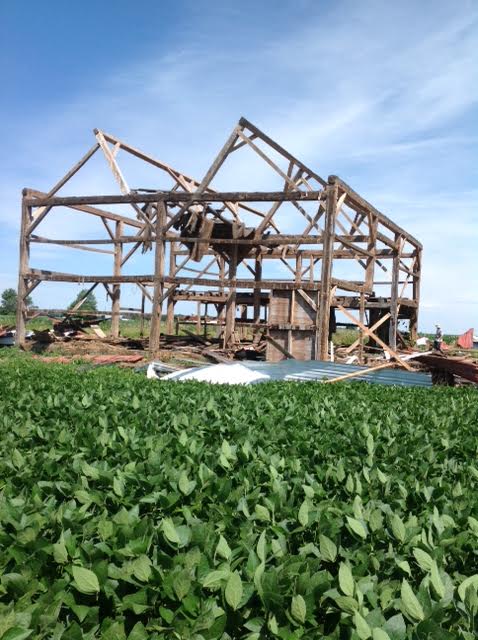
This beautifully kept timber frame barn, hailing all the way from Northern Indiana, was built amidst the prairies and the corn fields.

Former “meadow barn” surrounded by soybeans

Throughout the winter, the barn was used to store hay. The 34 X 46 foot structure stood far from the farmhouse itself, but strategically within the fields so that the balers wouldn’t have to transport the hay too far. Come springtime, the farmers could come back for the hay.

Who Built This Beautiful Barn?

The timber frame was likely built by New England timber hewers. Around the same period, in the 1840s, New England was adapting to water-powered saw mills. This meant the demand for craftsmen, who were skilled in creating square timbers using only axes and adzes, was on the way out. So the hewers headed west for new opportunities. 

What Makes This Barn So Remarkable?

While New Englanders had cut down most of the eastern hardwood trees and started building  with soft woods like pine, hemlock and spruce, Northern Indiana offered forests rich with hard wood timber. This frame was built from beautiful, first-cut red and white oak, beech, black walnut and ash.

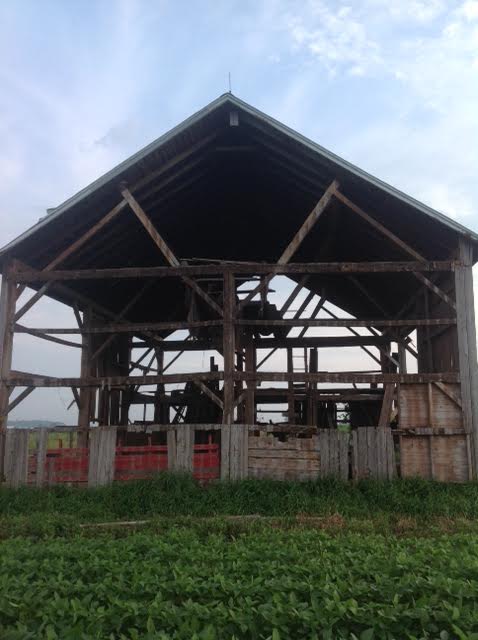
Pic 2_Gable end wall, loft space possible in roof rafters

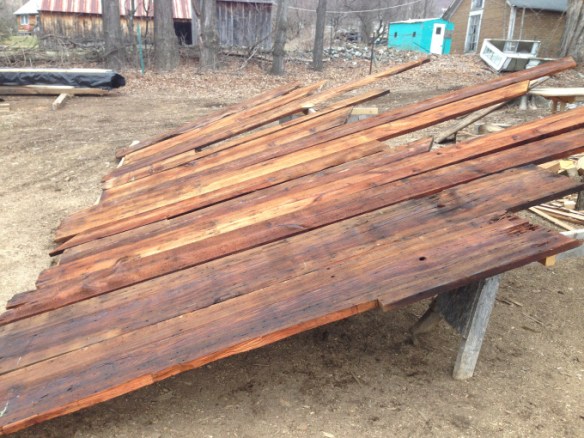
Wonderful White Oak Roof Boards

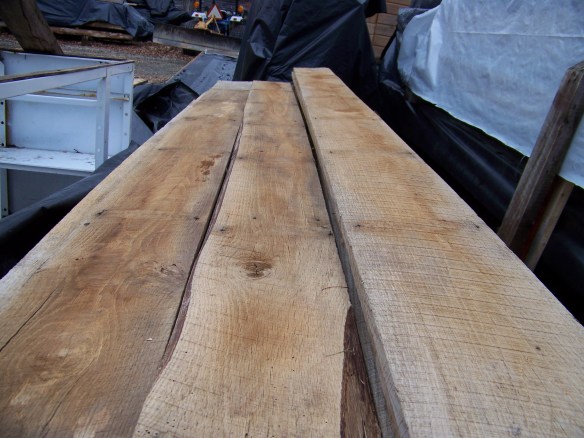
Because hard woods were still prevalent in Indiana, even the roof boards on this barn are hard wood. In fact, the white oak boards are so beautiful, the new owner could use them to make stunning flooring.

White Oak Roof boards restored by Green Mountain Timber Frames.JPG

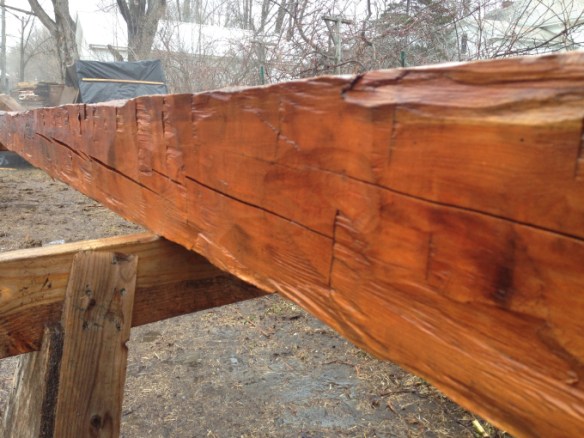
In the picture below, you can see the full length, hand hewn timbers.

Pic 4,_Loft space evident

The following picture showcases the soft, warm colors of the hardwood.

Lovely color of hardwood hewn timbers

Standing the Test of Time – An Old Barn in Excellent Condition

The frame itself is in excellent condition, with straight lines that have stood up to over 165 years of grueling winters and winds in the mid-western plains.

Picture 6_Simple geometry survives  165+ years of prairie winds

Endless Possibilities

Spacious and sturdy, this frame offers an expansive 1560 square feet of space, with the option for a second floor. We could easily add in a loft system in the rafters.

This barn frame could become a great room or a complete home. It could also become a restored barn, restaurant, studio or vintage vehicle storage.

Want to Call This Beautiful Frame Your Own?

Give us a call at (802) 774.8972 or email Luke@GreenMountainTimberFrames.com

All in a Day’s Work

Reading this in your email? For easier reading – Click here.

It’s amazing what you can accomplish in one day’s work! With a good team, beautiful cloudy Vermont skies and some hard work, we managed to install a new metal roof on this timber frame barn addition in ten hours with finish trim.

Timber frame_post and beams in Vermont_Green Mountain Timber Frames_8am

This particular timbered bridge addition was built by another crew, but since they weren’t available to complete the roof, we were asked to do the job. As a lover of all things timber, we couldn’t bear to see this new frame open to the Vermont elements any longer.

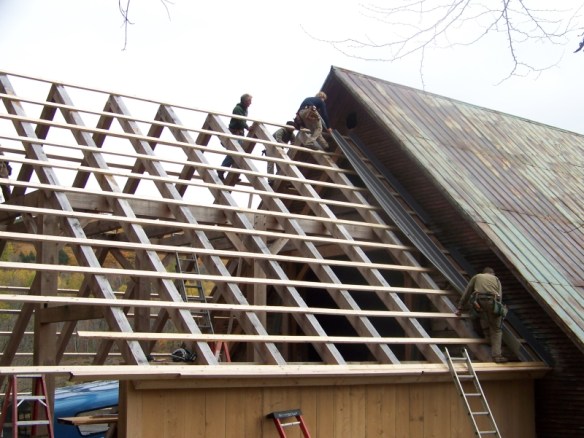
Our crew of seven left home at 6 am for the two hour drive to eastern VT. Starting with the raw frame at 8 am, we installed 2×4 nailers.

Working on roof of historic timber frame_green mountain timber frames_vermont

Then, we did the necessary finish on the roof trim and added flashing to the existing barn. Next, we screwed metal roofing to the 2×4 nailers.

applying roof boards_green mountain timber frames_custom barn homes

This particular barn has a beautiful gable window that adds an elegance to the building. The original builders did fine work. We believe the barn was built in the 1870s.
Gable Barn Window on Restored Timber Frame_Green Mountain Timber Frames

Closeup of Gable Barn window_Barn Restoration_green mountain timber frames

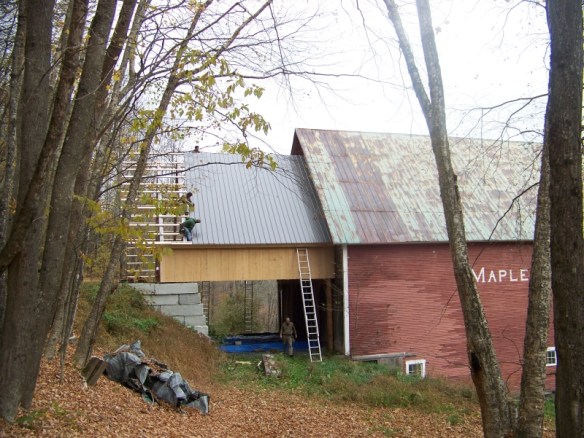
With the new roof safely and securely in place, the owner is relieved the structure is finally covered. We, too, are pleased that this rugged new timber frame isn’t taking on water anymore. Best of all, it’s a 40-year roof, so none of us will have to come back. I don’t think I’ll be doing roofs into my 11th decade!

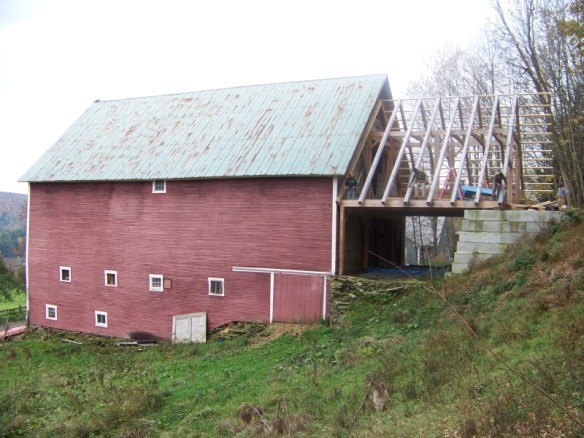
If you drive by Maple Avenue Farm in the back hills of Vermont, you can see the new roof for yourself. There are not many four-story bank barns left in Vermont. Especially with a timber frame bridge to access the upper levels of this 1870s former dairy barn.

new roof on restored timber frame_post and beam architecture_green mountain timber framesMeanwhile, we’re always happy to take on another project! Looking for a timber framer in Vermont? Give us a call at 802.774.8972!

1790s Gambrel House Restored and Available for Sale!

Reading this in your email? For easier reading – Click here.

Two years ago, we began taking down a gambrel house from the 1790s. (We blogged about it here and here.) I am delighted to report that we have now completed the restoration of this rugged old timber frame! After the passage of that much time, it is all the more satisfying to be putting the timber joints, so masterfully crafted over two hundred years ago, back together as they are meant to be!

Here is what the house looked like when we first heard about it:

1790 Gambrel House_Historic_Green Mountain Timber FramesWhy did we take on this project?

The house was on the docket to be burned down by the local fire department. We are so grateful to the fire fighter who realized how old the house was and contacted Green Mountain Timber Frames! We just couldn’t stand to let it be destroyed.

A couple hundred hours into the process of gutting the house, which included filling two giant dumpsters with insulation, vinyl siding, sheet rock, plaster, and much other “sundry”, our hearts were sinking. But then we finally started to see the original frame. Here is the view after approximately 650 cold winter hours of gutting:

Original 1790 timber frameAfter a couple hundred hours more, we had the frame down and stored carefully under tarps. Now the frame is once again standing, this time in restored condition.

Restored historic timber_Vermont_Green Mountain Timber Frame_Larson FarmWhat does it mean that we have restored the frame?

The first step was to power wash each individual beam, brace, and board, as well as pull thousands of nails out of the timbers. Next, we went over each beam looking for fatigued areas that needed attention. Below is a “English scarf joint,” an incredibly strong joint that we used to replace the bottom of a post.

British Scarf Joint_Green Mountain Timber Frame_Larson FarmRestoration – with painstaking attention to details

The photo below shows a careful repair we did to one of the five beams that measure thirty-eight feet long. The beam had a very “tired” spot over this post due to a leak in the roof that must have persisted for years. We carefully removed soft areas, and replaced them with hand hewn material. Good for another 200 years! We were able to use materials from the original carrying sills of the house to make the repairs on the posts and beams.

Repaired Wooden Beam_Restored Timber Frame_Green Mountain Timber Frame_Larson FarmAs part of the restoration, we laid out each cross-section of the building, called “bents” and “plate walls,” and checked all the joints for tightness and the geometry for squareness. We built new rafters out of oak to replace some that had been too far gone for re-use.

In the following photo, we are laying out all the original wall boards on the ground to check our labeling system as we put the boards back in their original location.

Original Historic Wall Boards_Green Mountain Timber Frame_Larson FarmThe plaster lines from the eighteenth century construction even lined up on the interior! Many of the sheathing boards are over twenty inches wide!

20 inch wide Sheating BoardsWhy have we put this frame up on temporary sills?

Often, we are able to locate a vintage barn and keep it standing until a new owner has a chance to look at it and decide if it will meet the needs and dreams for a new house or addition. In some cases, we have to take the frame down immediately, as in the case of this gambrel in order to avoid its date with the fire department!

With gratitude to Larson Farm, where timber framer Luke Larson grew up, we are able to put the frame up both to check our work and to have it up so that anyone considering using it can walk through it and visualize what it can become.

Here are some highlights of this particular frame:

  • Pre-1800s and framed with American Chestnut, Beech, Oak, and Elm.
  • Gunstock frame on both floors! This means the posts grow in width towards the tops.
  • The gambrel profile creates a 22’x38′ wide open living space on the second floor. First floor is 28’x38′.
  • Original arched collar ties.
  • Original wide pine flooring boards are available.

The October brilliance of color in Vermont has made it a pleasure to work on this frame over the past weeks! This frame is currently available for purchase, and is now ready to stand strong and true again in a new location.

Historic Barn Frame for Sale_ Green Mountain Timber Frame_Larson Farm

11_Inside view of Gambrel Roof_Green Mountain Timber Frame_Larson FarmWe wish to thank the Larson Farm for their generous loan of space to put the frame up. Please visit the frame on its current location. You can learn more about the farm and its fantastic vision on the Larson Farm website or on Facebook.

This frame could be your home… 

If you are interested in turning this beautiful gambrel frame into your own historic property, learn more on our website or contact us at 802.774.8972 or Luke@GreenMountainTimberFrames.com.

Coming up next…

Stay tuned for a future blog on the amazing and artistic labeling system on this gambrel frame!

Labeling System_Restored historic gambrel home_Vermont_Green Mountain Timber Frame_Luke Larson Farm

Labeling System

GMTF Takes Timber Framing to the Water: The Boat House Project

.Reading this in your email? For easier reading – Click here.

In our latest timber frame project, Green Mountain Timber Frames took to the water! We put in no less than 1000 hours of work to build this gem of a boat house:Timber Frame Custom Boat House Green Mountain Timber Frames

We built the new timber frame structure on beautiful Lake Bomoseen – literally on and over the lake. 

Lake Bomoseen_Green Mountain Timber Frames

Lake Bomoseen

The goal was to build a post and beam structure over a boat mooring, allowing a boat to come inside, be lifted out of the water and stored for the winter. 

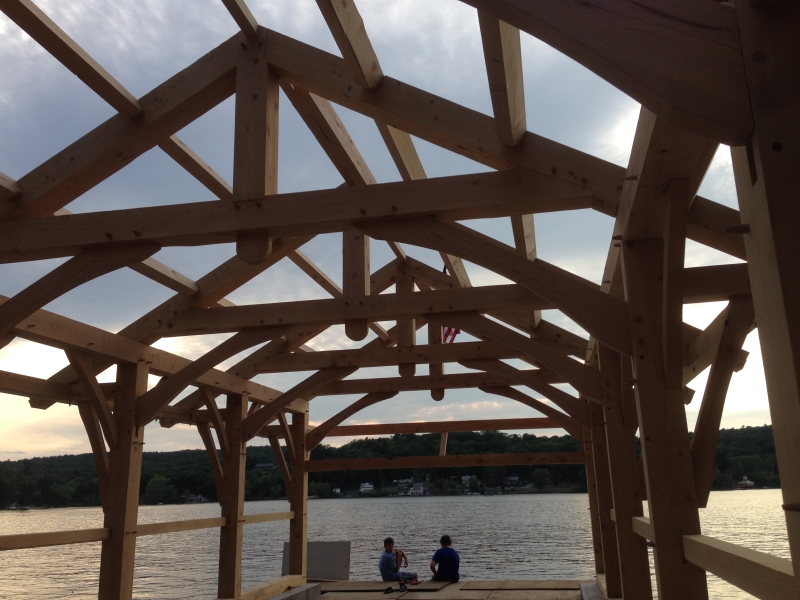
Inside the Boat House_Green Mountain Timber Frames_Luke Larson

The view from inside the Boat House

Hemlock and Oak Wood, from the Property

One particularly exciting aspect of this project is that the hemlock and oak were cut from the property using a portable saw mill. Only on a few rare occasions has Green Mountain Timber Frames been able to cut a new timber frame using materials from the land where the structure will be built­. Luckily for us, this was one of them!

Designed in Collaboration with the Owners

When it came to designing the boat house frame, our very own Luke Larson worked closely with the property owners. It was a great pleasure to work together to create a design that fit the goals and desires of the owners and also worked structurally.

One of those goals was to have an attractive shed roof across the gables. We decided to accomplish this with a secondary top plate, which we started calling an “outrigger,” that turns the corner and wraps across the gable ends.

Outrigger detail of boat house_luke larson_Green Mountain Timber Frames_Vermont

aerial view of timber frame boat house_Green Mountain Timber Frames_Luke Larson

View of “outriggers” from afar

The various dimensions of this frame were each built on saw horses in our yard, so that we could check all the math, angles and joinery as we went.

aerial view of timber frame boat house_Green Mountain Timber Frames_Luke Larson

Using saw horses to work on wall of the Boat House

We used king post trusses to frame the bents and curved oak braces throughout the frame.

Timber frames_Green Mountain Timber Frames_Luke LarsonMost of the purlins in the frame were hemlock from the property, but we needed two pick points in the ceiling that would be strong enough to lift a 4,000 pound boat. Heavy oak purlins were installed at two places which are rated for well over 2,000 pound point loads each.

Purlins in custom boat house timber frames of custom boat house_Green Mountain Timber Frames_Luke Larson

The location of the timber frame presented challenges in getting it erected. Since the lay of the land was such that a crane or lull was not feasible, we put it up the old fashioned way – by hand.

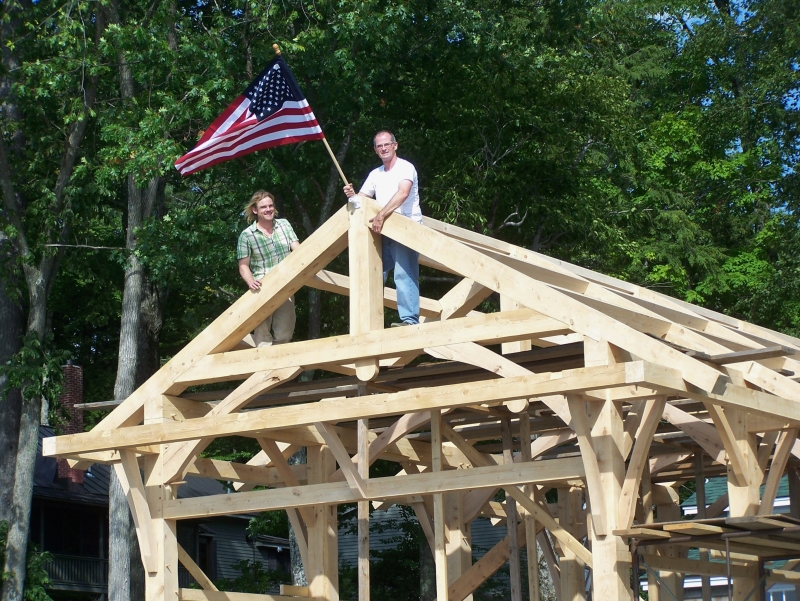
Dan went out in his kayak to take this picture of the flag being raised. 

Flag Raising on boat house_Green Mountain Timber Frames_Luke Larson

Here is a what the rafter trusses look like with the roof boards and wall sheathing applied. These were also harvested on the property. Soon there will be a walkway around the inside edges of the boathouse.

Interior view of custom boat house_Boat house completed with siding_Green Mountain Timber Frames_Luke Larson


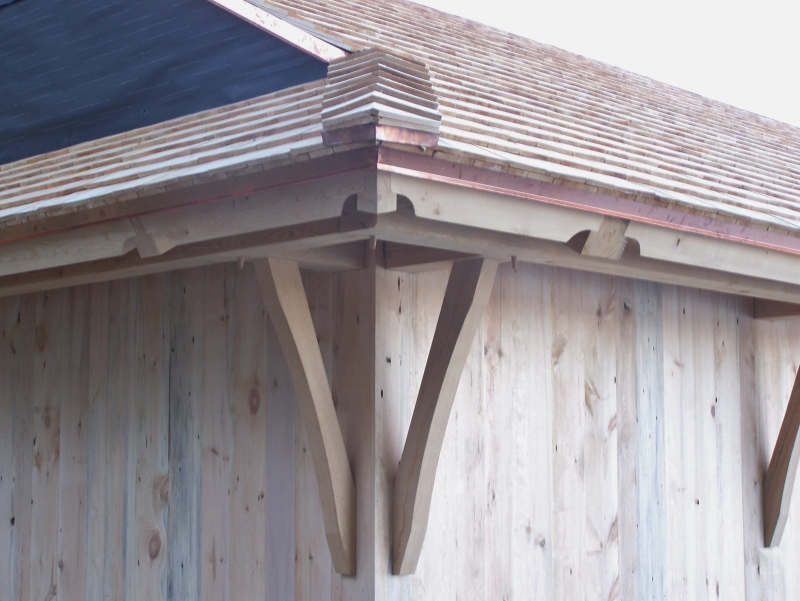
Corner details of boat house completed with siding_Green Mountain Timber Frames_Luke Larson

We were especially happy with how the hip corners and eve purlins turned out visually.

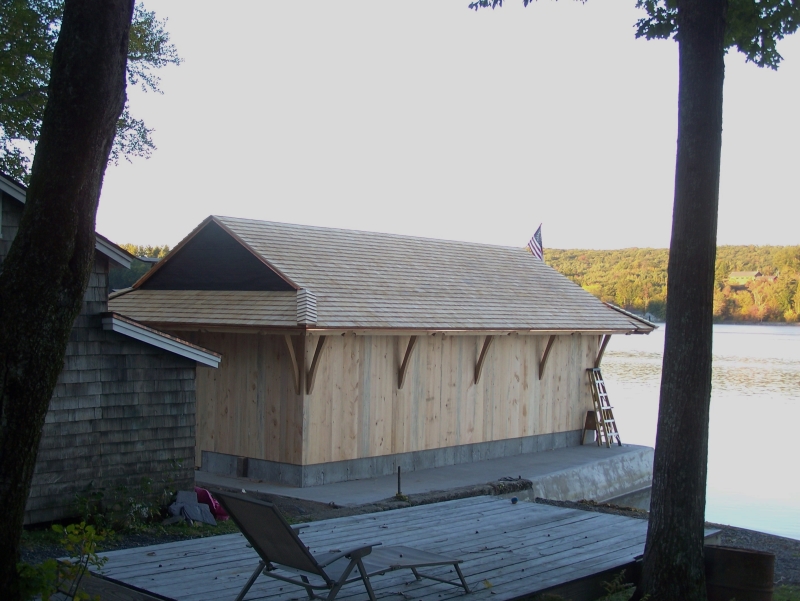
Custom Boat House_Boat house completed with siding_Green Mountain Timber Frames_Luke Larson

Next, the structure will receive beautiful salvaged windows, carefully restored, and a layer of cedar shingles on the walls. There will also be triangular windows in the peak. Take a look!

Boat house completed with siding_Green Mountain Timber Frames_Luke LarsonInterested in your very own timber frame boat house? Have another timber frame project in mind? Green Mountain Timber Frames specializes in historic timber frames and restoration projects, but we also erect new timber frames.

Contact us with any questions! Email Luke@GreenMountainTimberFrames.com or call 802.774.8972.